Models & Releases
Models & Releases32Funding & Deals7Benchmarks3Agents & Products67Hardware & Compute10Robotics16Policy & Drama43
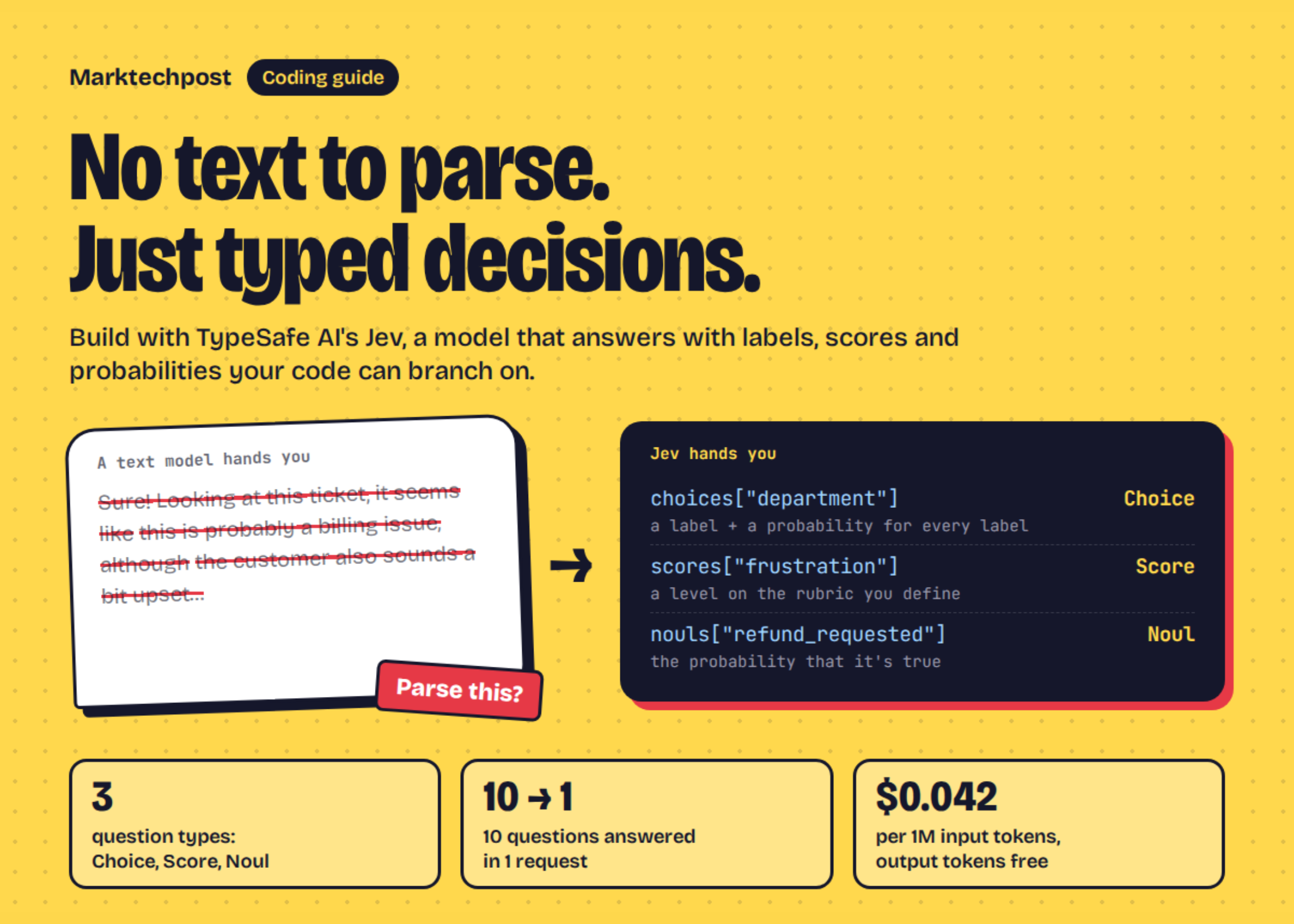
A Coding Guide to TypeSafe AI Jev: Typed Decisions, Calibrated Confidence, and Speculative Fan-Out with a System One Model
In this tutorial, we work with Jev, TypeSafe AI’s first System One model, which does not generate text at all: we send it a piece of program state and a set of typed questions, and it returns choices, scores, and yes/no probabilities that our code can branch on directly. We install the official Python SDK, make a first call that uses all three question primitives at once, and look at how the shape of the state changes what the model can know. We then recompute the published confidence sta
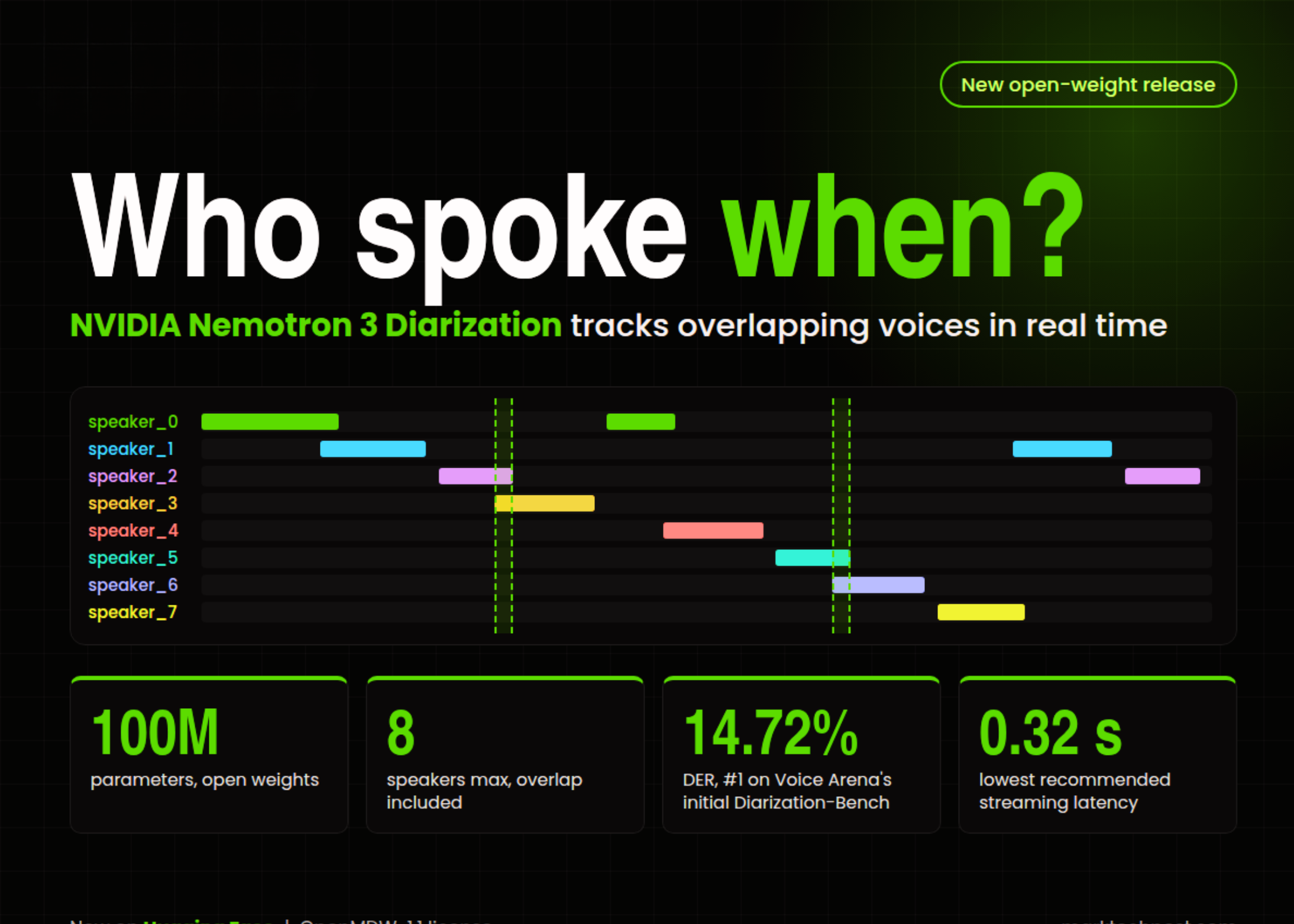
NVIDIA Releases Nemotron 3 Diarization: A 100M-Parameter Open-Weight Model That Tracks 8 Speakers in Real Time
NVIDIA has released Nemotron 3 Diarization, an open-weight speaker diarization model on Hugging Face. It answers one question about any conversation: who spoke when. The 100M-parameter model tracks up to 8 speakers, including when voices overlap. One checkpoint handles both offline recordings and real-time streaming. Is it deployable? Yes. The weights are released under the OpenMDW License 1.1, which permits commercial use. It runs on Linux through NVIDIA NeMo, using Ampere, Ada Lovelace, Ho
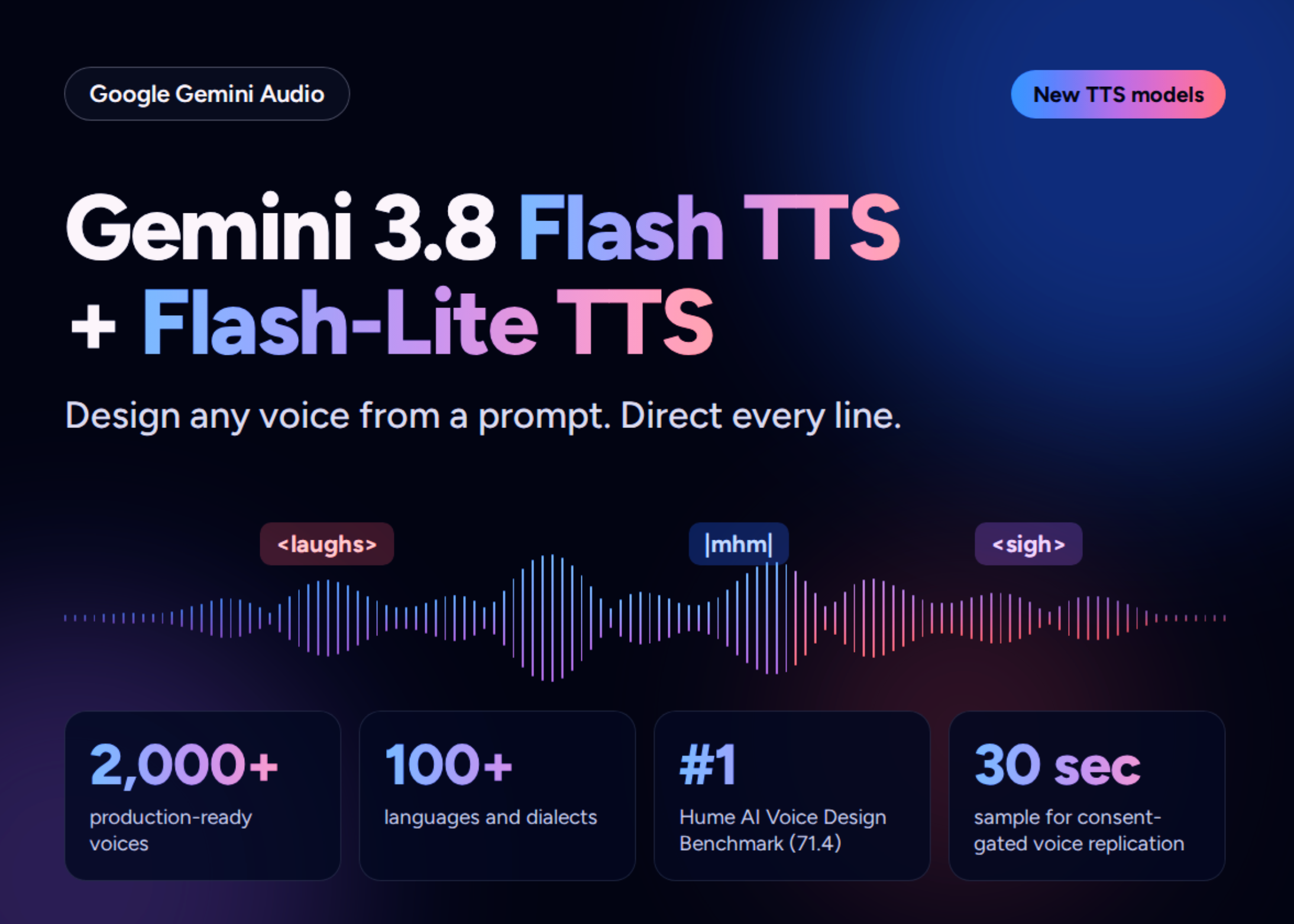
Google Releases Gemini 3.8 Flash TTS and Flash-Lite TTS With Prompt-Based Voice Design
Google has released Gemini 3.8 Flash TTS and Gemini 3.8 Flash-Lite TTS, 2 new text-to-speech models in its Gemini Audio family. Google calls them its most expressive audio generation models yet. Flash TTS targets creative direction and character voices. Flash-Lite TTS targets high-volume, cost-efficient production. Both let developers direct delivery line by line using natural language. Is it deployable? Yes, both models are rolling out now through the Gemini API and Google AI Studio. Access
Gemini 3.8 text-to-speech says hello
The capability lets AI systems communicate with users through spoken words, expanding accessibility beyond text-based interfaces.

Advancing Private AI Compute with secure, server-side memory
Introducing private, server-side memory to Private AI Compute for personal AI.
**Know Who Spoke When: Build Real-Time, Multi-Speaker AI with NVIDIA Nemotron 3 Diarization**
Identifying individual speakers in conversations could improve customer service transcripts, meeting notes, and accessibility tools that currently struggle with overlapping voices.
Kyutai Releases Voice of Reason: A Speech-Native Model that Solves Spoken Math with Reinforcement Learning
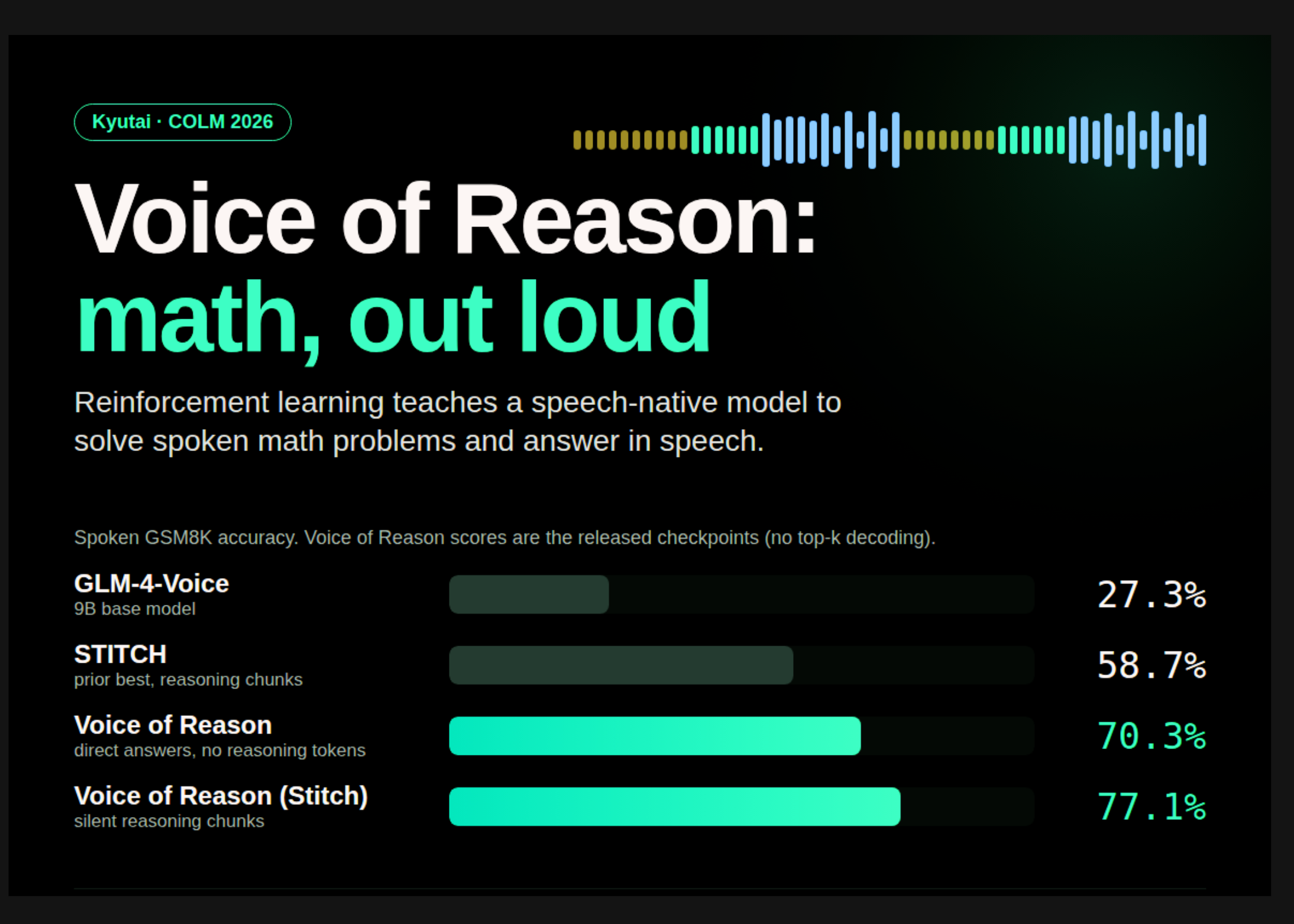
Kyutai has released Voice of Reason, 2 open-weight speech-to-speech models that solve math problems out loud. Both start from GLM-4-Voice-9B and add supervised fine-tuning (SFT) and reinforcement learning (RL). There is no transcription step and no separate text LLM in the loop. On spoken GSM8K, accuracy climbs from 27.3% for the base model to 77.1%. Is it deployable? Yes, for self-hosting. Kyutai ran both BF16 checkpoints on a single H100. You also need the GLM-4-Voice repo for its speech t
Nokia Open-Sources AnyJev: A Training-Free Layer That Turns Any Open LLM Into a Calibrated Decision Model
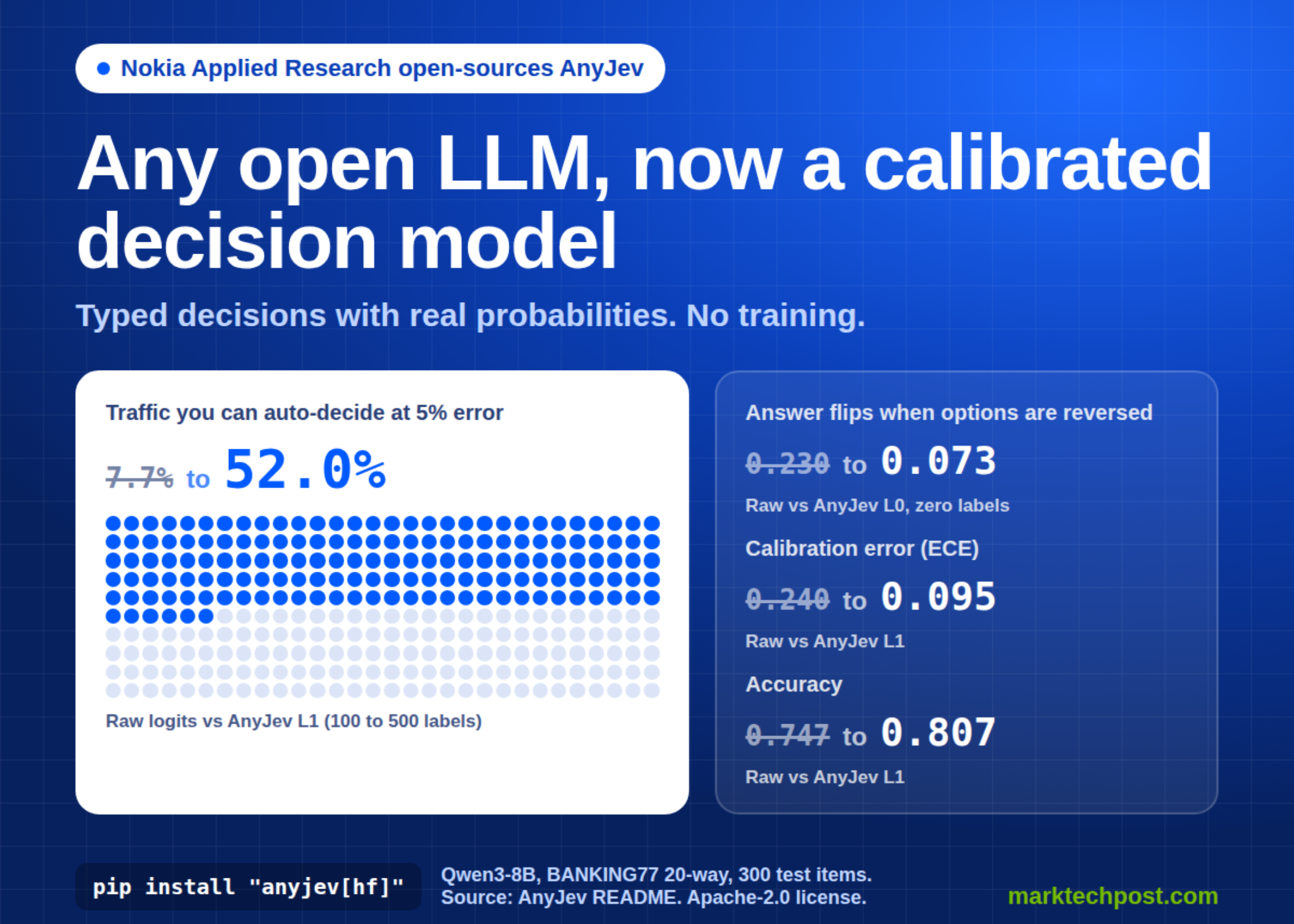
Nokia’s applied research team has open-sourced AnyJev, a Python library that turns an open LLM into a decision model. It needs no training. It targets a common production job: picking one answer from a fixed set instead of writing a sentence. Is it deployable? Yes, it installs from PyPI, ships under Apache-2.0, and has transformers and vLLM backends with shared-prefix scoring. What is AnyJev? AnyJev borrows its interface from Jev. Jev is the System One decision model that TypeS
OpenAI Releases GPT-6 Sol and Luna: 50% Cheaper API Pricing and Benchmarks
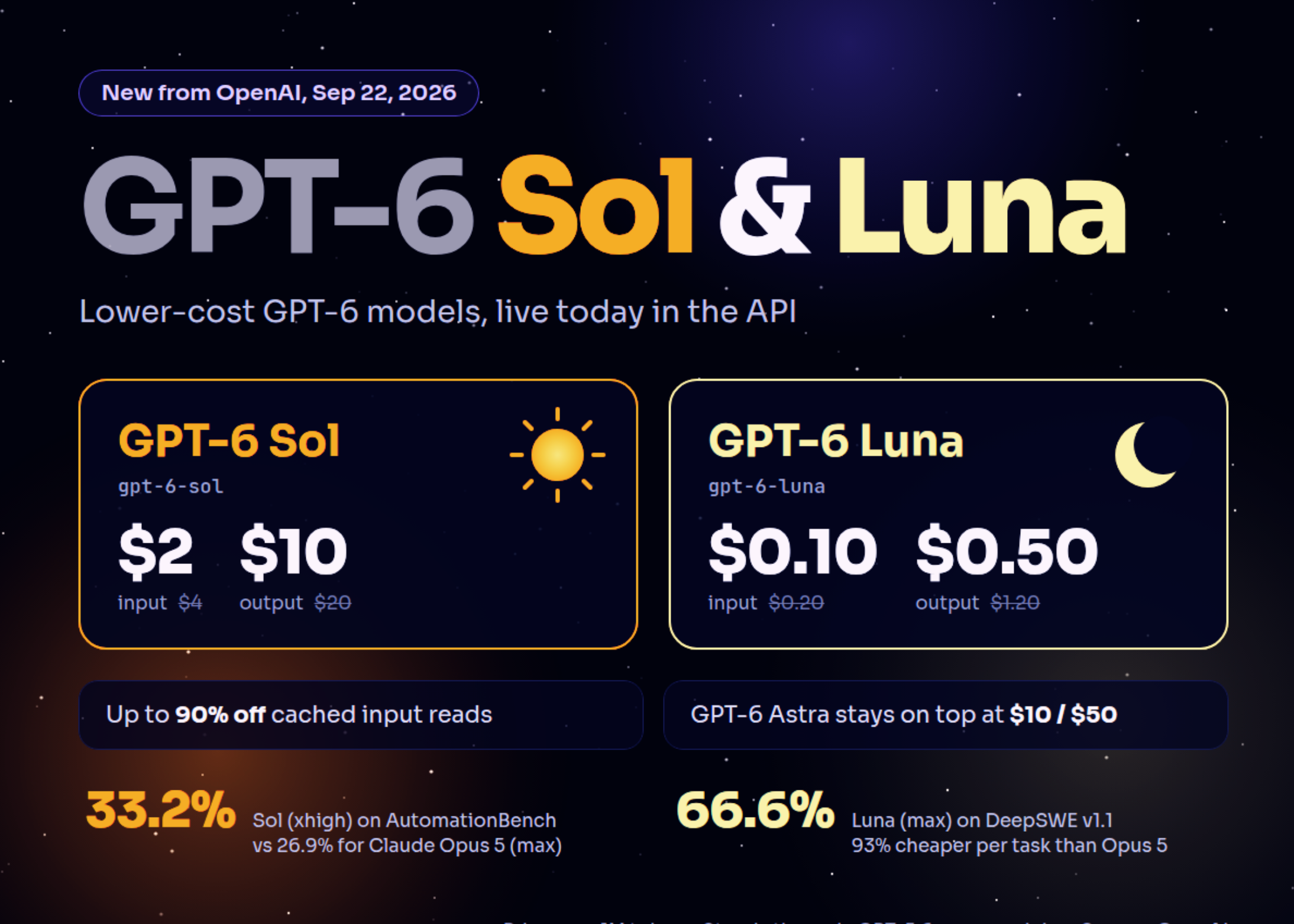
OpenAI has released GPT-6 Sol and GPT-6 Luna, 2 new models in its GPT-6 family. They sit below GPT-6 Astra, which launched earlier this month. OpenAI trained both with methods similar to Astra’s. The aim is to bring Astra’s advances to faster, more affordable models. Deployable today? Yes. Both models are live in the OpenAI API as gpt-6-sol and gpt-6-luna. They are API-only models, so there are no weights to self-host. Three tiers, one recipe The GPT-6 family now has 3 tier
New Anthropic, OpenAI models make same promise: A little more for a lot less money
OpenAI and Anthropic both recently released new models aimed at lowering costs. Anthropic announced Opus 5.5, the latest version of its main mass-market workhorse model, used for tasks like coding and other complex knowledge work. And OpenAI announced GPT-6 Sol and Luna, the latest versions of its middle-of-the-road or smaller models focused on efficiency and speed.Read full article Comments
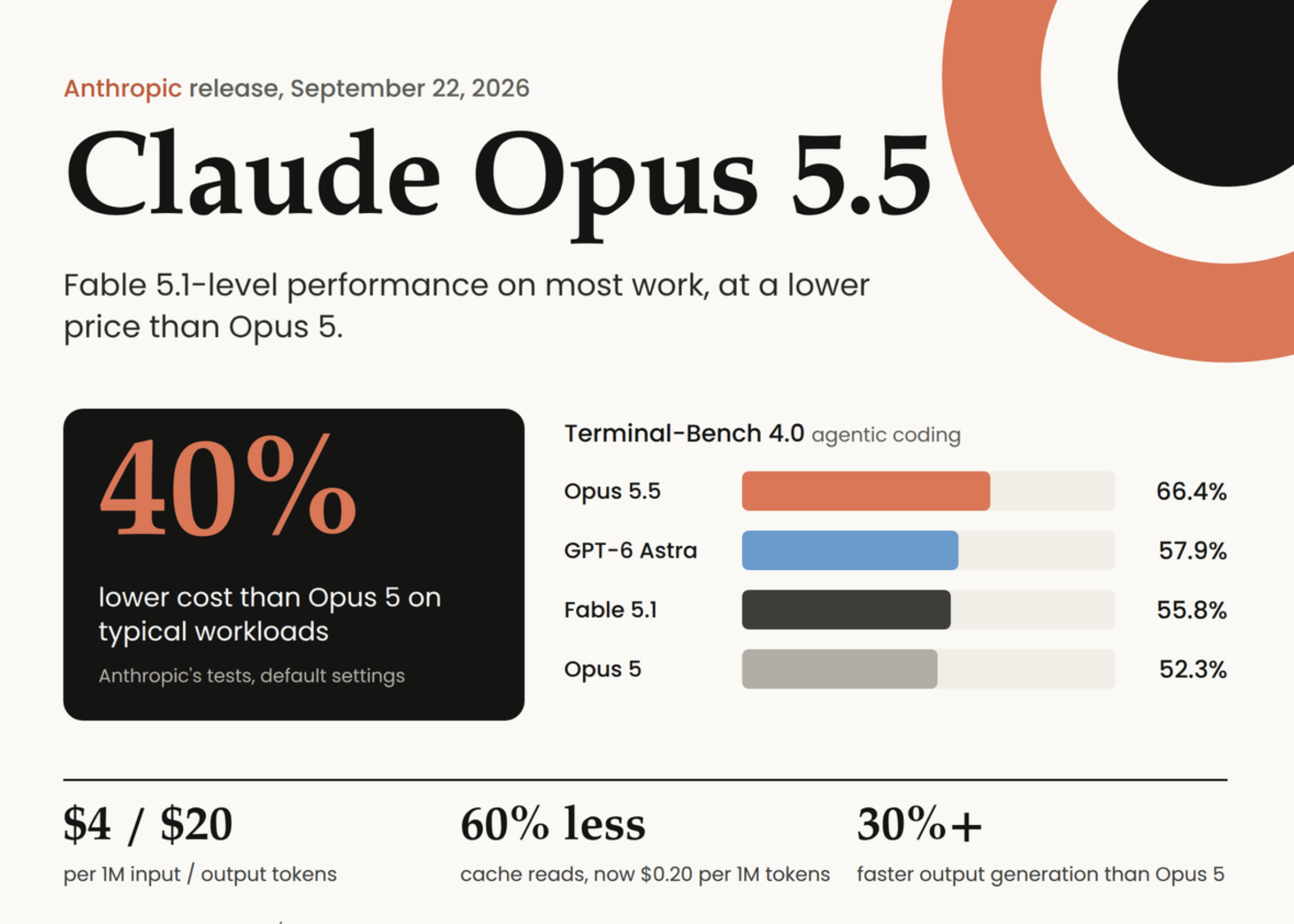
Anthropic Releases Claude Opus 5.5: Fable 5.1-Level Performance at 40% Lower Running Cost Than Opus 5
Anthropic has released Claude Opus 5.5, the first model in its new Claude 5.5 family. The team states it performs at the level of Claude Fable 5.1 on most work. It also costs 40% less to run than Opus 5 on typical workloads at default settings. On Anthropic’s own benchmarks, it leads in agentic coding, computer use, and knowledge work. Is it deployable? Yes, as a managed API model. Anthropic has not released weights, so self-hosting is not an option. Developers can call claude-opus-5-

OpenAI launches GPT-6 Sol and Luna, boasting lower cost and fewer mistakes
OpenAI is launching two new models, which it says are cut from the same cloth as Astra.

Better prompt caching for GPT-6
Learn how GPT-6 improves prompt caching with higher cache hit rates, new diagnostics, explicit breakpoints, and controls that reduce latency and costs.

Introducing GPT-6 Sol and Luna
Meet GPT-6 Sol and Luna, two models that bring frontier intelligence to everyday work with different balances of capability and cost.

Anthropic launches Claude Opus 5.5 with stricter safeguards for cybersecurity
Anthropic says its new Claude Opus 5.5 model comes with stronger safeguards in the wake of recent rogue AI hacking incidents. In an announcement on Tuesday, Anthropic says Opus 5.5 comes with improvements to certain risky behaviors, including attempts to escape the company's testing sandbox. It's the first model released by Anthropic after CEO Dario Amodei announced plans to "pace the frontier," or slow down AI development. In recent weeks, several AI companies, including Anthr

Anthropic releases Opus 5.5 with lower prices and Fable-level performance
Anthropic called it "the strongest-performing model we've tested to date."
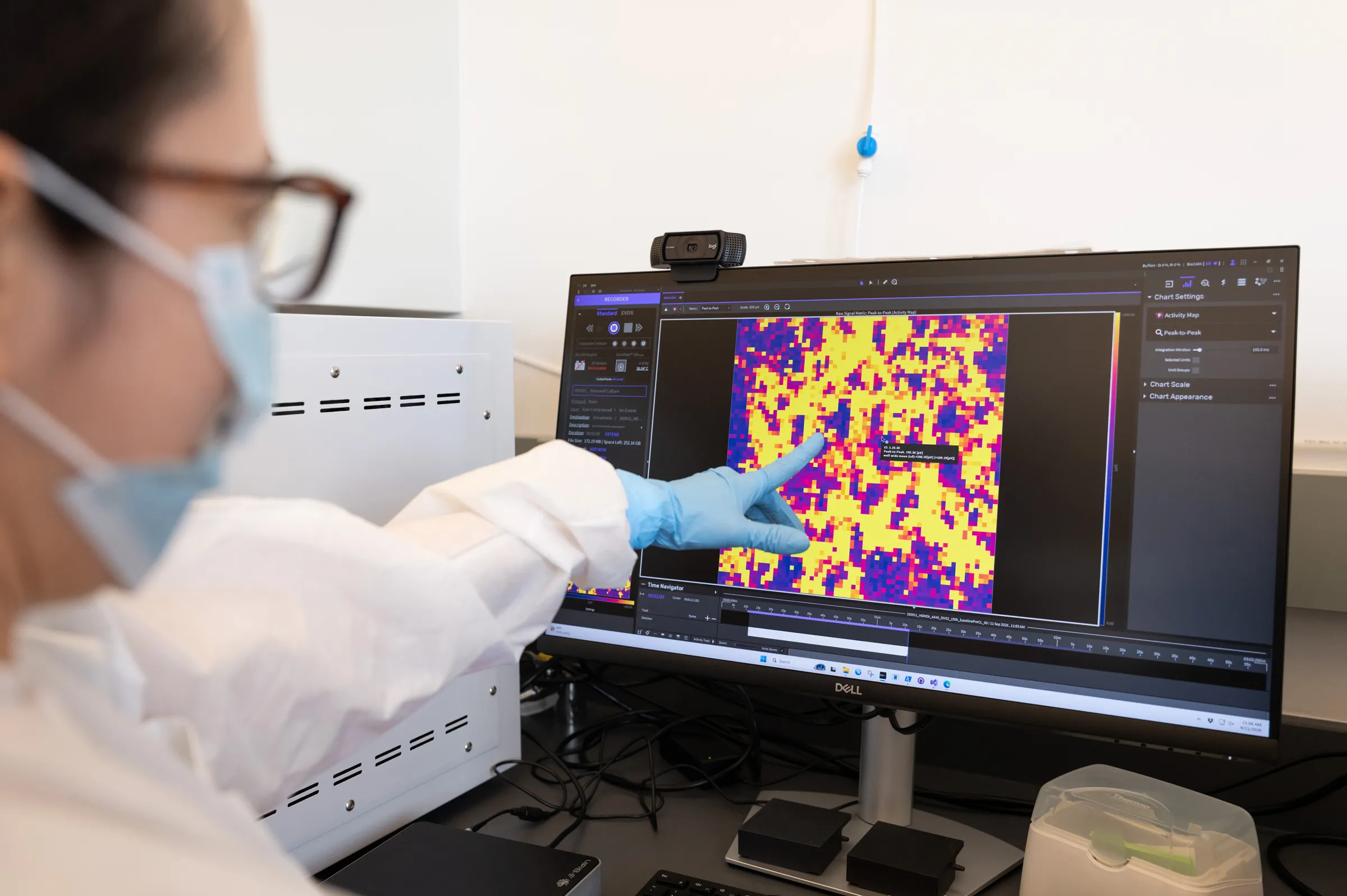
AI Models Built From Rat Brains Just Got Closer to Reality
The Biological Computing Company is bringing its AI tools to Amazon Web Services in a major boost for a once-fringe field that aims to marry nature with code.

Transformers now runs llama.cpp quants
Running quantized models locally reduces costs and latency while keeping data private, making AI more accessible to developers without expensive hardware.

A New Chatbot Wants to Unlock the Secrets in Tattered Ancient Greek Records
In the hope of uncovering new details about ancient life, researchers have developed a large language model that fills in the gaps in papyrus fragments.
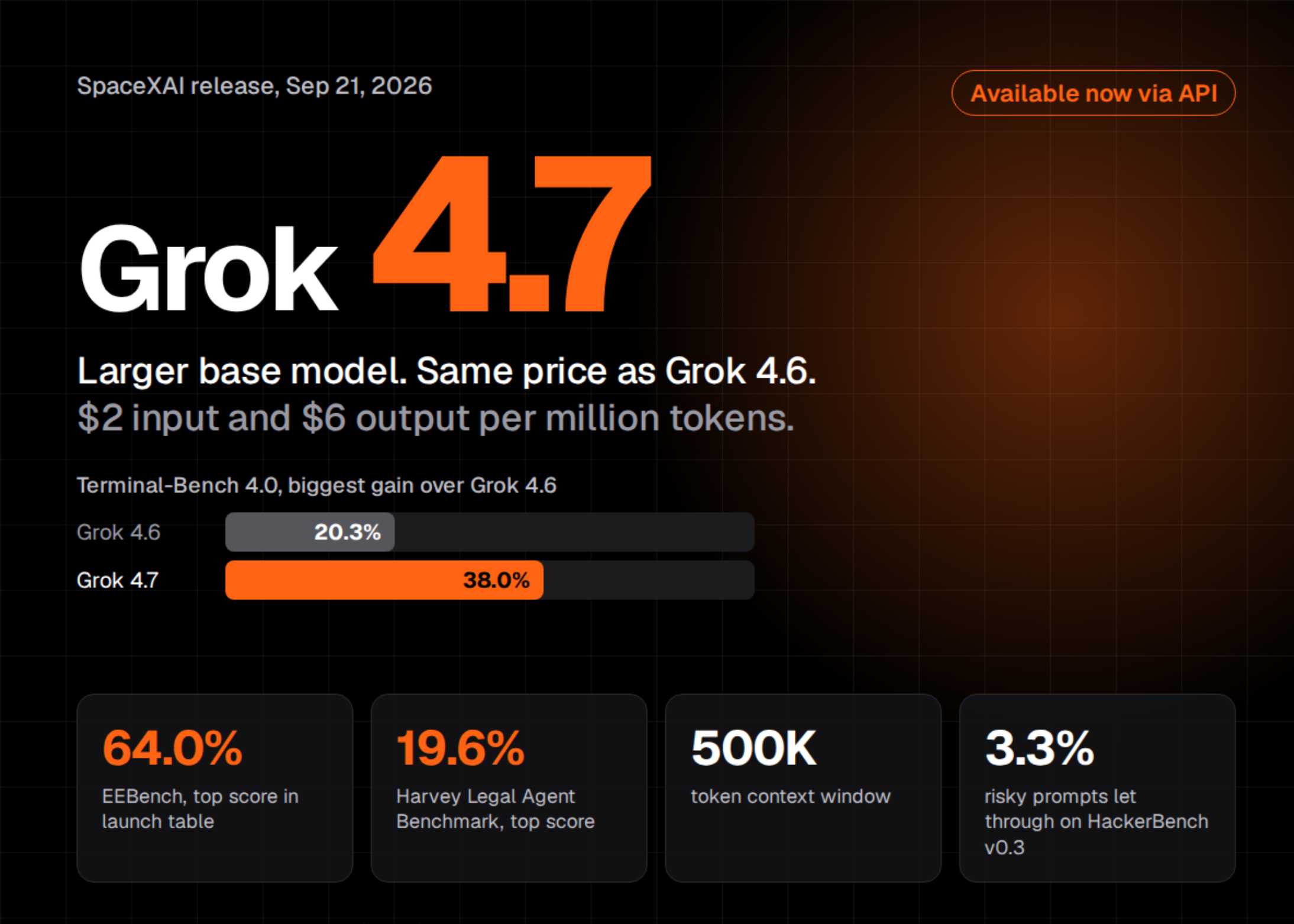
SpaceXAI Releases Grok 4.7: A Larger Base Model at the Same $2/$6 Price as Grok 4.6
SpaceXAI has released Grok 4.7, its new flagship model for coding, agentic tasks, and knowledge work. Grok 4.7 is built on a larger base model and a longer reinforcement learning run. It still ships at the same price and speed as Grok 4.6. Is it deployable? Yes, as a hosted model. You can call grok-4.7 today through the xAI API, Cursor, Grok Build, OpenRouter, Vercel, and Cloudflare. What Changed Under the Hood SpaceXAI lists 4 changes over Grok 4.6: A new, larger base model: Grok
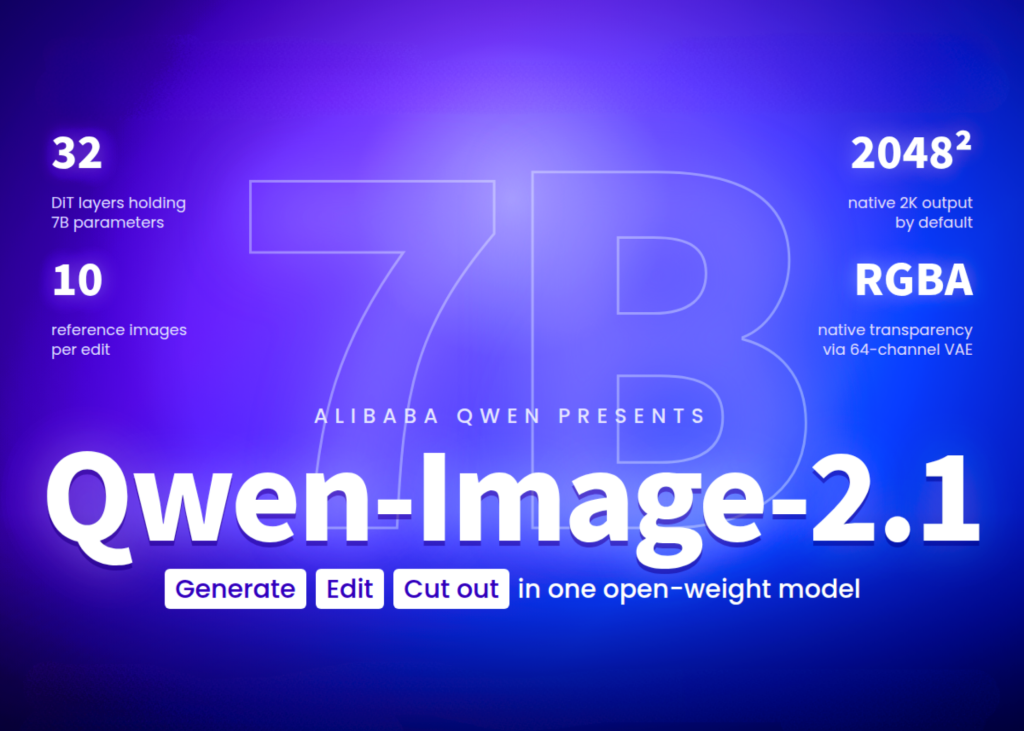
Alibaba Qwen Releases Qwen-Image-2.1: A 7B Open-Weight Model for Image Generation and Editing
Alibaba’s Qwen team has released Qwen-Image-2.1, a unified text-to-image generation and image editing model. Its visual generation component has 7B parameters across 32 single-stream DiT layers. One checkpoint covers text-to-image, multi-reference editing, local edits, and transparent RGBA output. Is it deployable? Yes, for research and evaluation. Day 0 support covers Diffusers, ComfyUI, vLLM-Omni, SGLang, and LightX2V. Commercial deployment needs a separate license from Qwen. Fro
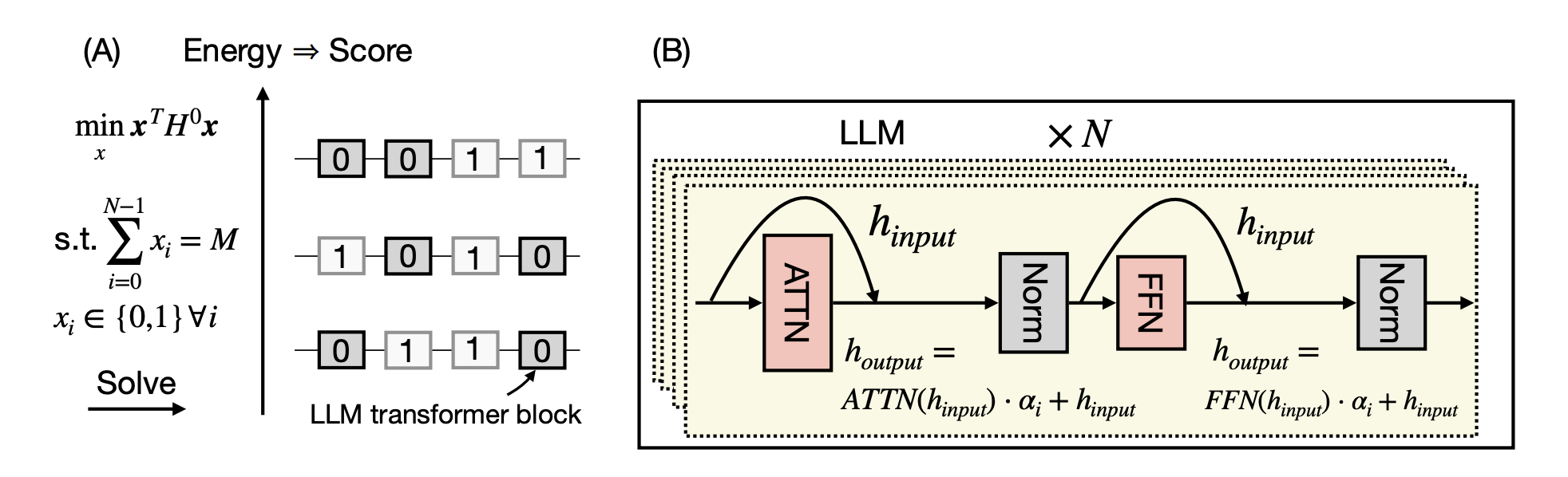
Pruning LLMs Like a Physicist: Block Removal as an Ising Optimization Problem
Removing unnecessary neural network components could reduce computational costs while maintaining model performance.

tokenizers v1: encode, decode and scaling, measured
Efficient text-to-number conversion is fundamental to how language models process and generate information at scale.
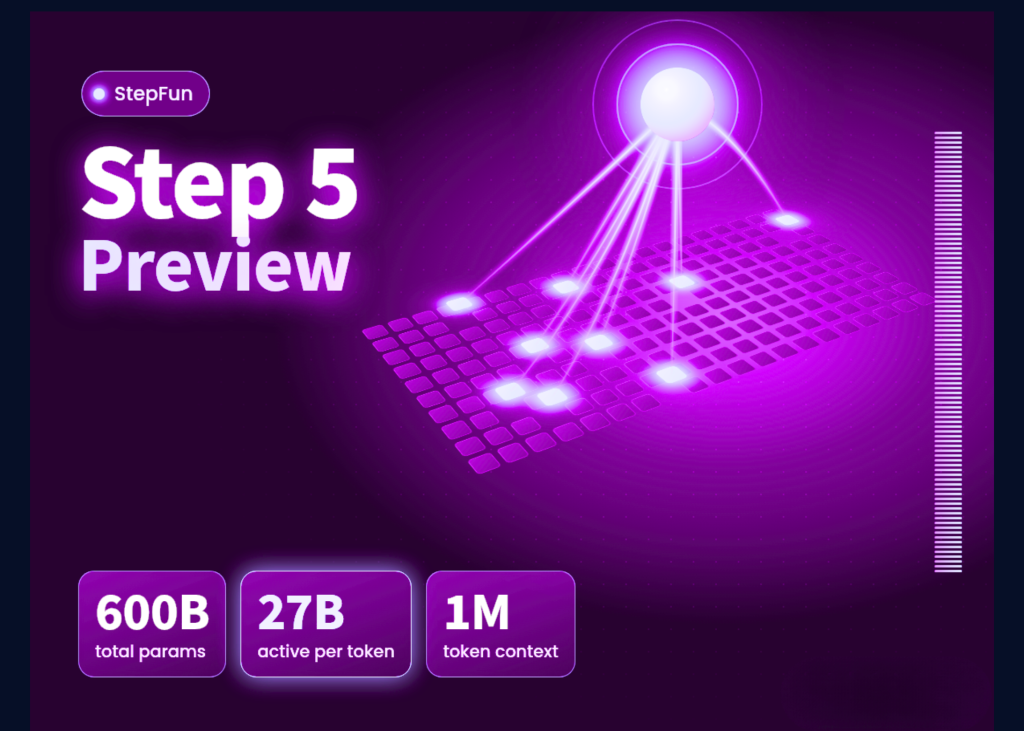
StepFun Launches Step 5 Preview: A 600B-Total, 27B-Active MoE Model With 1M Context for Long-Horizon Agentic Work
StepFun has released Step 5 Preview, its new flagship model for agentic work. The target workloads are software engineering, professional knowledge work, and finance. The main pitch is cost. StepFun team states the model delivers comparable intelligence at a substantially lower task cost. That is the ‘Pareto frontier’ framing in the launch title. Is it deployable? Yes, as a hosted API and on the StepFun platform. Self-hosting waits for open weights. StepFun says open weights land
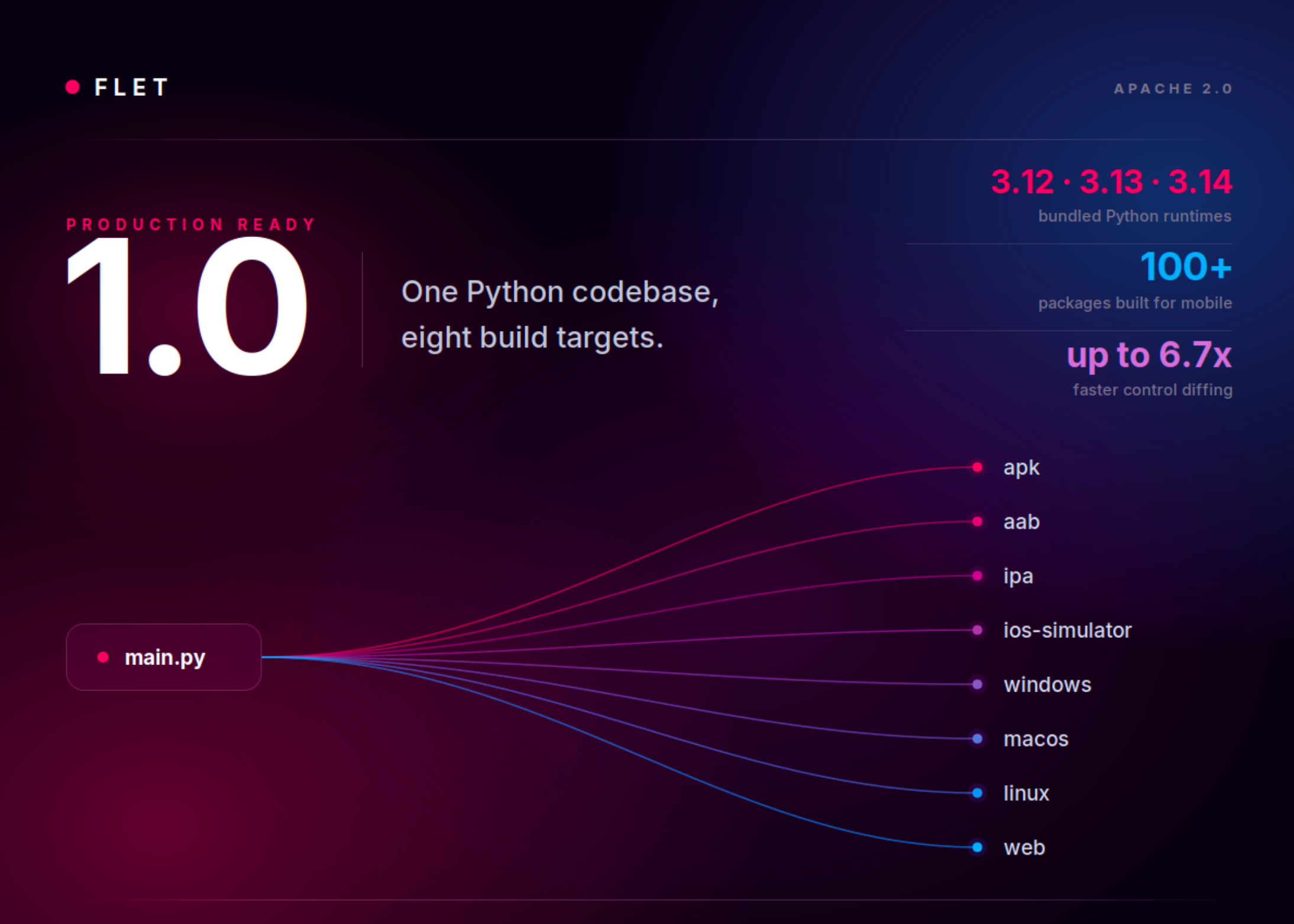
Flet 1.0 Released: Build Production Web, Desktop and Mobile Apps in Python Only
Flet is an open source Python framework that renders its UI with Flutter. You write Python, and Flet draws Material and Cupertino widgets on iOS, Android, Windows, macOS, Linux and the browser. No Dart, Swift, Kotlin or JavaScript required. Last week, the Flet team released Flet 1.0 and declared it ready for building production apps. The release lands roughly four years after the project started. Is it deployable? Yes, today. Flet 1.0.0 is on PyPI under the Apache 2.0 license, requires Py
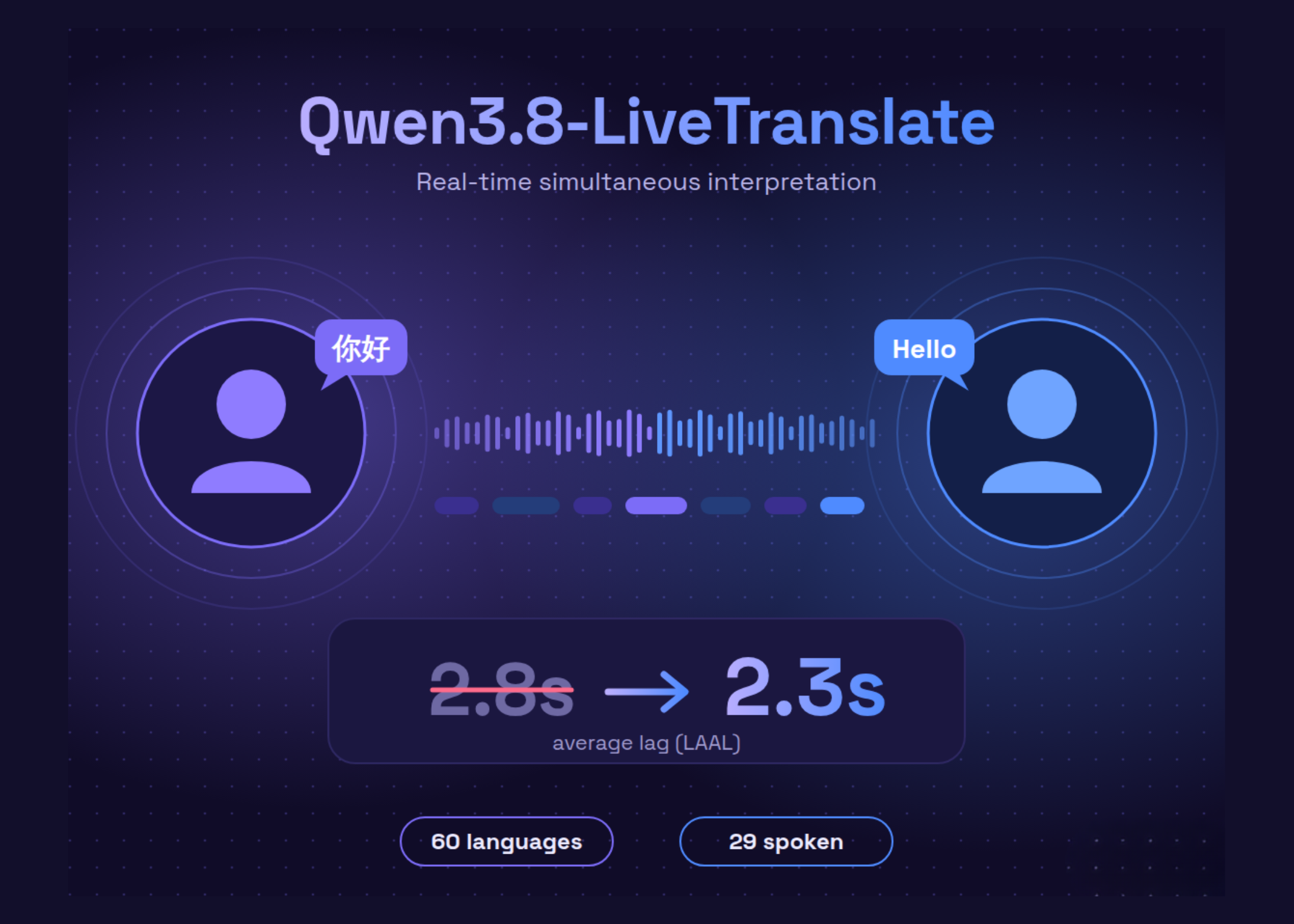
Alibaba Qwen Team Releases Qwen3.8-LiveTranslate: A Real-Time Interpretation Model That Cuts Average Lag to 2.3 Seconds Across 60 Languages
Qwen has released Qwen3.8-LiveTranslate, its next-generation real-time simultaneous interpretation model. It listens to live speech, with optional video frames, and returns translated text and speech while the speaker is still talking. The core change is a new Interleave architecture. Qwen reports gains in faithfulness, fluency, and conciseness, with average lagging (LAAL) dropping from 2.8 seconds to 2.3 seconds. The release also adds real-time speaker diarization, synchronized bilingual displ
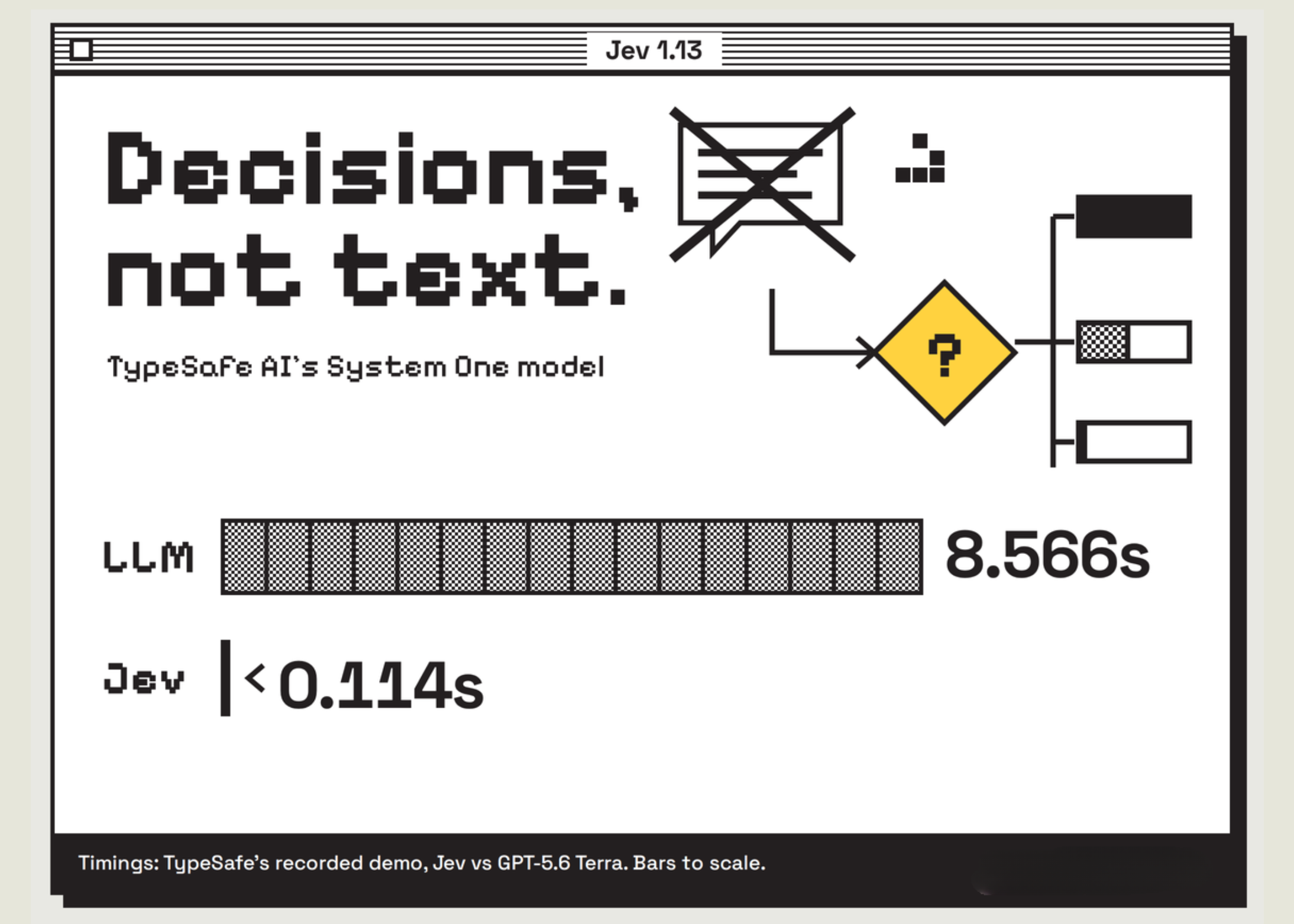
TypeSafe AI Releases Jev: A System One Model That Returns Typed, Calibrated Decisions Instead of Text
The ChatGPT moment in 2022 taught AI to talk to people. One of its builders now bets the next moment is AI that talks to software, not people. TypeSafe AI released Jev. Jev is transformer-based, but it is not a large language model. It does not generate text. You send a state and typed questions. It returns typed decisions with probabilities that code can branch on. Is it deployable? Yes, as a hosted API in early access behind a waitlist. TypeSafe has not published weights, a parameter count
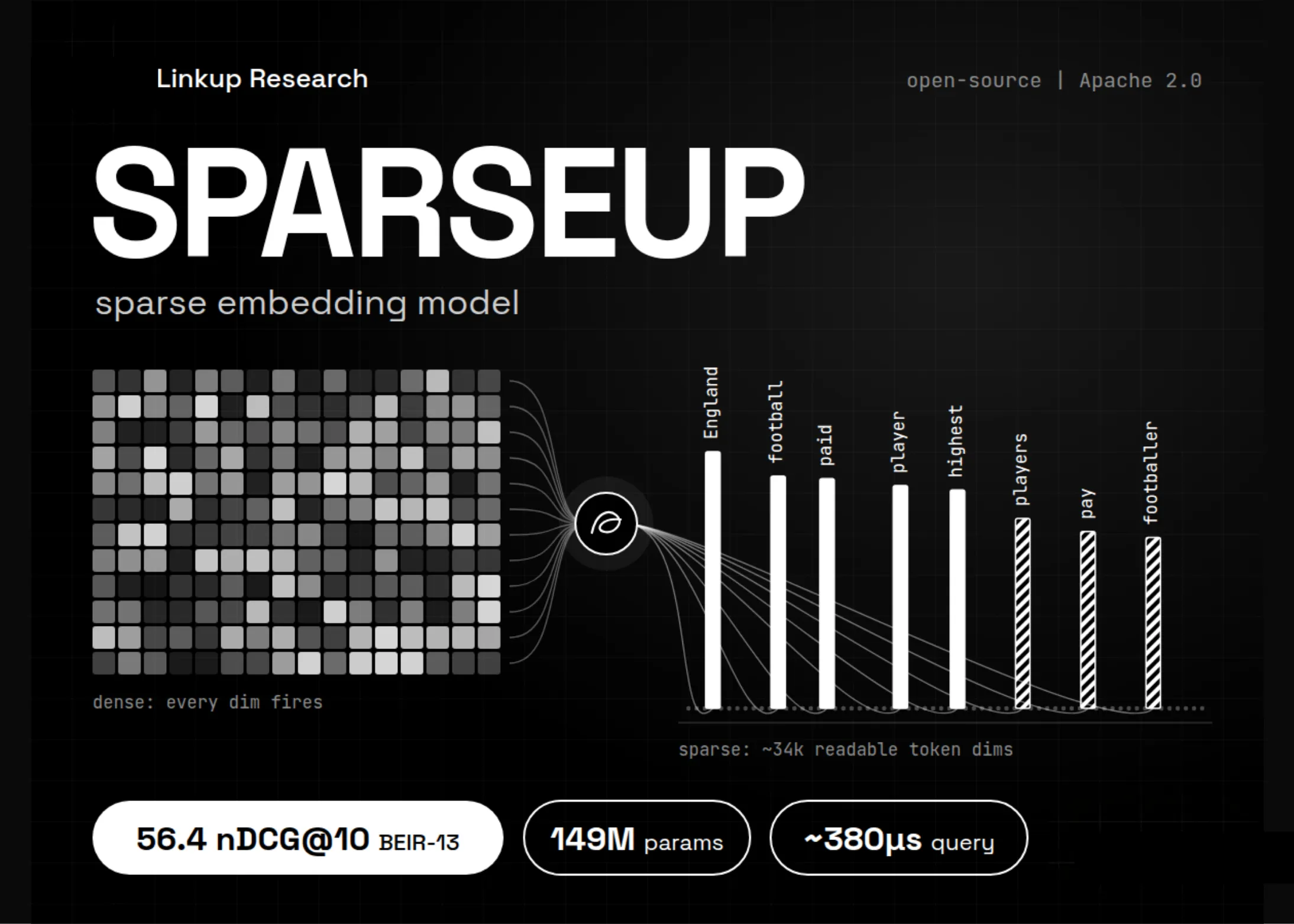
Linkup Research Releases SPARSEUP: A 149M-Parameter Open-Source Sparse Embedding Model
Linkup research team releases SPARSEUP, an open-source learned sparse embedding model. The model runs on a 149M-parameter ModernBERT backbone and ships under Apache 2.0. Linkup team reports 56.4 average nDCG@10 on BEIR-13. It calls this the strongest public vocabulary-based sparse encoder it knows of under 150M parameters. Is it deployable? Yes. The weights are on Hugging Face under Apache 2.0. The model loads through Transformers or Sentence Transformers with trust_remote_code=True. Why
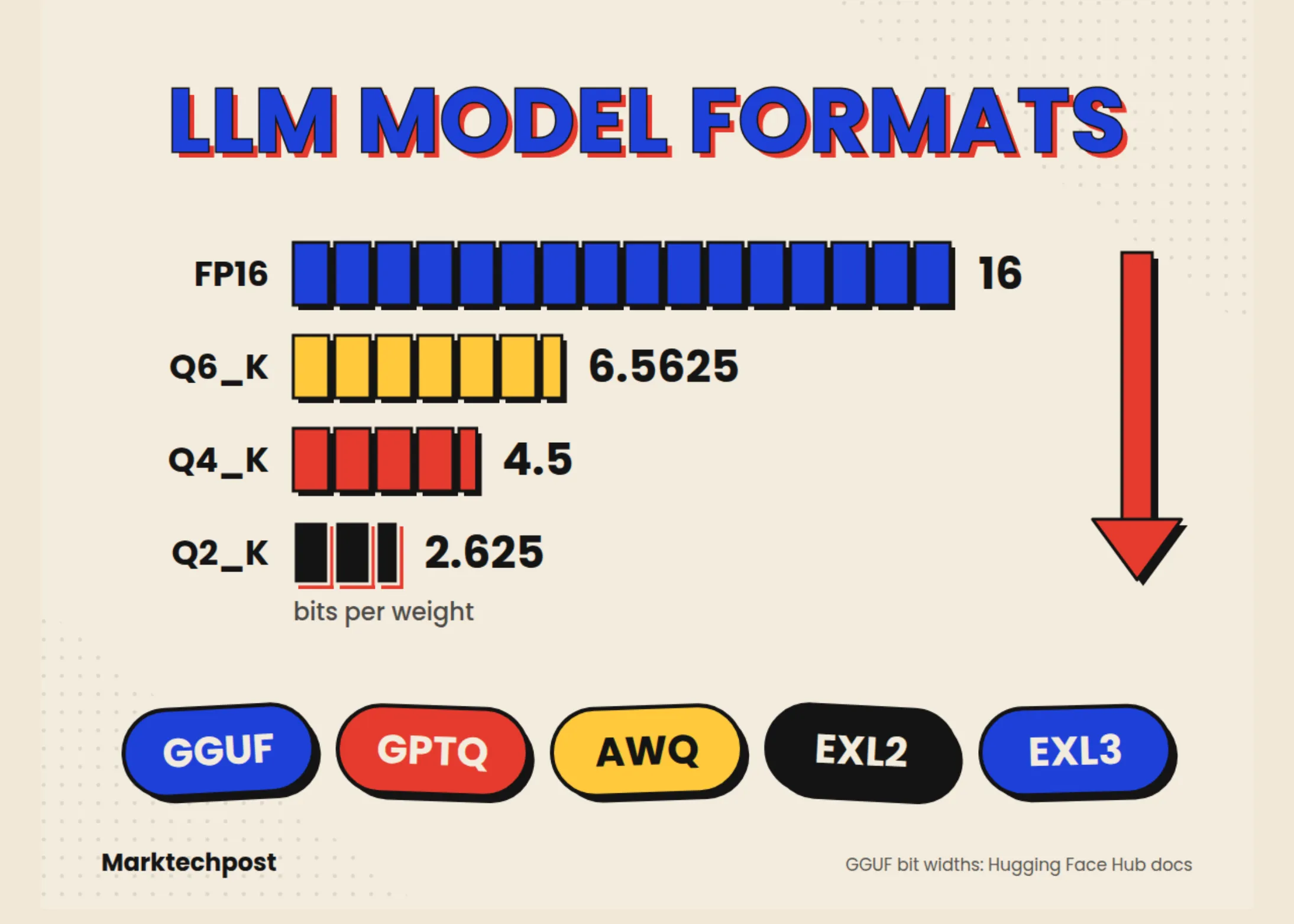
GGUF vs GPTQ vs AWQ vs EXL2: LLM Model Formats Explained (2026)
First, separate 2 ideas: containers vs. quantization methods Most confusion comes from mixing 2 layers. A container defines how tensors are stored on disk. A quantization method defines how weights are squeezed into fewer bits. Containers: safetensors, GGUF, PyTorch pickle (.bin / .pt). Methods: GPTQ, AWQ, bitsandbytes NF4, llama.cpp K-quants and I-quants. Both at once: EXL2 and EXL3 are a method plus a storage layout tied to one inference library. A quick memory rule of thu
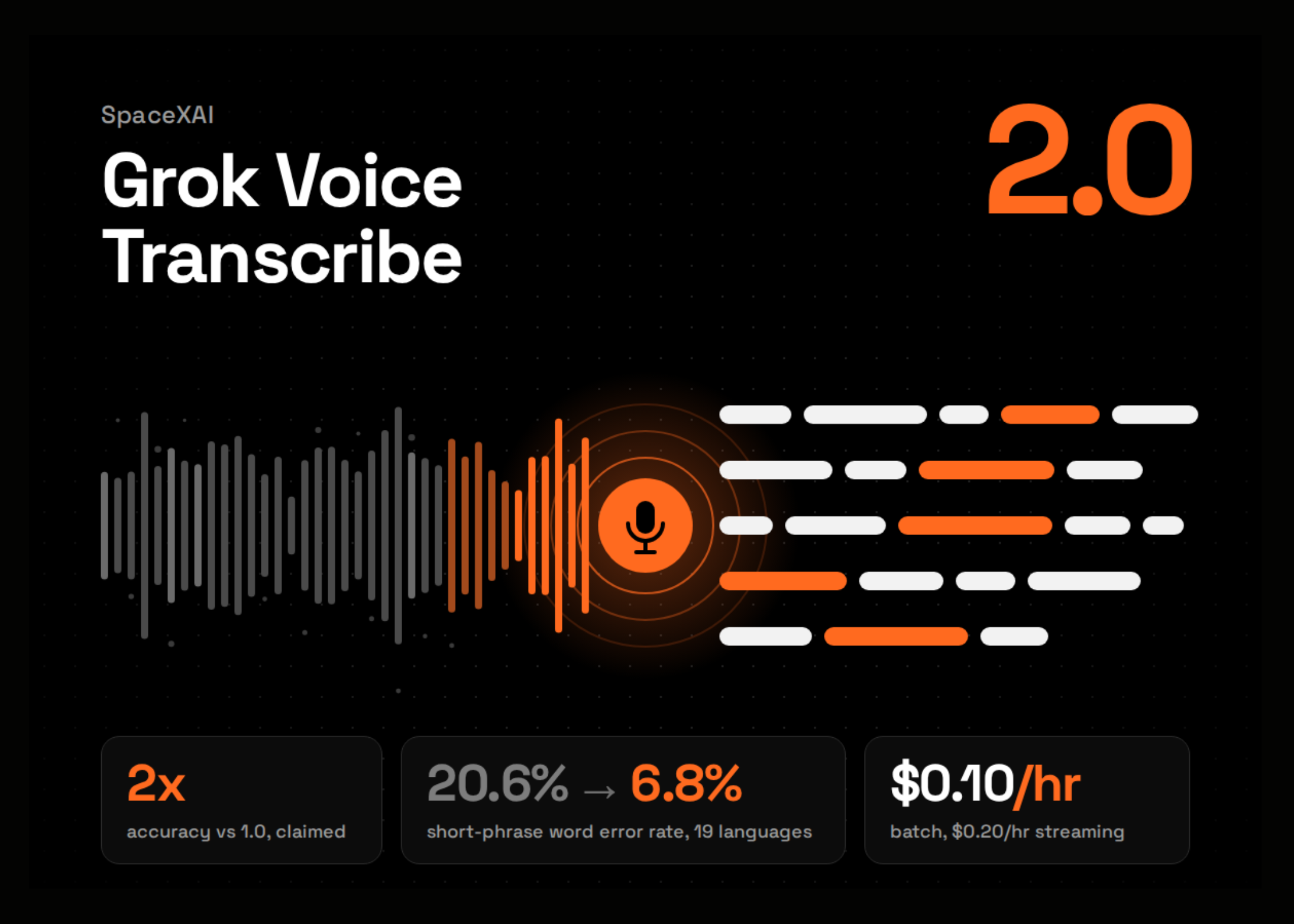
SpaceXAI Releases Grok Voice Transcribe 2.0: A Speech-to-Text API Claiming 2x Accuracy Over 1.0 at $0.10 per Hour
SpaceXAI has released Grok Voice Transcribe 2.0, its newest speech-to-text (STT) model. The development team claims it to be twice as accurate as Grok Voice Transcribe 1.0 at the same price. The model targets hard audio: noisy phone lines, competing voices, local accents, and spoken credentials. It runs in batch and real-time streaming modes through the Speech to Text API. Is it deployable? Yes, as a hosted API. It is live today under the model ID grok-voice-transcribe-2.0. SpaceXAI has not
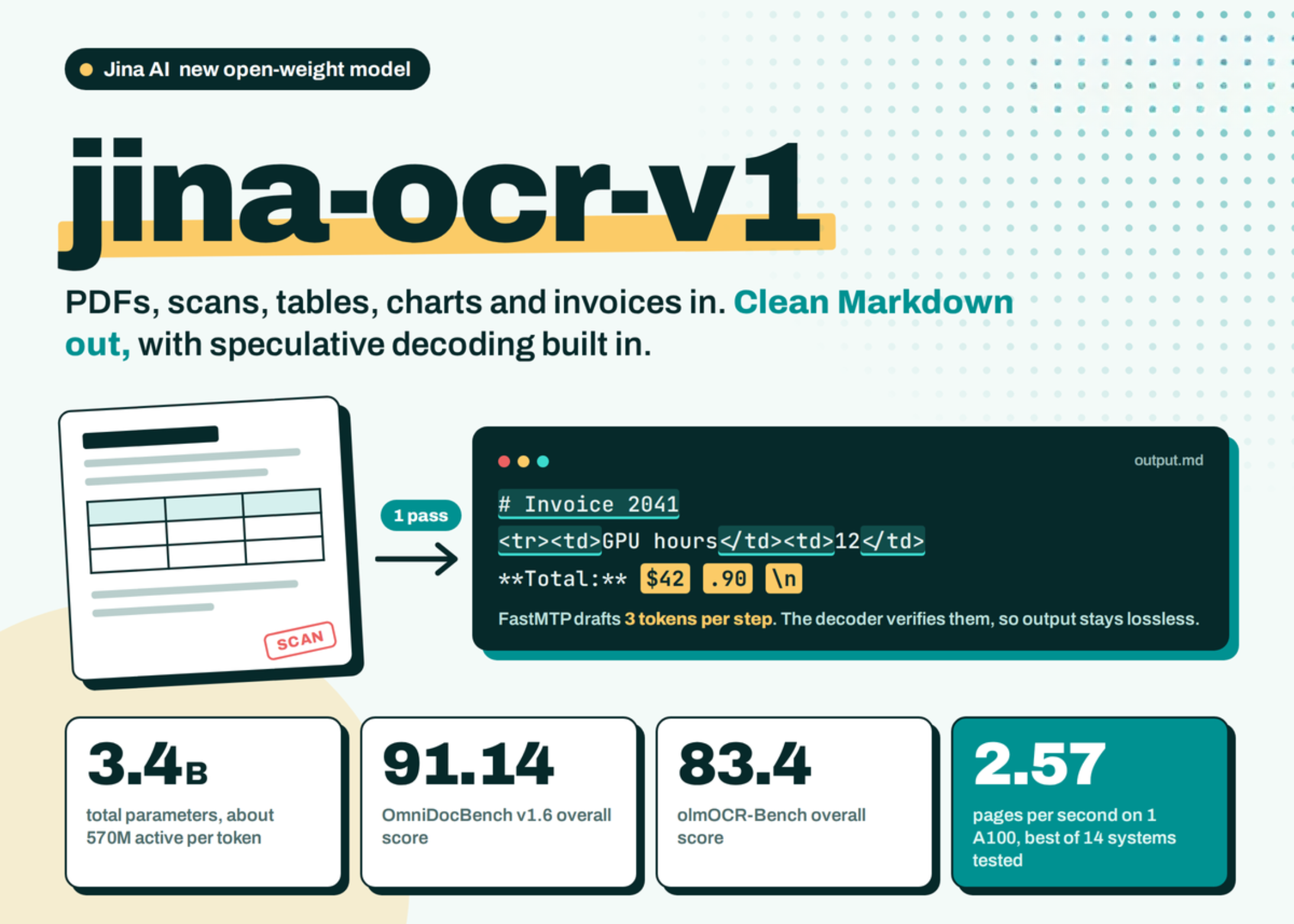
Jina AI Releases jina-ocr-v1: A 3.4B MoE Document Parser With Built-In Speculative Decoding for Low-Budget GPUs
Jina AI, part of Elastic, has released jina-ocr-v1, an end-to-end visual document parser. It takes PDFs, scans, tables, charts or invoices and returns clean Markdown in 1 pass. The model has 3.4B total parameters, with about 570M decoder parameters active per token. A speculative decoding head ships inside the checkpoint. Jina AI built it to serve on low-budget GPUs such as the NVIDIA L4. The technical report lists 91.14 on OmniDocBench v1.6 and 83.4 on olmOCR-Bench. Is it deployable? Yes, f
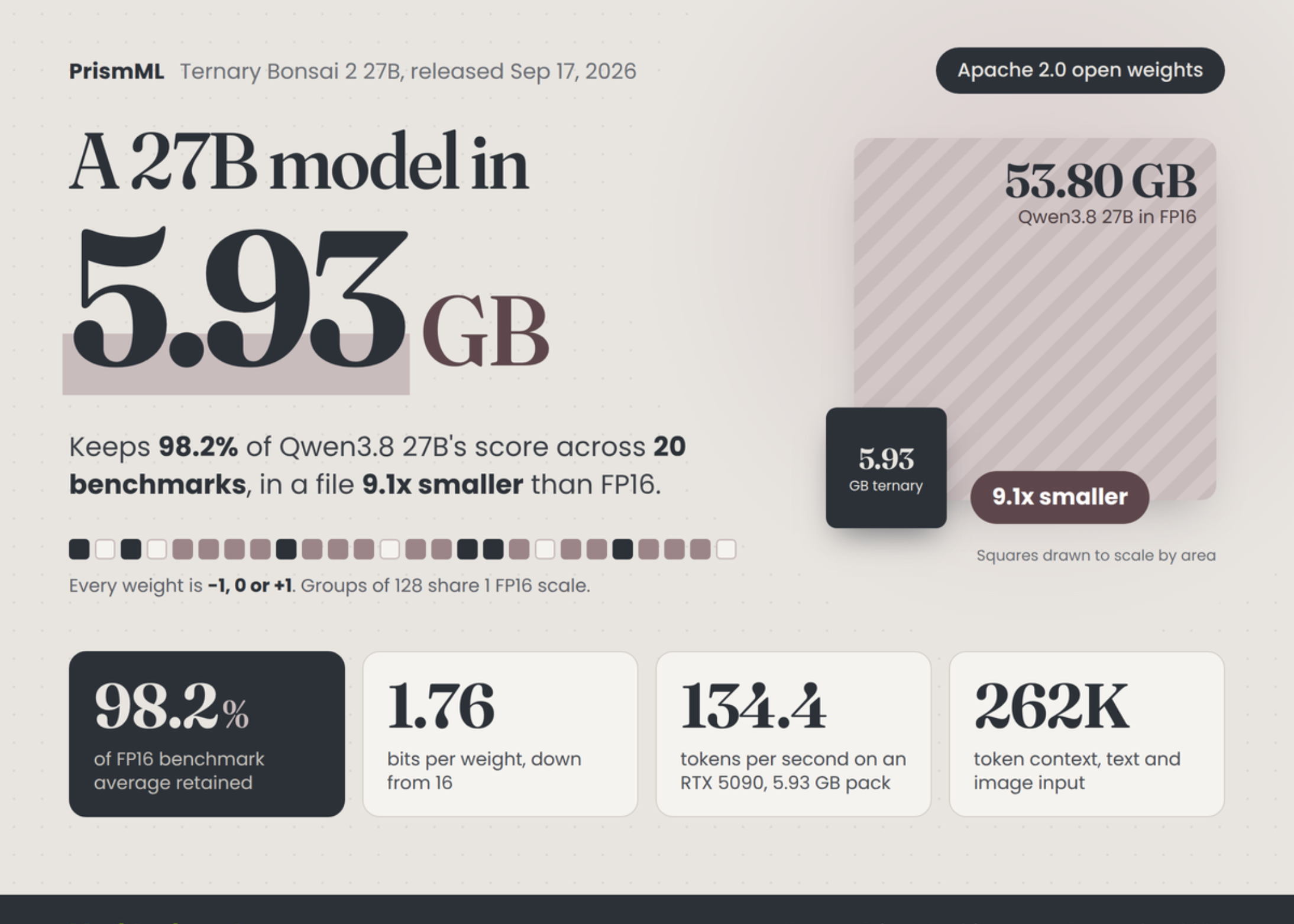
PrismML Releases Ternary Bonsai 2 27B: A 5.9 GB Apache 2.0 Model Retaining 98.2% of Qwen3.8 27B Performance
PrismML has released Ternary Bonsai 2 27B, a ternary-weight version of Qwen3.8 27B. The language model occupies 5.93 GB, against 53.80 GB in FP16. PrismML reports that it keeps 98.2% of the parent model’s average across 20 benchmarks. The model accepts text and images and supports a 262K-token context. PrismML demos it driving Cline coding agents and computer use on an RTX 5090. It arrives 2 months after the first Bonsai 27B, whose ternary variant retained about 95%. Is it deployable?
Relevant courses
Want to go deeper than the news? Explore live, cohort-based AI courses taught by practitioners.
Browse AI courses on MavenGet Agent5 in your inbox
The AI stories worth your attention, and a way to test your read. Free, no spam.