
Tencent introduces Hy4 model with computer-use abilities
SiliconANGLE: Tencent releases Hy4, powerful frontier LLM introducing visual understanding and computer use
Tencent Holdings Ltd. today introduced Hy4, a new large language model that adds computer-use capabilities for the first time, using advanced visual understanding, reasoning and tool-calling to deliver long-horizon agentic performance. The company said the model marks a significant leap in performance over its Hy4 Preview, which arrived August 28, weighing in at 770 billion parameters with 49 […] The post Tencent releases Hy4, powerful frontier LLM introducing visual understanding and comp
Get smart on it
Tencent introduced a new large language model called Hy4 that adds computer-use capabilities through visual understanding and reasoning for the first time. The model improved substantially over its preview version in areas like instruction following, long-context understanding, and complex workplace tasks including web development, document work, and game development. It maintains a 1 million token context window and costs approximately $0.90 per million input tokens, with the company planning to release model weights and system cards soon as part of open-source AI development.
Relevant courses
Want to go deeper than the news? Explore live, cohort-based AI courses taught by practitioners.
Browse AI courses on MavenRelated news

Daybreak Red is now available in AWS GovCloud (US-East)
Daybreak Red brings GPT-5.6 Cyber to approved customers in AWS GovCloud (US-East) through Amazon Bedrock for authorized cybersecurity work.
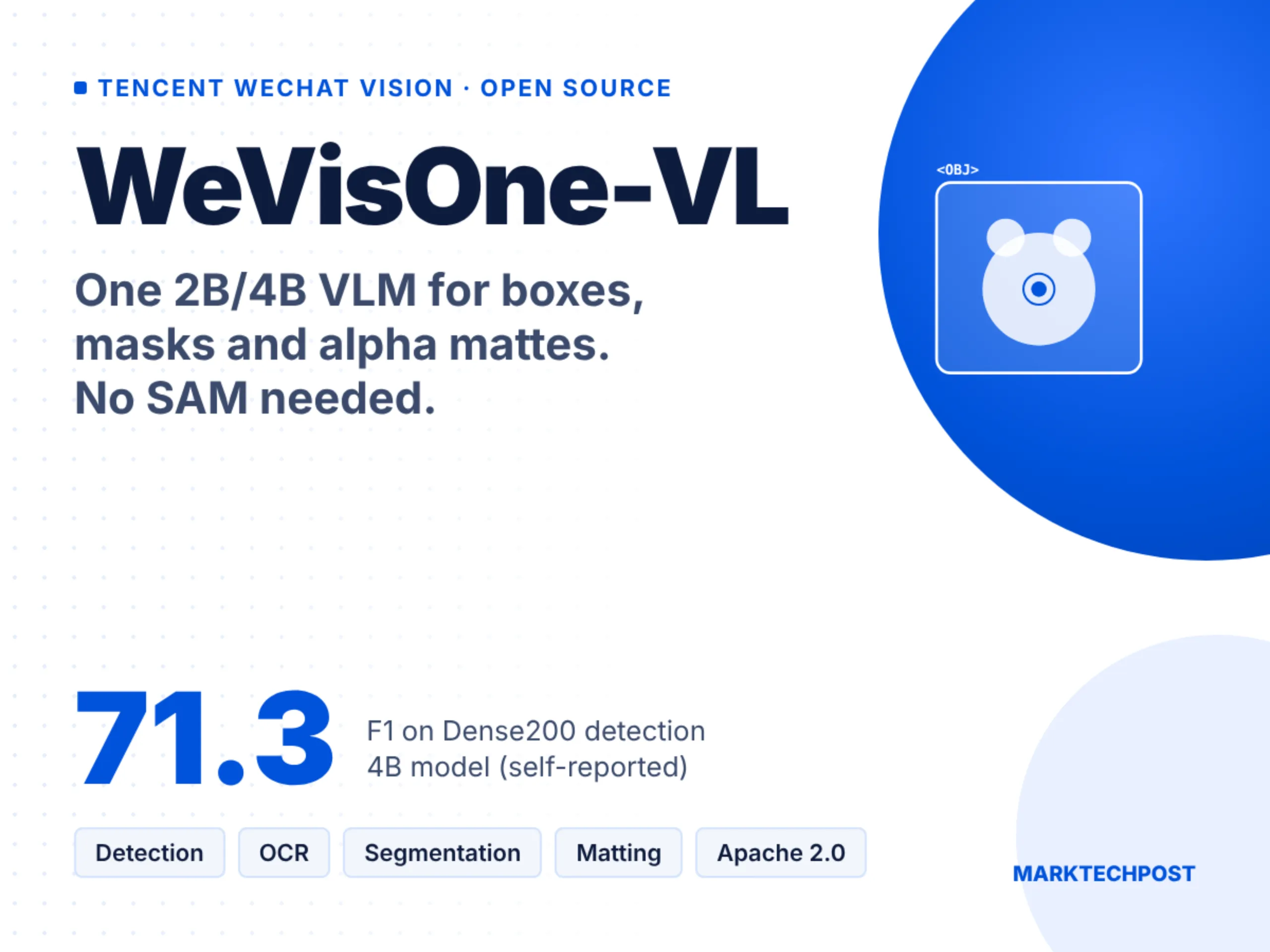
Tencent WeVisOne-VL Unifies Detection, OCR, Segmentation and Matting
Tencent’s WeChat Vision team has released WeVisOne-VL, an open vision language model in 2B and 4B sizes. The WeVisOne-VL vision language model handles detection, referring, counting, pointing, OCR, segmentation and alpha matting in one model. Pixel outputs come from a 9.6M-parameter decoder, so no separate SAM is needed. It also answers “None” when a queried object is absent. For developers, that can replace a detector, an OCR engine and a segmenter with one model. TL;DR
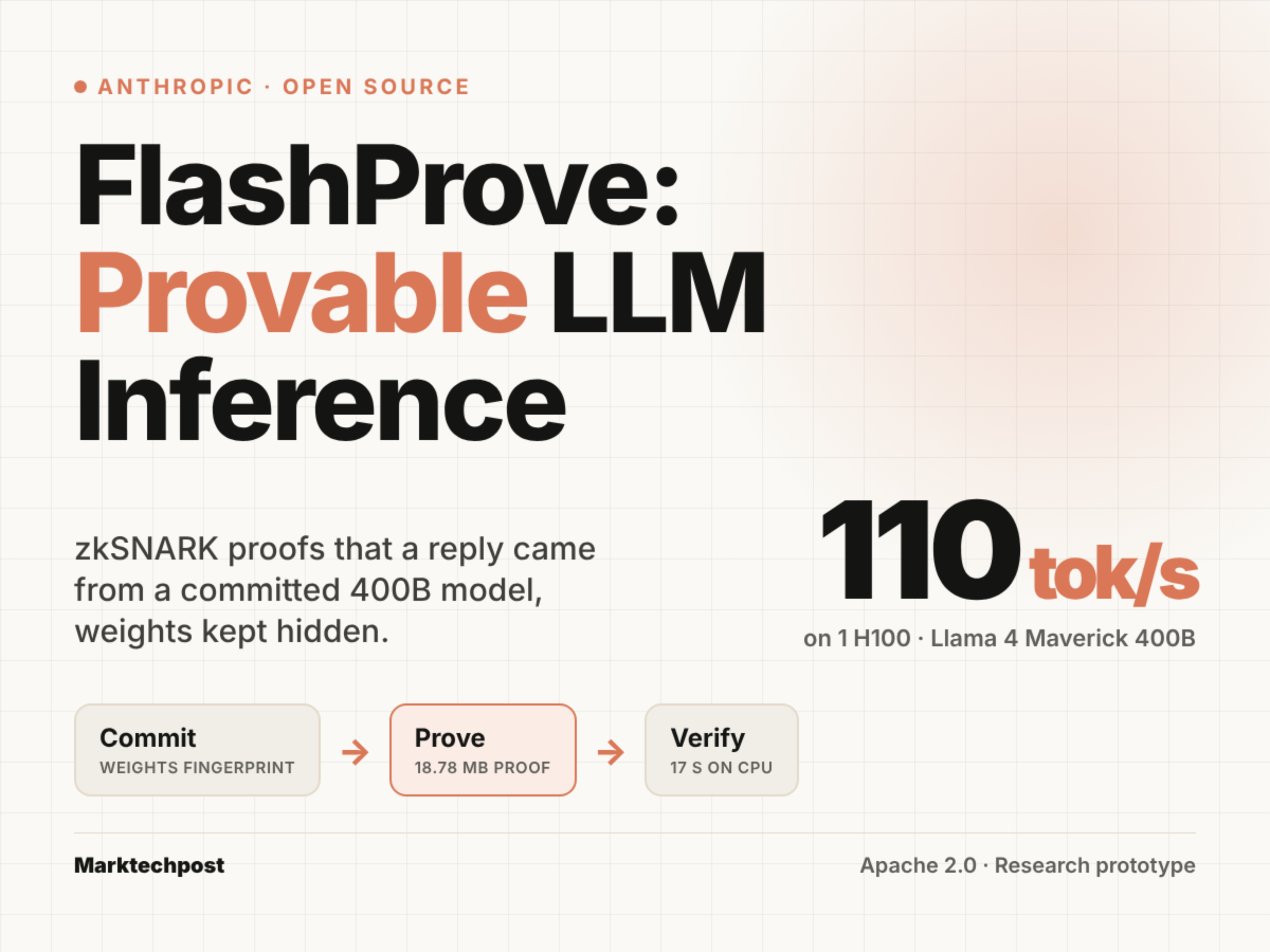
Anthropic Releases FlashProve: Cryptographic Proofs That a Reply Came From Committed Weights
Anthropic’s Frontier Red Team has released FlashProve, an open-source research prototype for provable inference. FlashProve is a zkSNARK system from Anthropic that proves a reply came from a committed model. The proof reveals nothing about the model weights. On Llama 4 Maverick, a 400B mixture-of-experts model, it proves about 110 tokens/second on 1 H100. For developers, this targets a real gap: today you cannot check which model actually answered your API call. TL;DR Size: Proves

42AI comes out of stealth with $62.5M and a world model that can ‘predict human behavior’
Here's a question straight out of sci-fi: What if AI could predict what you were going to do before you decided to, even in a completely new situation?
Also reported by SiliconANGLE
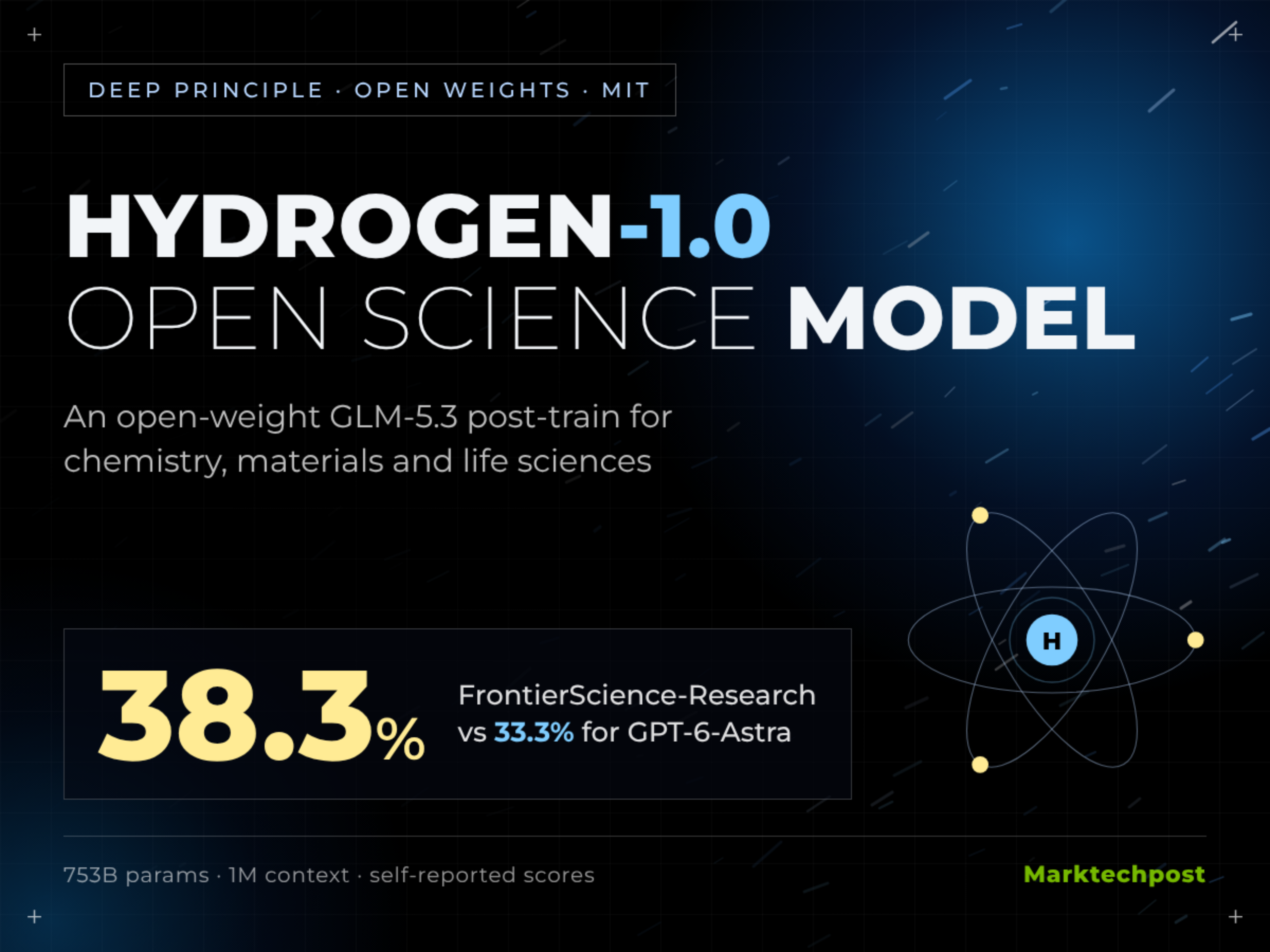
Deep Principle Releases Hydrogen-1.0: A 753B Open-Weight Model for Scientific Discovery
Deep Principle has released Hydrogen-1.0, an open-weight scientific model for chemistry, materials science and life sciences. It is built by post-training Z.ai’s GLM-5.3 on domain data, laboratory records and agent discovery trajectories. For developers, it offers open weights that report a FrontierScience-Research win over GPT-6-Astra. The weights ship under the MIT License. TL;DR Size: 753B parameters (MoE, ~40B active per the GLM-5.3 base), 1M-token context, 128K max output.

OpenAI sets new behavioral guidelines for AI models that have already proven hard to control
OpenAI has updated its Model Spec, restructuring its AI behavior guidelines around five core values, including faithfulness to human intent and correctability. GPT models should now draw on conversation history to figure out what users actually want and disclose their own assumptions. Whether the models follow these rules is another matter. The article OpenAI sets new behavioral guidelines for AI models that have already proven hard to control appeared first on The Decoder.