
Higgsfield takes AI video from 1 minute to over 10
Higgsfield brings creators longer videos with GPT-6 Astra, precise visuals with GPT-Image-2.5, and a path to voice filmmaking with GPT-Live.
Get smart on it
A startup is using OpenAI's AI models to extend the length of AI-generated videos from approximately one minute to over ten minutes, while also improving image quality and enabling faster creative workflows. The longer video capability addresses a key challenge in creative AI: maintaining visual consistency across extended content. This matters because it allows smaller creative teams and individual creators to produce professional-quality video and image content that previously required larger production budgets and teams. The startup's approach combines multiple AI tools to handle repetitive tasks, complex 3D modeling work, and code generation, reducing the manual effort needed to move from creative concept to finished product.
Relevant courses
Want to go deeper than the news? Explore live, cohort-based AI courses taught by practitioners.
Browse AI courses on MavenRelated news

Gemini 4 Argon: Built to solve your hardest problems
The new model aims to handle complex reasoning tasks where current systems often struggle or fail completely.
Also reported by The Verge, Ars Technica and The Decoder

Meta releases its first frontier model, Muse Wonder
Meta's Superintelligence Lab released a pair of new state-of-the-art models on Monday, Muse Wonder and Muse Wonder Full, the company's first attempt at a frontier model.
Also reported by The Verge, Wired AI, The Decoder and SiliconANGLE

The maker of non-text AI model Jev valued at $7.5B just weeks after launch
What has users and large corporations so excited about Jev is TypeSafe’s claim that it works significantly faster and uses far fewer tokens than LLMs.
Alibaba Qwen Introduces QwenGyre: Elastic Reinforcement Learning RL for XLong-Horizon Agents
Alibaba’s Qwen team has introduced QwenGyre, an elastic reinforcement learning RL framework for extreme-long-horizon agent training. QwenGyre is an online reinforcement learning system from Alibaba that trains coding agents through unmodified, black-box harnesses. It targets rollouts that run for hours and process close to 1M tokens. The QwenGyre elastic RL framework was used on Qwen’s flagship Qwen 3.8 2.4T model. It rests on 2 core ideas. It moves idle GPUs between rollout and tra
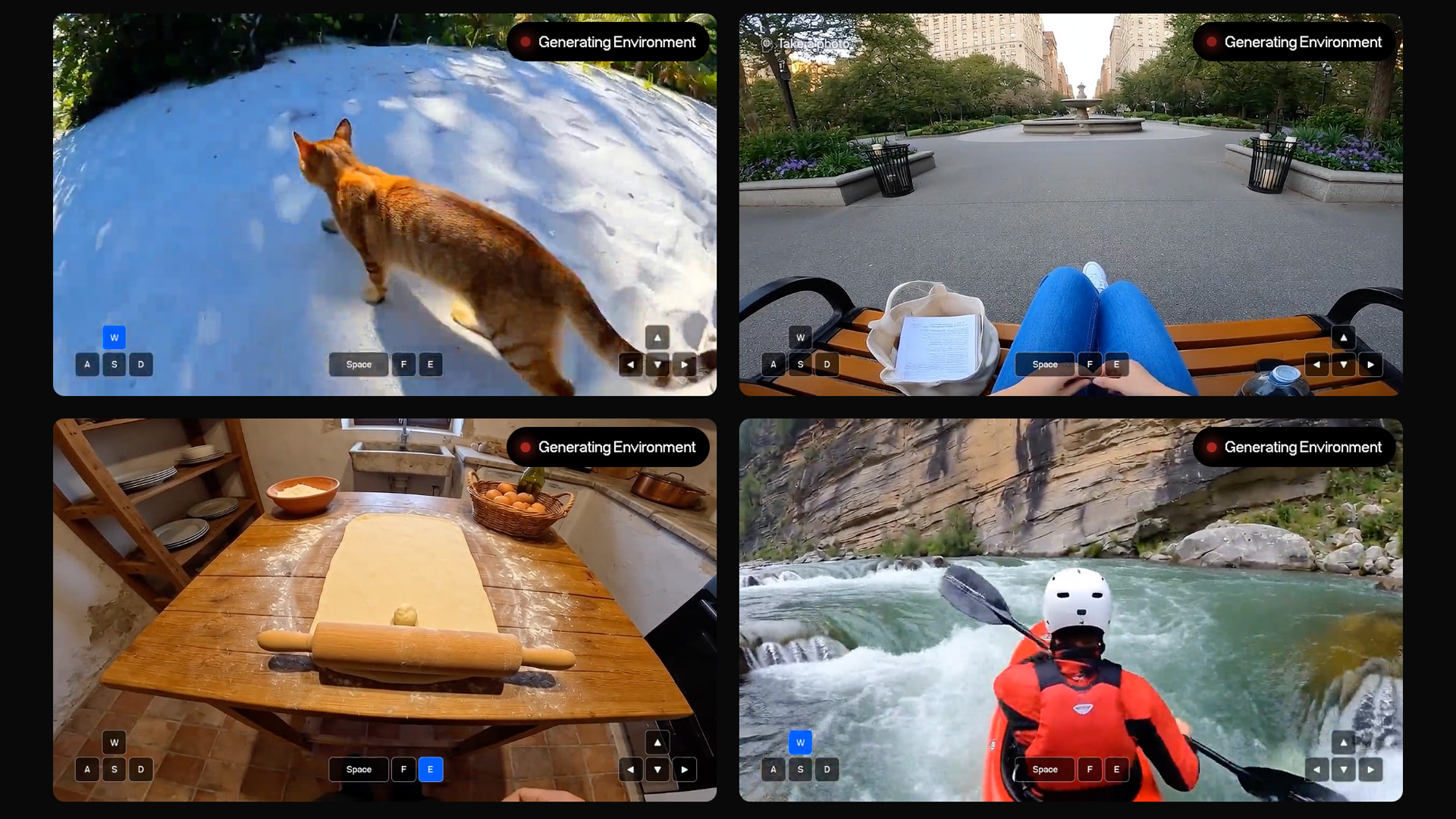
Odyssey-3 is a new generative world model that you can try for free
Odyssey is making its world model Odyssey-3 available as a public research preview. The 14-billion-parameter model generates interactive environments from text prompts in real time and can reportedly control robots, drones, and even GTA V. Odyssey claims top scores on physics benchmarks, though the methodology behind those results has limits. The article Odyssey-3 is a new generative world model that you can try for free appeared first on The Decoder.
OpenAI Decisions API Hits Public Beta With 10x Faster Typed Answers
OpenAI has released the Decisions API in public beta. It turns text and images into typed answers your code can branch on. OpenAI team states the OpenAI Decisions API runs about 10x faster than the Responses API. It targets a common pattern: prompt an LLM, then parse its text into a label. TL;DR Size: GPT-6 Luna parameter count is not disclosed. Its model card lists a 1,050,000-token context window. Runs on: OpenAI-hosted API only, via POST /v1/decisions. No open weights, no self-host