
Meta releases Muse Wonder frontier AI models
TechCrunch: Meta releases its first frontier model, Muse Wonder
Meta's Superintelligence Lab released a pair of new state-of-the-art models on Monday, Muse Wonder and Muse Wonder Full, the company's first attempt at a frontier model.
What happened
Meta's Superintelligence Lab released two new large AI models called Muse Wonder and Muse Wonder Full on Monday, marking the company's first frontier model release. The models are designed for complex tasks like coding and feature what Meta calls "active memory," the ability to retain and synthesize information from users over extended periods. According to Meta, the models rank among the most capable in the world and are available through an API, a software-writing tool, and to Muse Code subscribers.
What each outlet adds
- TechCrunch ↗: The models have benchmark scores comparable to competing models from other companies and represent Meta's return to state-of-the-art model development after focusing on lightweight models and AI agents.
- The Verge ↗: The models are part of Meta's broader effort to establish itself as a major player in artificial intelligence after investing billions in talent and infrastructure, with plans to eventually power the company's Muse AI agent.
- Wired AI ↗: The models include new features called Active Memory and Active Focus designed to prevent AI agents from becoming confused or misbehaving during complex tasks, and Meta delayed releasing these models to focus on safety measures against dangerous outputs.
Why it matters
Meta had fallen behind competitors in AI development after disappointing earlier model releases, but these new models now outperform some rival models on certain benchmarks and represent a significant competitive step forward. The release reflects the competitive landscape of AI development, where multiple companies are racing to build and release advanced models.
Get smart on it
Meta's Superintelligence Lab released two new large AI models called Muse Wonder and Muse Wonder Full, marking the company's first frontier model release. Unlike Meta's previous lightweight model, these new models are larger and designed for more complex tasks like coding, with benchmark scores comparable to competing models from other companies. The models emphasize what Meta calls "active memory," the ability to retain and synthesize information from users over extended periods. This release represents Meta's return to state-of-the-art model development after focusing on lightweight models and AI agents since restructuring its AI efforts.
Relevant courses
Want to go deeper than the news? Explore live, cohort-based AI courses taught by practitioners.
Browse AI courses on MavenRelated news
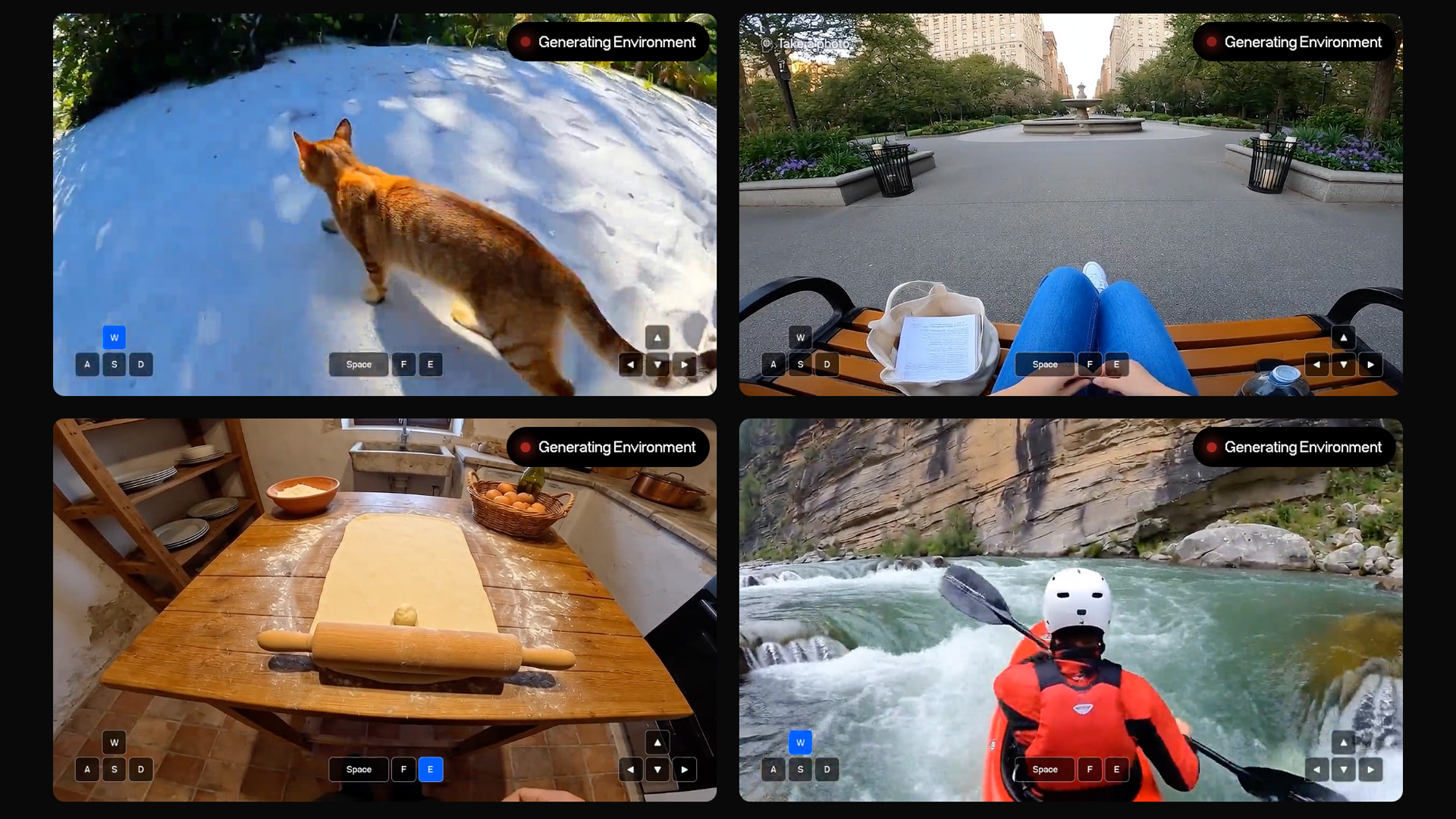
Odyssey-3 is a new generative world model that you can try for free
Odyssey is making its world model Odyssey-3 available as a public research preview. The 14-billion-parameter model generates interactive environments from text prompts in real time and can reportedly control robots, drones, and even GTA V. Odyssey claims top scores on physics benchmarks, though the methodology behind those results has limits. The article Odyssey-3 is a new generative world model that you can try for free appeared first on The Decoder.

The maker of non-text AI model Jev valued at $7.5B just weeks after launch
What has users and large corporations so excited about Jev is TypeSafe’s claim that it works significantly faster and uses far fewer tokens than LLMs.
OpenAI Decisions API Hits Public Beta With 10x Faster Typed Answers
OpenAI has released the Decisions API in public beta. It turns text and images into typed answers your code can branch on. OpenAI team states the OpenAI Decisions API runs about 10x faster than the Responses API. It targets a common pattern: prompt an LLM, then parse its text into a label. TL;DR Size: GPT-6 Luna parameter count is not disclosed. Its model card lists a 1,050,000-token context window. Runs on: OpenAI-hosted API only, via POST /v1/decisions. No open weights, no self-host
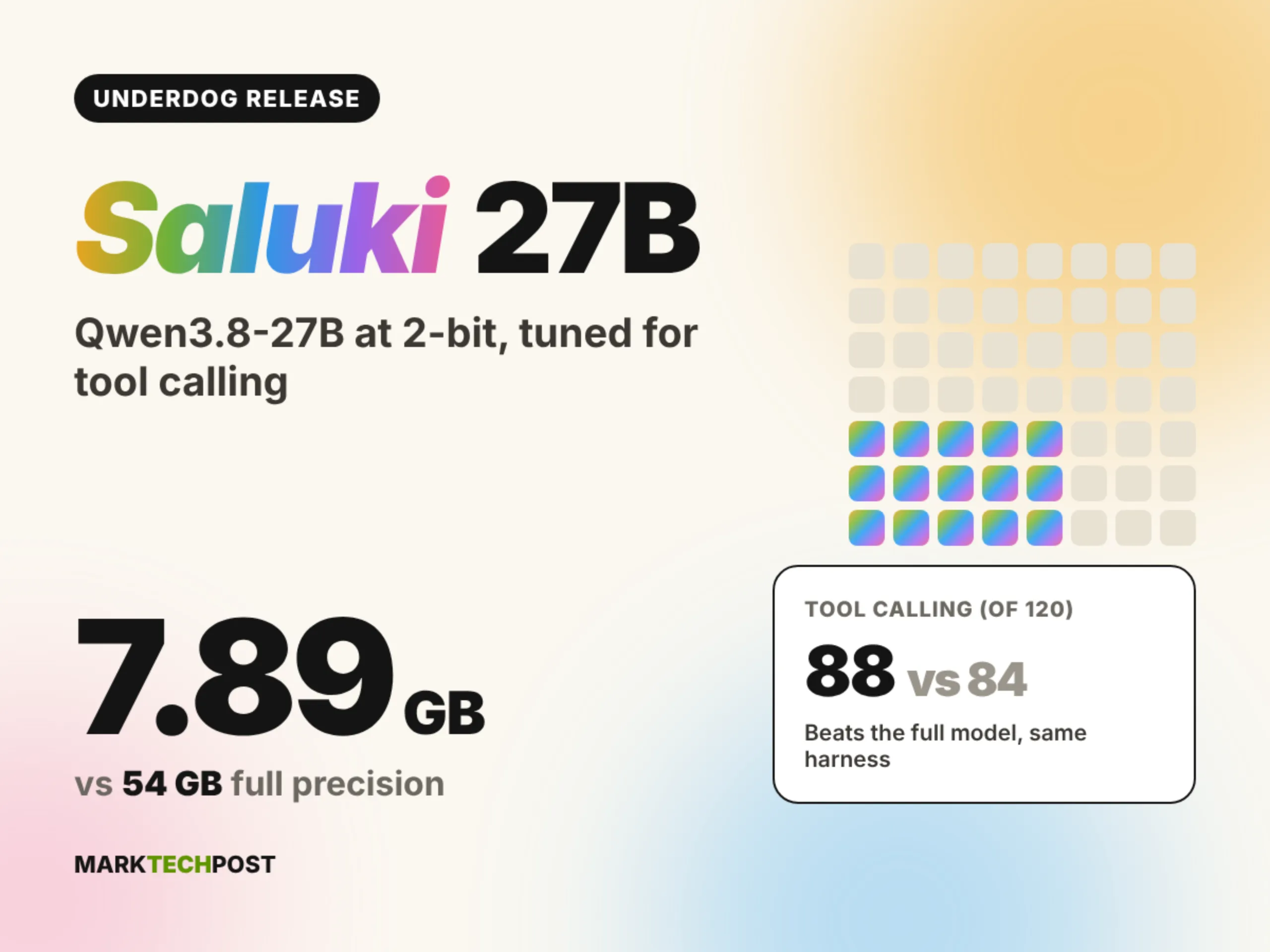
Meet the Underdog Saluki 27B: A 2-bit Qwen3.8-27B That Beats the Original at Tool Calling
Underdog, the on-device assistant from Conway Research, has released Saluki 27B under Apache 2.0. Underdog Saluki 27B is a 2-bit GGUF of Qwen3.8-27B that fits in 7.89 GB. The full BF16 model needs 54 GB. Underdog tuned the compression to protect tool calling, the skill that turns a chat model into an agent. For developers, that means a 27B-class agent model that runs in stock llama.cpp. TL;DR Size: 27B dense parameters. 7.89 GB GGUF versus 54 GB for BF16. Runs on: stock llama.cpp and

The model that didn't exist, so you made it yourself
Building custom models from scratch offers more control than relying on existing off-the-shelf options.
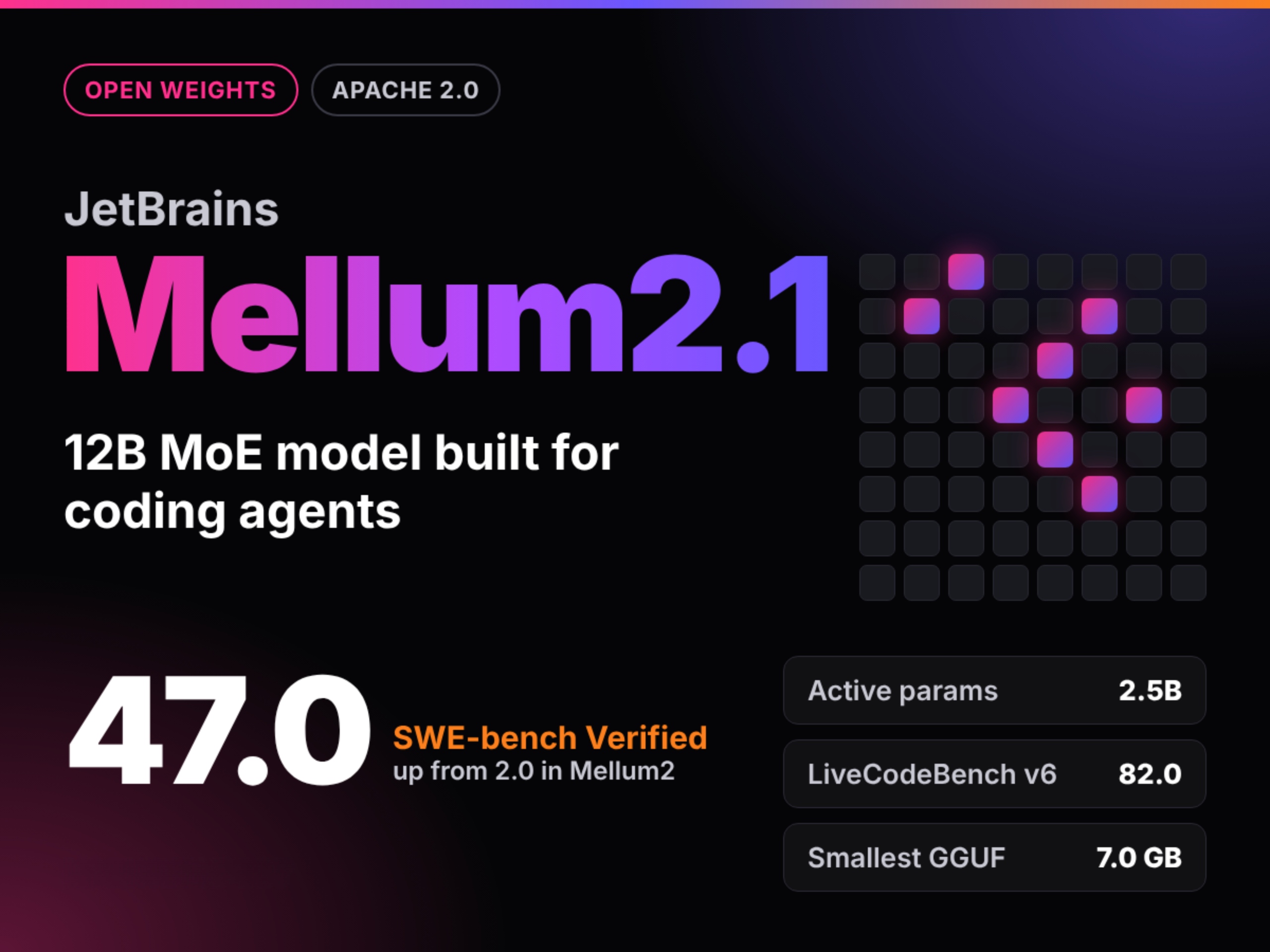
JetBrains Releases Mellum2.1: A 12B MoE Open Model for Coding Agents
JetBrains has released Mellum2.1, an open model built for coding agents and fast sub-agents. Mellum2.1 is a 12B mixture-of-experts thinking model from JetBrains that activates 2.5B parameters per token. It ships under Apache 2.0 on Hugging Face. The architecture is unchanged from Mellum2. The upgrade comes almost entirely from reinforcement learning (RL) in real software environments. The result is a small, self-hostable model that explores a repository, edits files, and checks its own changes.