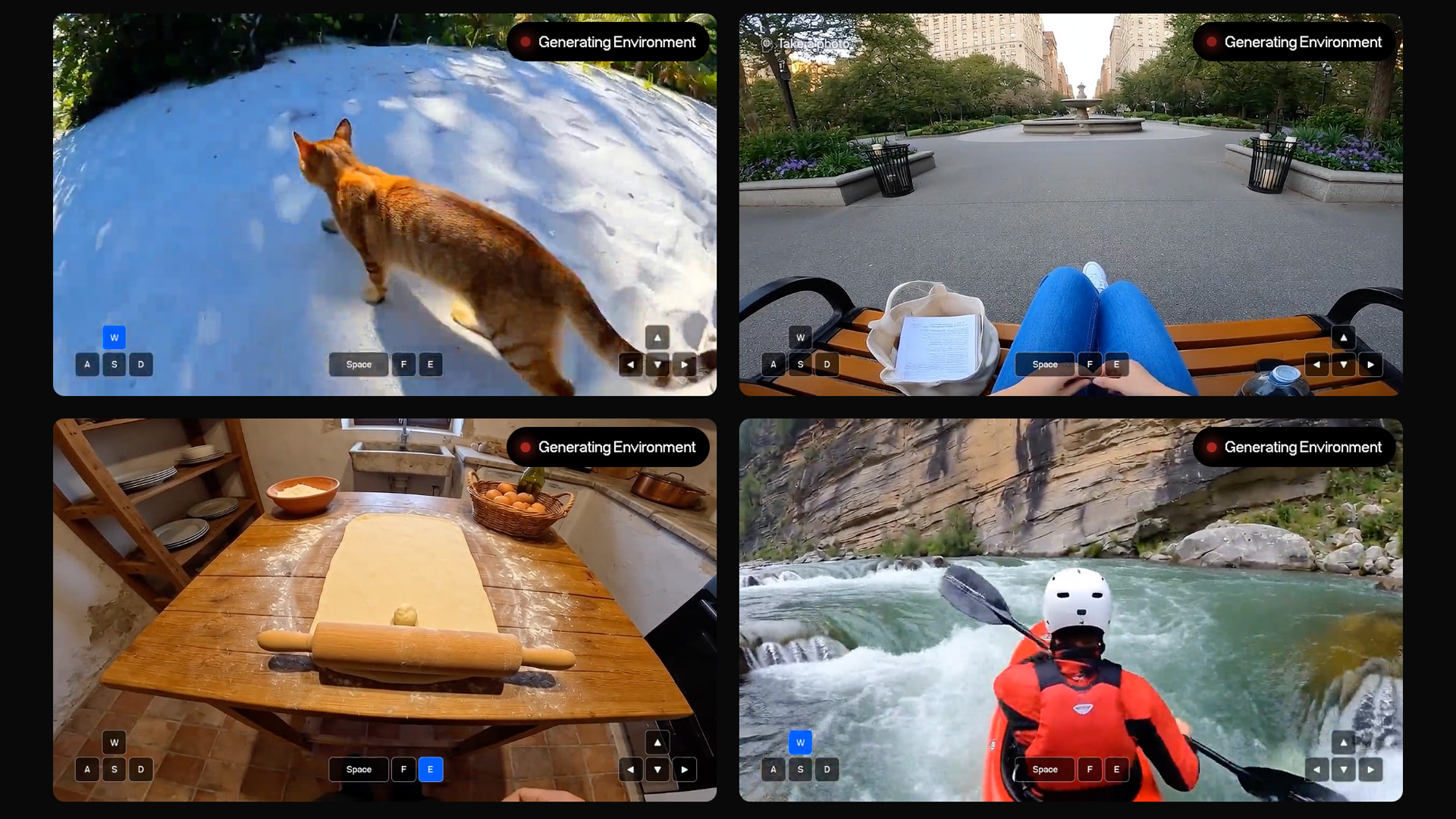
Odyssey-3 world model available for public preview
The Decoder: Odyssey-3 is a new generative world model that you can try for free
Odyssey is making its world model Odyssey-3 available as a public research preview. The 14-billion-parameter model generates interactive environments from text prompts in real time and can reportedly control robots, drones, and even GTA V. Odyssey claims top scores on physics benchmarks, though the methodology behind those results has limits. The article Odyssey-3 is a new generative world model that you can try for free appeared first on The Decoder.
Get smart on it
A California-based AI company has released a public preview of a generative world model that creates interactive environments from text descriptions in real time, allowing users to explore these worlds from different perspectives and trigger events. The model learns physical relationships and cause-and-effect from training data including internet videos, video game footage, and simulated physical interactions, then generates new video frames based on previous frames and user actions. Beyond interactive world generation, the model is designed to control different systems like robotic arms, drones, and video game characters by pairing it with specialized controllers for each application. World models aim to give AI systems an understanding of spatial and physical relationships, and this represents part of a broader industry race to develop such technology.
Explainer: How to Actually Read an AI Benchmark (Without Being Fooled)
Relevant courses
Want to go deeper than the news? Explore live, cohort-based AI courses taught by practitioners.
Browse AI courses on MavenRelated news

The maker of non-text AI model Jev valued at $7.5B just weeks after launch
What has users and large corporations so excited about Jev is TypeSafe’s claim that it works significantly faster and uses far fewer tokens than LLMs.
OpenAI Decisions API Hits Public Beta With 10x Faster Typed Answers
OpenAI has released the Decisions API in public beta. It turns text and images into typed answers your code can branch on. OpenAI team states the OpenAI Decisions API runs about 10x faster than the Responses API. It targets a common pattern: prompt an LLM, then parse its text into a label. TL;DR Size: GPT-6 Luna parameter count is not disclosed. Its model card lists a 1,050,000-token context window. Runs on: OpenAI-hosted API only, via POST /v1/decisions. No open weights, no self-host
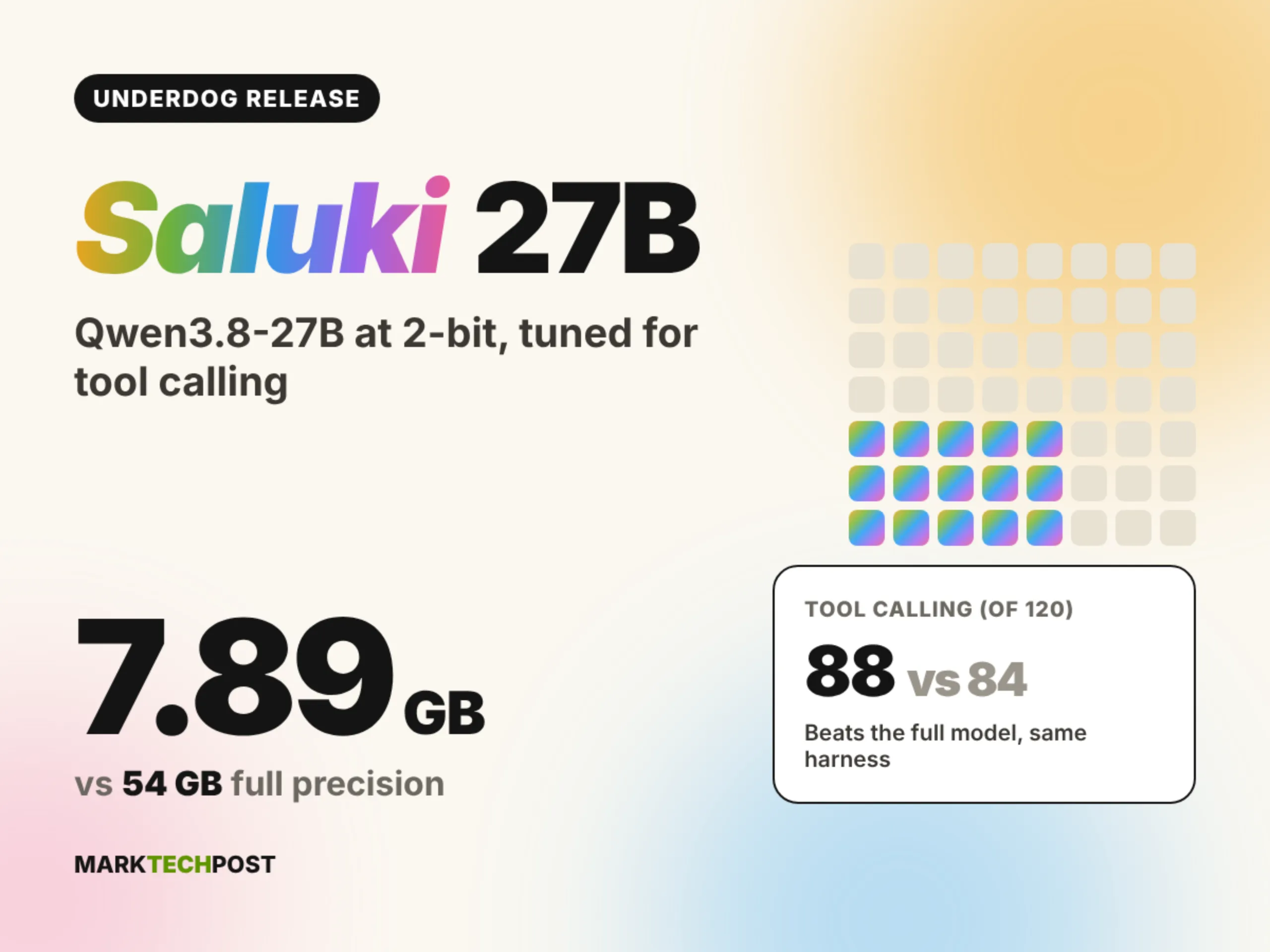
Meet the Underdog Saluki 27B: A 2-bit Qwen3.8-27B That Beats the Original at Tool Calling
Underdog, the on-device assistant from Conway Research, has released Saluki 27B under Apache 2.0. Underdog Saluki 27B is a 2-bit GGUF of Qwen3.8-27B that fits in 7.89 GB. The full BF16 model needs 54 GB. Underdog tuned the compression to protect tool calling, the skill that turns a chat model into an agent. For developers, that means a 27B-class agent model that runs in stock llama.cpp. TL;DR Size: 27B dense parameters. 7.89 GB GGUF versus 54 GB for BF16. Runs on: stock llama.cpp and

The model that didn't exist, so you made it yourself
Building custom models from scratch offers more control than relying on existing off-the-shelf options.
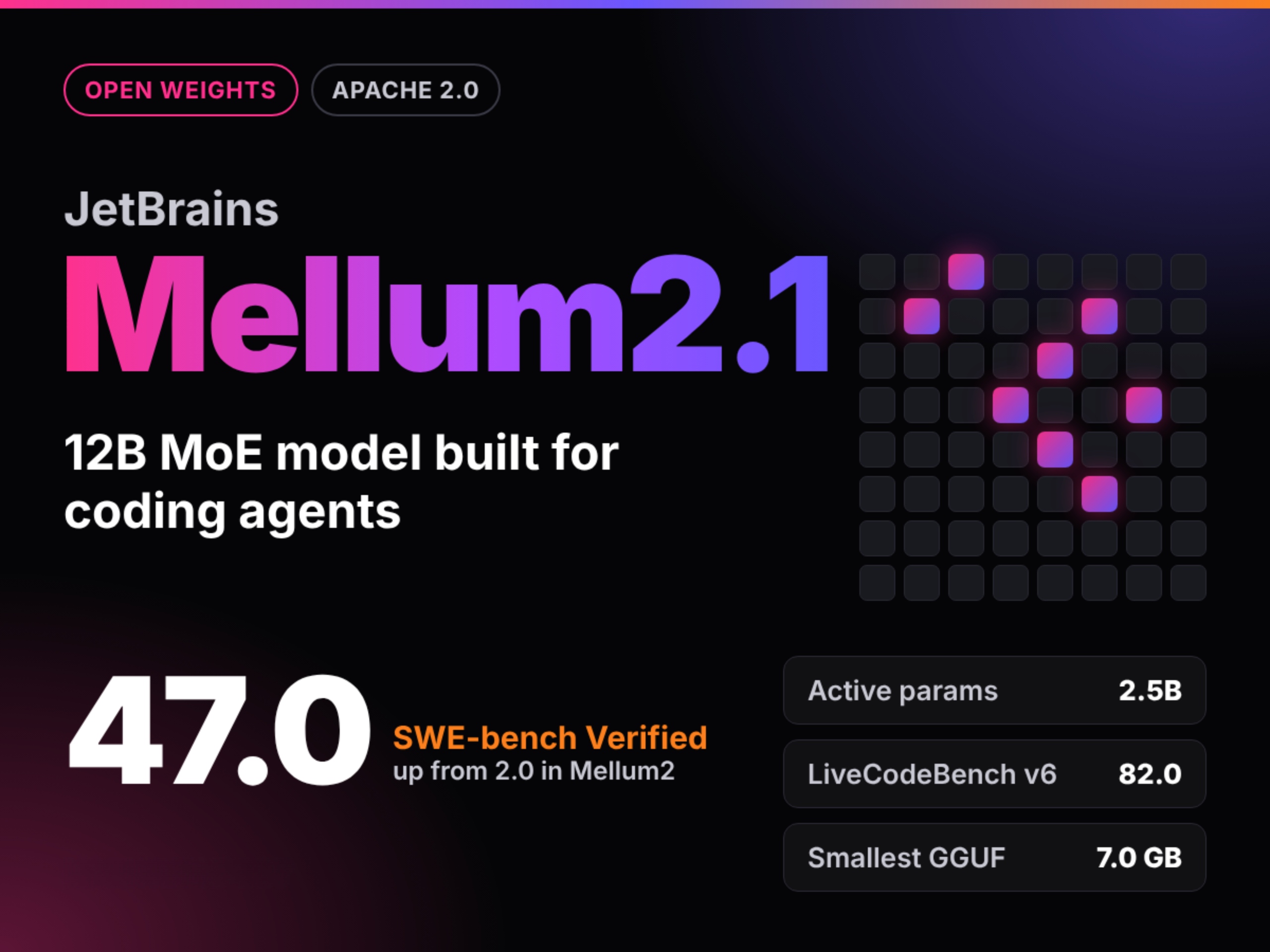
JetBrains Releases Mellum2.1: A 12B MoE Open Model for Coding Agents
JetBrains has released Mellum2.1, an open model built for coding agents and fast sub-agents. Mellum2.1 is a 12B mixture-of-experts thinking model from JetBrains that activates 2.5B parameters per token. It ships under Apache 2.0 on Hugging Face. The architecture is unchanged from Mellum2. The upgrade comes almost entirely from reinforcement learning (RL) in real software environments. The result is a small, self-hostable model that explores a repository, edits files, and checks its own changes.

Google’s AI note-taking app transcribes your meetings completely offline
Google has released an experimental note-taking app that can transcribe meetings and audio files entirely offline, as reported earlier by TechCrunch. The app, called Google AI Edge Foresight, is free to use and runs on macOS using the company's on-device EmbeddingGemma 2 model. Similar to AI note-taking apps like Granola and Wispr Flow, Foresight summarizes your meetings while providing a space where you can take your own notes. Google says you can jot down shorthand bullet poi