Why Apple’s camera-equipped AirPods may not be the ‘pervert pods’ consumers fear
Apple’s leaked camera-equipped AirPods might avoid the privacy pitfalls of other AI wearables by preventing users from recording photos and videos.
Get smart on it
Apple is reportedly developing camera-equipped AirPods that would allow users to interact with an upgraded Siri AI assistant by pointing at objects in their environment. The cameras would capture low-resolution visual information to assist Siri rather than record photos or videos, according to leaked footage and code found in a test version of Apple's operating system. This matters because camera-equipped wearables have raised privacy concerns about non-consensual recording, which conflicts with Apple's positioning as privacy-focused, though the company appears to be addressing this with transparency features like an LED indicator that lights up when visual data is shared to the cloud. The strategic goal is to reduce reliance on pulling out a phone throughout the day by embedding AI access into a commonly worn and socially acceptable device.
Related news

Meta, OpenAI and Uber Just Taught AI Agents to Talk First. What About When to Stay Quiet?
TL;DR: Meta’s Muse, OpenAI’s Dots and Uber’s driver assistant share one bet: the agent speaks first. That moves the hard problem from what to answer to when to interrupt, on which channel, and with what offer. Classic ML and new decision models can solve it. Three launches, one pattern Meta Muse (Sept 8). A personal agent that books, emails and keeps working with the app closed. It remembers details, makes unprompted suggestions and checks in for approval, in its own ap
IBM Brings Bob to Self-Hosted and Air-Gapped Environments: Agentic Software Development Without Moving Your Code
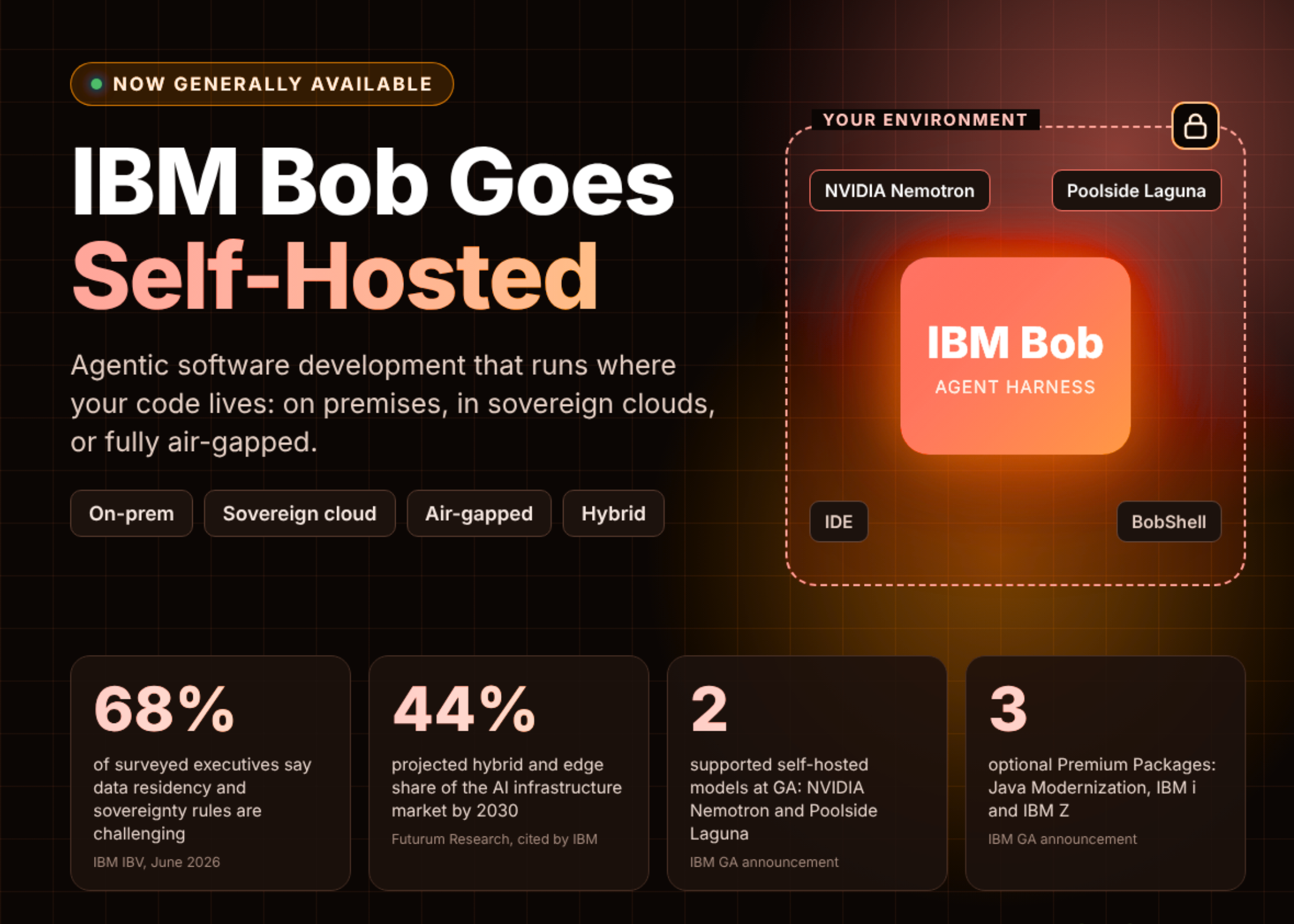
IBM has made a self-hosted deployment option for IBM Bob generally available. Bob is IBM’s agentic software development platform. It covers the full lifecycle: understanding code, planning work, executing changes and validating results. The new option lets enterprises run Bob on premises, in private or sovereign clouds, and in air-gapped networks. Is it deployable today? Yes. The self-hosted option is generally available to enterprise customers. You must source, license and host a sup