Boston Dynamics brings its legged robots to the FIFA World Cup
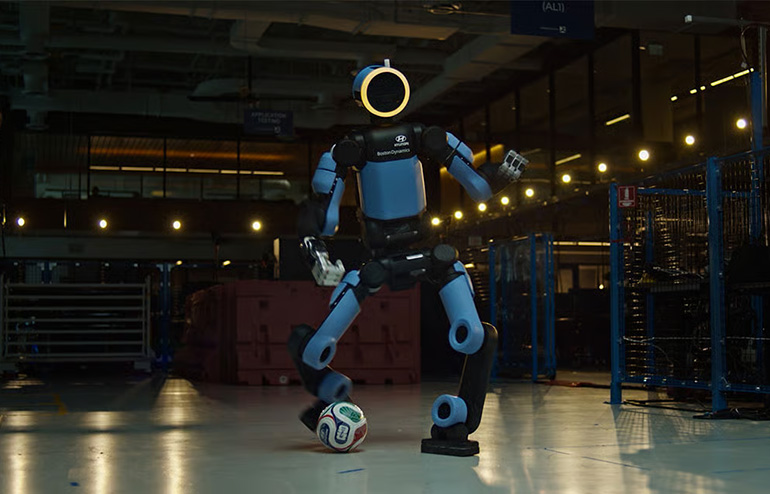
Atlas demonstrates the deceptive Ghost Rabona kick. Source: Hyundai The FIFA World Cup is not only a showcase for global athletic competition and camaraderie; it’s also an opportunity for leading legged robots to strut their stuff. Boston Dynamics Inc. has taught its Atlas humanoid to kick a soccer ball while its Spot robots support security operations at tournament venues. Hyundai Motor Co., which acquired Boston Dynamics in 2021, has expanded its 27-year partnership with FIFA World Cup.
Make your prediction
Will Boston Dynamics Atlas perform a live soccer demonstration at the 2026 FIFA World Cup venue by July 20?
Resolves by Jul 20, 2026
Your prediction
50% · 50/50 coin flip
NOYES
Get smart on it
Boston Dynamics has brought its legged robots to the FIFA World Cup, with its Atlas humanoid demonstrating soccer trick shots and its Spot quadruped supporting security operations at tournament venues. Atlas was trained using reinforcement learning and motion capture data to perform complex moves like the "Ghost Rabona" kick, which proved more challenging than previous athletic maneuvers because it required interaction with an object and the ground. Spot is patrolling stadium perimeters equipped with cameras and thermal imaging to detect hazards and suspicious packages, operating either autonomously or through remote control. The company framed the World Cup participation as both a demonstration of robot capabilities and an opportunity to make the public more comfortable with robots, while acknowledging that current technology remains far from what human soccer players can accomplish.
Related news
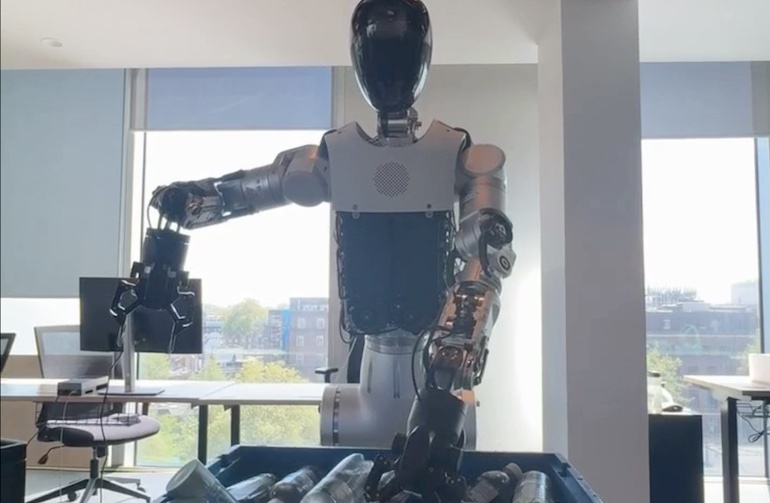
Humanoid says KinetIQ Ascend reinforcement learning approaches human-level dexterity
Arm drift after long reinforcement training caused by action prefix drift. Source: Humanoid Robotic manipulation is making progress with artificial intelligence. London-based Humanoid last week introduced KinetIQ Ascend, its reinforcement learning, or RL, approach designed to reach 99.9% manipulation reliability at human speed and beyond. “The humanoid race is becoming a question of scale, and real-world RL can be a core part of the answer,” stated Jarad Cannon, chief technology offi
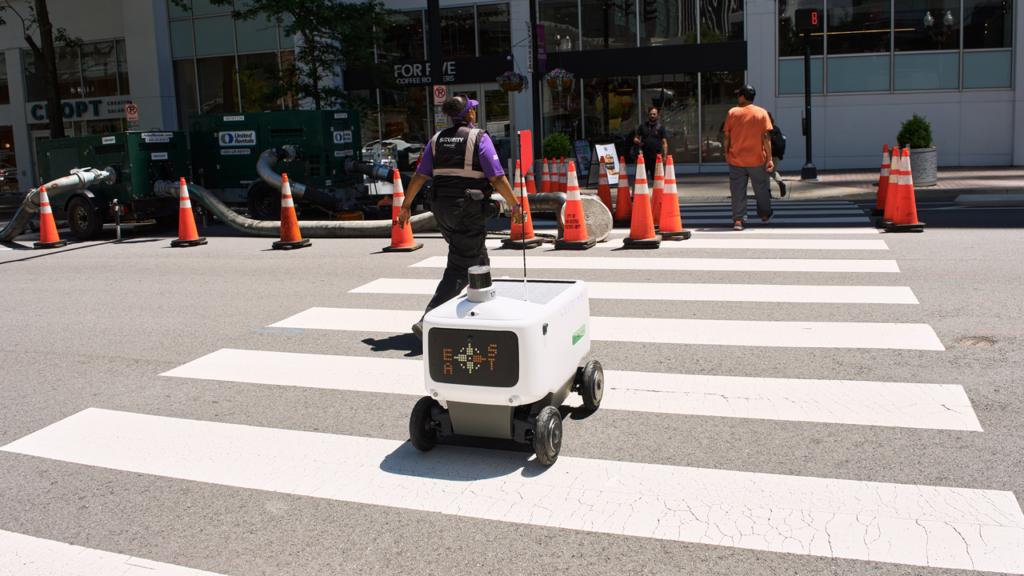
Context is king: How Avride uses cloud VLMs as a safety net for delivery robots
Avride has integrated vision-language models into its delivery robots. Source: Avride Avride Inc. has built its delivery robots for high level of autonomy. Every single day, hundreds of them navigate busy city streets entirely on their own, processing complex sensor data locally on their onboard compute units. Our sidewalk robots run with minimal human involvement, reliably handling standard urban maneuvers, pedestrians, and traffic lights on their own. However, efficiently managing the mechanic