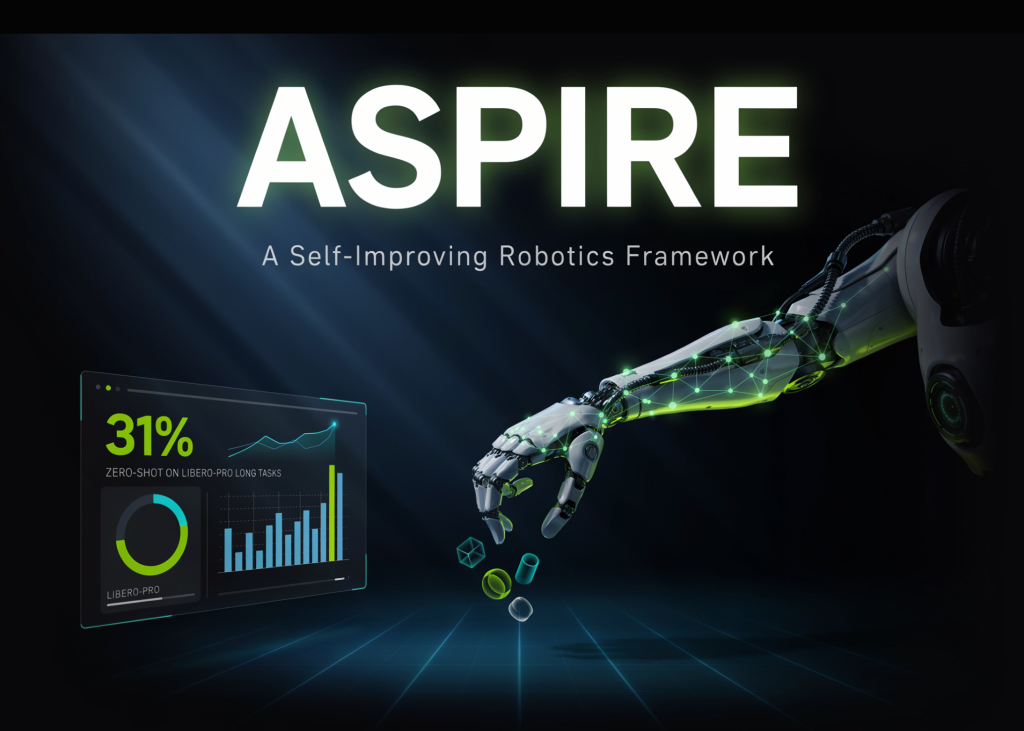
NVIDIA AI Introduces ASPIRE: A Self-Improving Robotics Framework Reaching 31% Zero-Shot on LIBERO-Pro Long Tasks
Traditional robot programming is hard to scale. It requires orchestrating multimodal perception, physical contact dynamics, diverse configurations, and execution failures by hand. Code-as-policy systems let language models compose these into executable robot programs. That makes robot behavior inspectable, editable, and debuggable. But existing robotic coding agents run in naive execution environments. They receive only coarse, task-level feedback. A failed rollout signals that the task fail
Get smart on it
ASPIRE is a continual learning system that enables robots to write and refine their own control programs while building a reusable library of validated fixes. Traditional robot programming requires manually handling perception, motion planning, grasping, and failure cases, but code-as-policy systems let language models compose these into executable programs that can be inspected and debugged. ASPIRE improves upon existing coding agents by providing detailed per-primitive feedback about what specifically failed during execution, rather than just coarse task-level signals, and it preserves solutions as transferable skills instead of discarding them after each task. In benchmarks, ASPIRE achieved 72% on LIBERO-Pro overall and notably reached 31% on held-out long-horizon tasks without prior training on them, compared to about 4% for previous methods.
Related news

Automate 2026 show recap
The Robot Report Podcast · Automate 2026 Show Recap In Episode 251 of The Robot Report Podcast, hosts Steve Crowe and Mike Oitzman are joined by special guest Sarah Wynn, senior editor at sibling site Packaging OEM, to chat about their experiences on the show floor at Automate last month. They describe the robotics industry’s shift away from early-stage humanoid hype toward the practical, real-world deployment of physical AI and edge computing. The editors also discuss how software orches
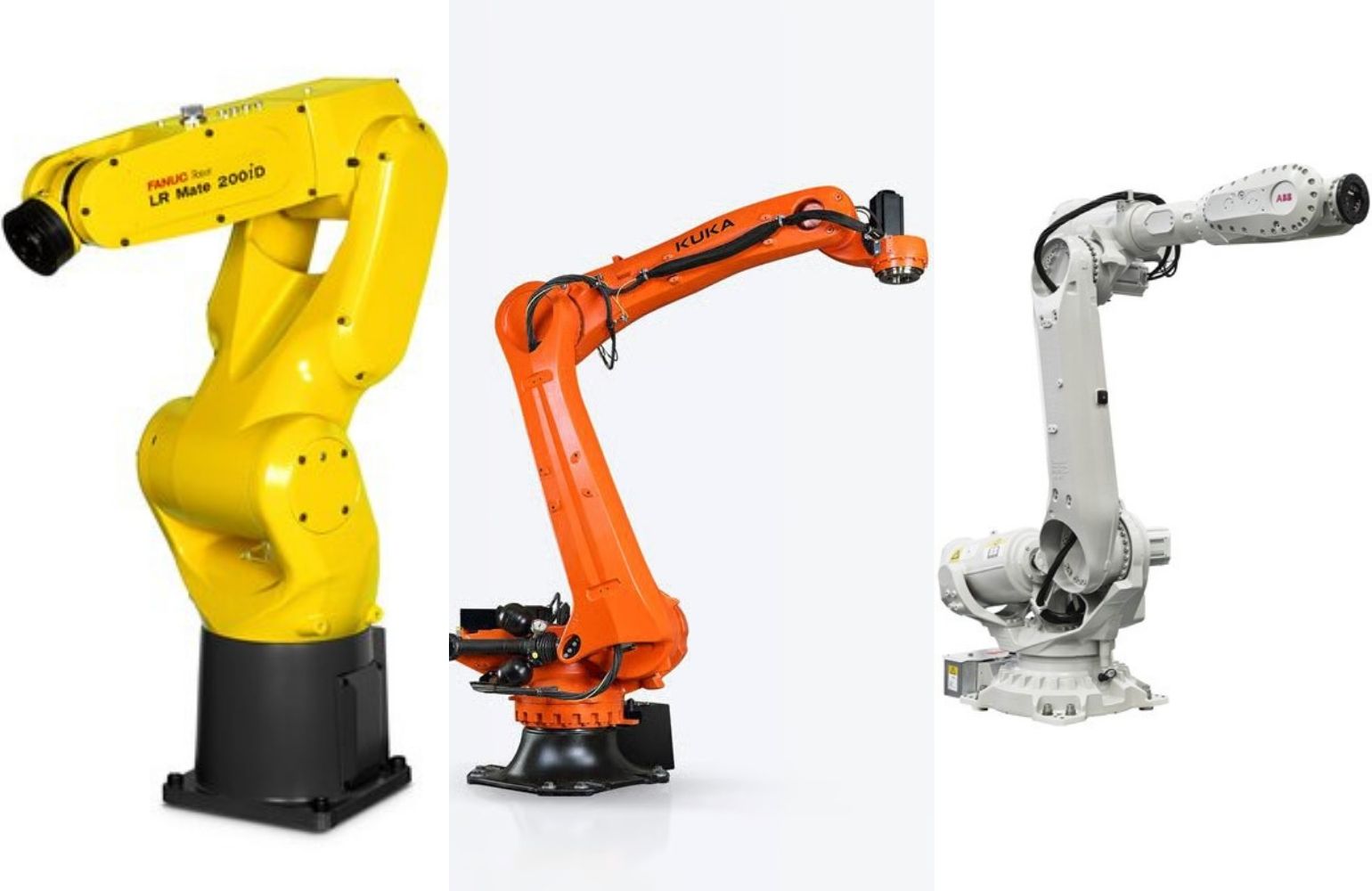
Why you should combine robot dexterity with mechanical positioning for complex assembly operations
From left to right: The FANUC LR Mate 200 iD, the KUKA KR QUANTEC, and ABB’s IRB 6700. | Source: FANUC, KUKA, ABB Robotics Robotics professionals know how much the industry will grow in the coming years, especially because of the numerous disruptive advancements that keep entering workflows. While automation is the goal, experts are recognizing the importance of mechanical positioning and its impact on the machine’s mobility, range and speed. Considering these characteristics more comprehe