Humanoid says KinetIQ Ascend reinforcement learning approaches human-level dexterity
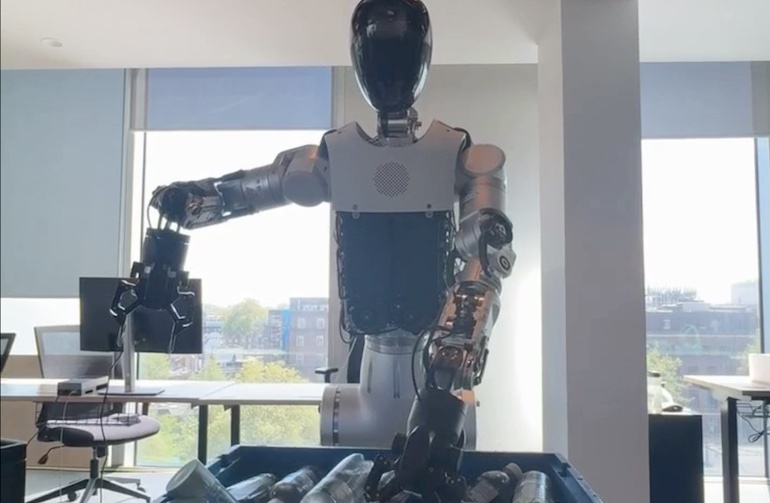
Arm drift after long reinforcement training caused by action prefix drift. Source: Humanoid Robotic manipulation is making progress with artificial intelligence. London-based Humanoid last week introduced KinetIQ Ascend, its reinforcement learning, or RL, approach designed to reach 99.9% manipulation reliability at human speed and beyond. “The humanoid race is becoming a question of scale, and real-world RL can be a core part of the answer,” stated Jarad Cannon, chief technology offi
Make your prediction
Will Humanoid publish technical details or a paper on KinetIQ Ascend by August 1, 2026?
Resolves by Aug 1, 2026
Your prediction
50% · 50/50 coin flip
NOYES
Get smart on it
A London-based robotics company has introduced a reinforcement learning system designed to improve robot manipulation tasks to near-human reliability levels. The system works by allowing robots to learn and refine skills directly through trial-and-error on industrial tasks rather than requiring extensive manual programming and data collection. In testing across picking, handling, and bimanual tasks, the approach reportedly achieved significant improvements in speed and success rates within days of training. The company claims this method scales predictably with more training time, similar to how large language models improve with additional compute and data.
Related news
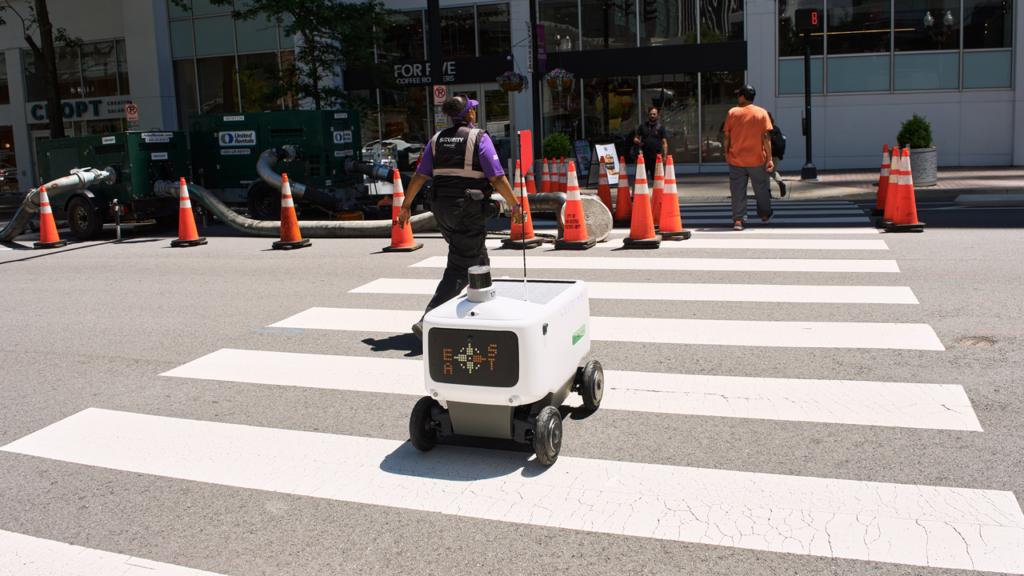
Context is king: How Avride uses cloud VLMs as a safety net for delivery robots
Avride has integrated vision-language models into its delivery robots. Source: Avride Avride Inc. has built its delivery robots for high level of autonomy. Every single day, hundreds of them navigate busy city streets entirely on their own, processing complex sensor data locally on their onboard compute units. Our sidewalk robots run with minimal human involvement, reliably handling standard urban maneuvers, pedestrians, and traffic lights on their own. However, efficiently managing the mechanic
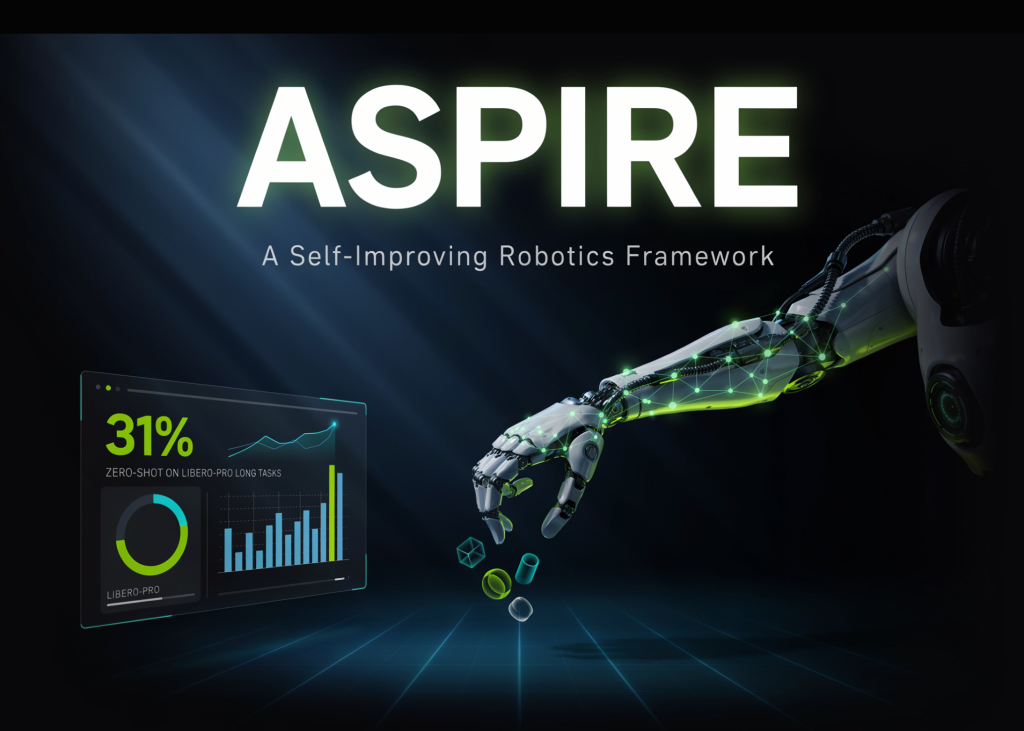
NVIDIA AI Introduces ASPIRE: A Self-Improving Robotics Framework Reaching 31% Zero-Shot on LIBERO-Pro Long Tasks
Traditional robot programming is hard to scale. It requires orchestrating multimodal perception, physical contact dynamics, diverse configurations, and execution failures by hand. Code-as-policy systems let language models compose these into executable robot programs. That makes robot behavior inspectable, editable, and debuggable. But existing robotic coding agents run in naive execution environments. They receive only coarse, task-level feedback. A failed rollout signals that the task fail