Context is king: How Avride uses cloud VLMs as a safety net for delivery robots
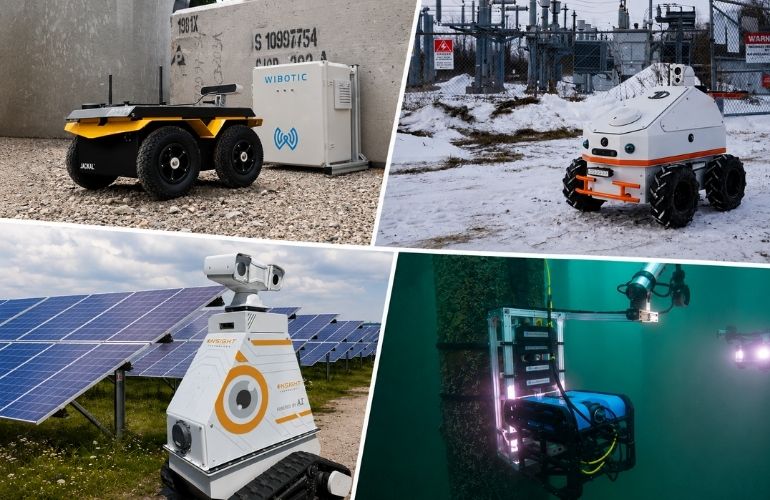
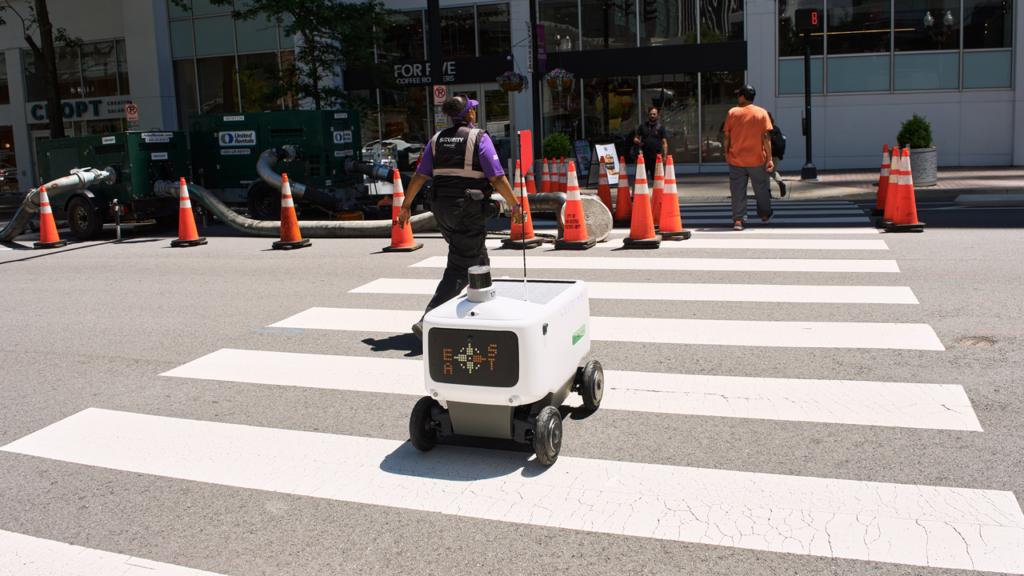
Avride has integrated vision-language models into its delivery robots. Source: Avride Avride Inc. has built its delivery robots for high level of autonomy. Every single day, hundreds of them navigate busy city streets entirely on their own, processing complex sensor data locally on their onboard compute units. Our sidewalk robots run with minimal human involvement, reliably handling standard urban maneuvers, pedestrians, and traffic lights on their own. However, efficiently managing the mechanic
Get smart on it
Delivery robots that operate autonomously on city streets use onboard sensors and local neural networks to handle basic navigation and object detection, but they struggle to understand complex real-world context, such as distinguishing a police officer on routine business from an active crime scene. To address this gap, one company has integrated cloud-based vision-language models that analyze camera snapshots every few seconds to detect unusual or sensitive situations and alert human remote assistants when intervention may be needed. The system preserves privacy by anonymizing faces and license plates on the robot before data leaves the device, and the company uses a plug-and-play architecture to test multiple state-of-the-art models rather than relying on a single provider. This approach evolved from the company's existing practice of using cloud VLMs to automatically filter video data for rare, valuable training scenarios, a technique that proved effective enough to extend into live safety operations.
Related news
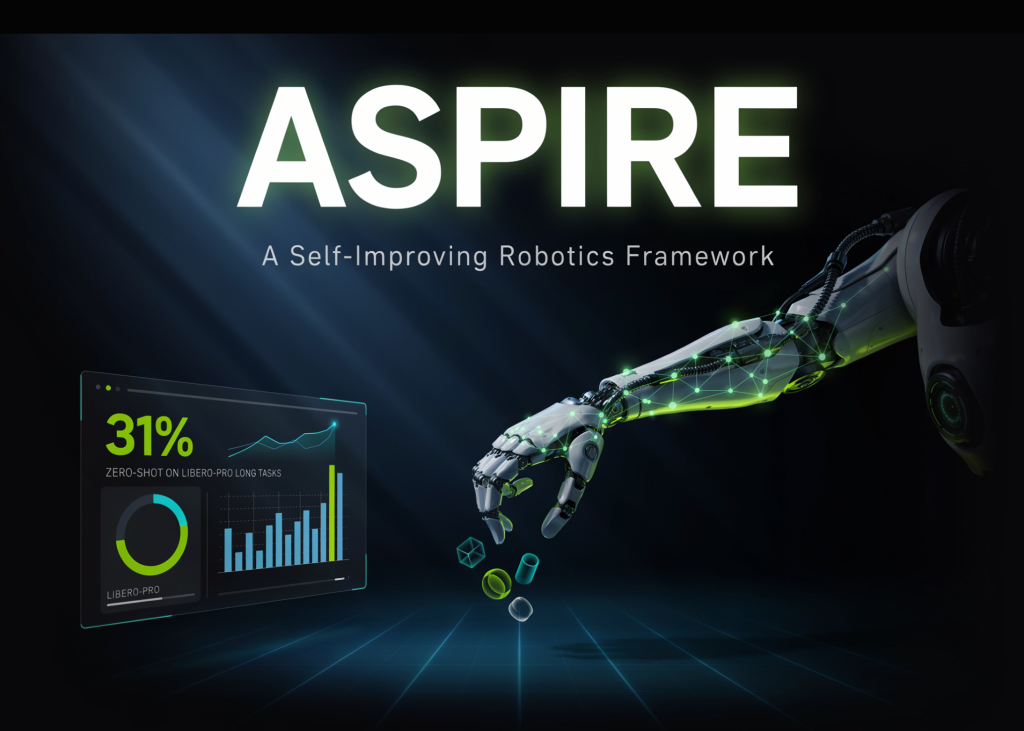
NVIDIA AI Introduces ASPIRE: A Self-Improving Robotics Framework Reaching 31% Zero-Shot on LIBERO-Pro Long Tasks
Traditional robot programming is hard to scale. It requires orchestrating multimodal perception, physical contact dynamics, diverse configurations, and execution failures by hand. Code-as-policy systems let language models compose these into executable robot programs. That makes robot behavior inspectable, editable, and debuggable. But existing robotic coding agents run in naive execution environments. They receive only coarse, task-level feedback. A failed rollout signals that the task fail

Automate 2026 show recap
The Robot Report Podcast · Automate 2026 Show Recap In Episode 251 of The Robot Report Podcast, hosts Steve Crowe and Mike Oitzman are joined by special guest Sarah Wynn, senior editor at sibling site Packaging OEM, to chat about their experiences on the show floor at Automate last month. They describe the robotics industry’s shift away from early-stage humanoid hype toward the practical, real-world deployment of physical AI and edge computing. The editors also discuss how software orches