What is Decision 3.0? vLLM Semantic Router’s New Open Decision Models
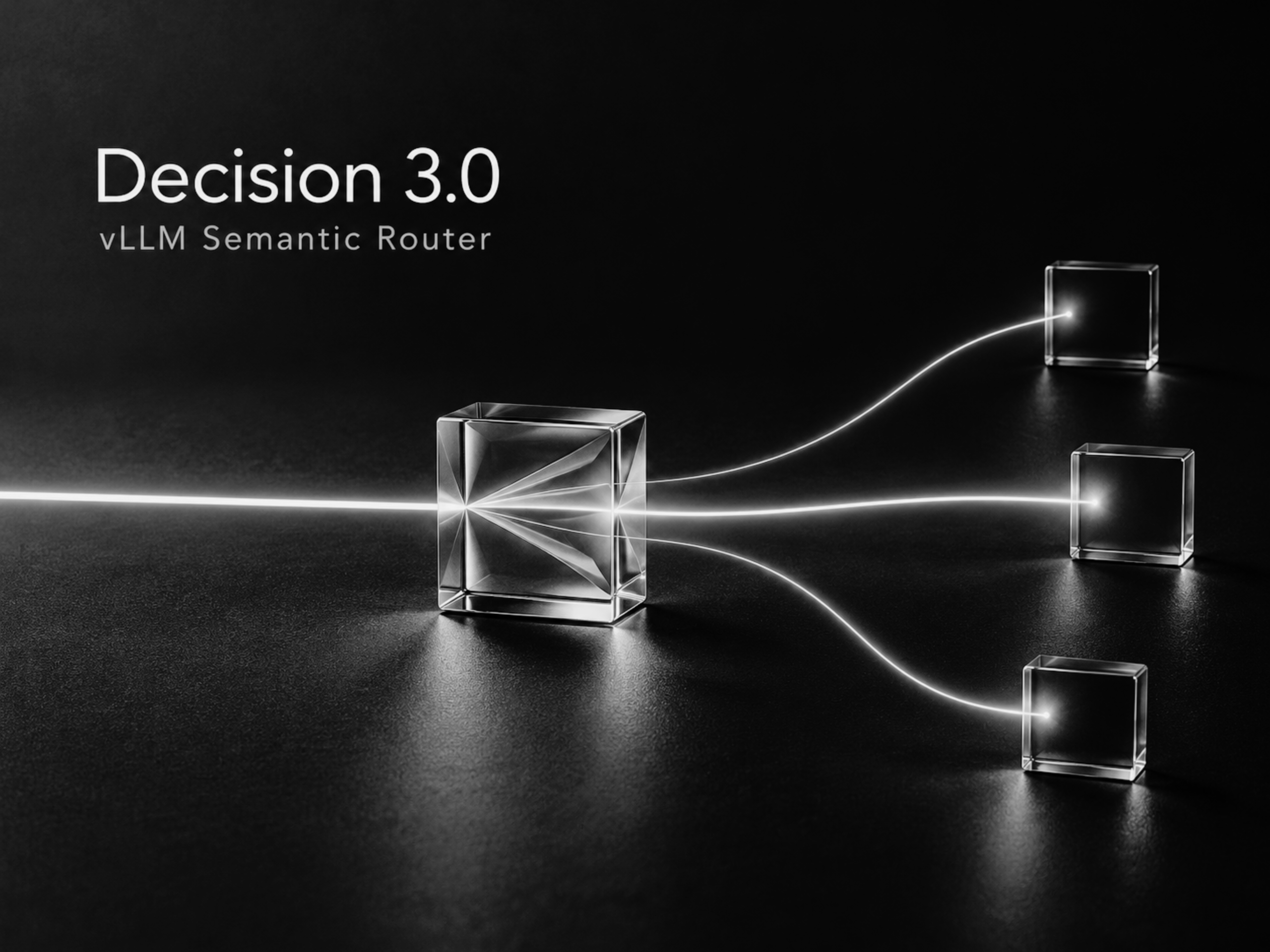
The vLLM Semantic Router team has released Decision 3.0, a family of multimodal decision models. Decision 3.0 multimodal decision models read text, JSON and images, then answer typed questions about them. There are 5 sizes, from 0.8B to 27B, all under Apache-2.0. For developers, this is a fast way to classify, route and gate requests without parsing generated text. TL;DR Size: 5 models: d3-lite (0.85B), d3-nano (2.21B), d3-mini (4.54B), d3-flash (8.39B), d3 (26.09B). Context length: not
Get smart on it
Decision 3.0 is a set of open decision models that process text, JSON, and images to answer structured questions by returning probability scores rather than generated text. These models are designed to help developers classify, route, and filter requests without needing to parse text output. The models come in five sizes ranging from 0.8 billion to 27 billion parameters and are built on Qwen base models with integrated vision encoders. Performance improvements over the previous generation include a 9-billion-parameter model that outperforms the prior generation's 27-billion-parameter model on benchmark evaluations.
Related news
TII Releases Falcon-ASR: 1.6B Arabic Speech Model Hits 20.92% WER
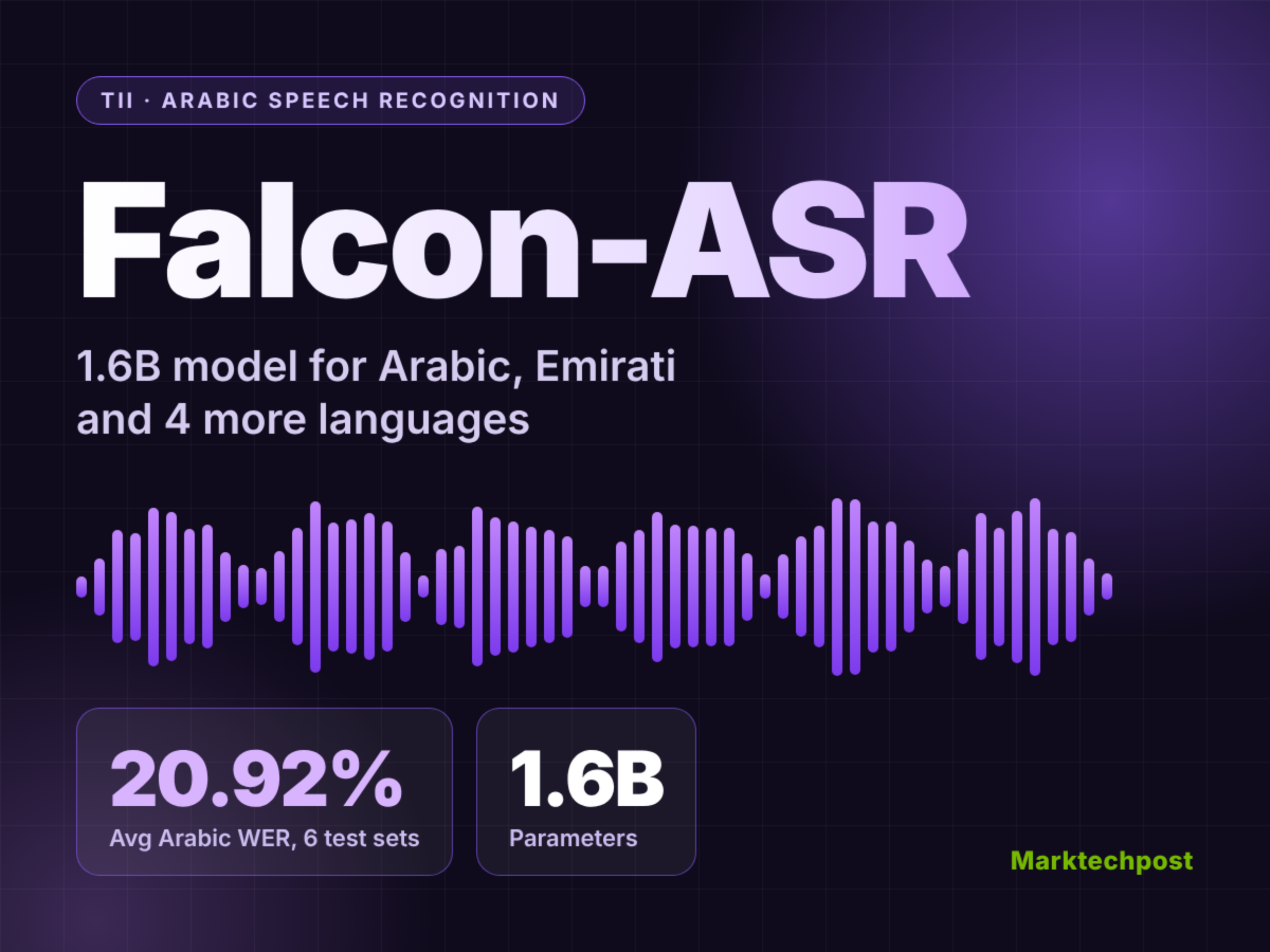
The Technology Innovation Institute (TII) in Abu Dhabi has released Falcon-ASR, a 1.6B parameter Arabic speech recognition model. It focuses on the Emirati dialect and also transcribes English, French, Spanish and Portuguese. In TII’s evaluation, Falcon-ASR posts a 20.92% average word error rate (WER) across 6 Arabic test sets. That beats the best published entry in TII’s leaderboard snapshot by 2.25 points. For developers building Arabic voice products, the catch is access: today i
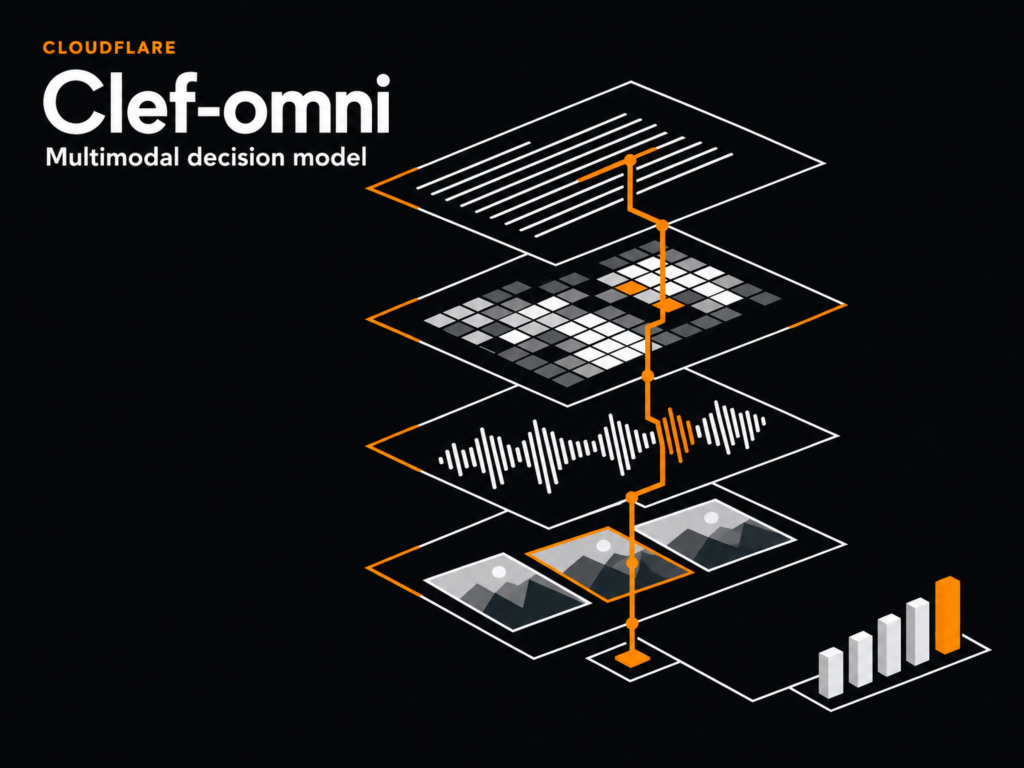
Meet Cloudflare Clef-omni: A 30B-A3B Multimodal Decision Model for Audio, Video, Image and Text
Cloudflare has released Clef-omni, a new open-weight member of its Clef decision model family. Clef-omni is a Cloudflare decision model that scores text, images, audio and video in 1 call. It arrived on October 9, 2026, 8 days after the original Clef and Clef-flash launch. The same update cut Clef-flash pricing below TypeSafe’s Jev and made hosted Clef roughly 2x faster. For developers, this removes the transcription and captioning steps that multimodal agent pipelines usually need. TL