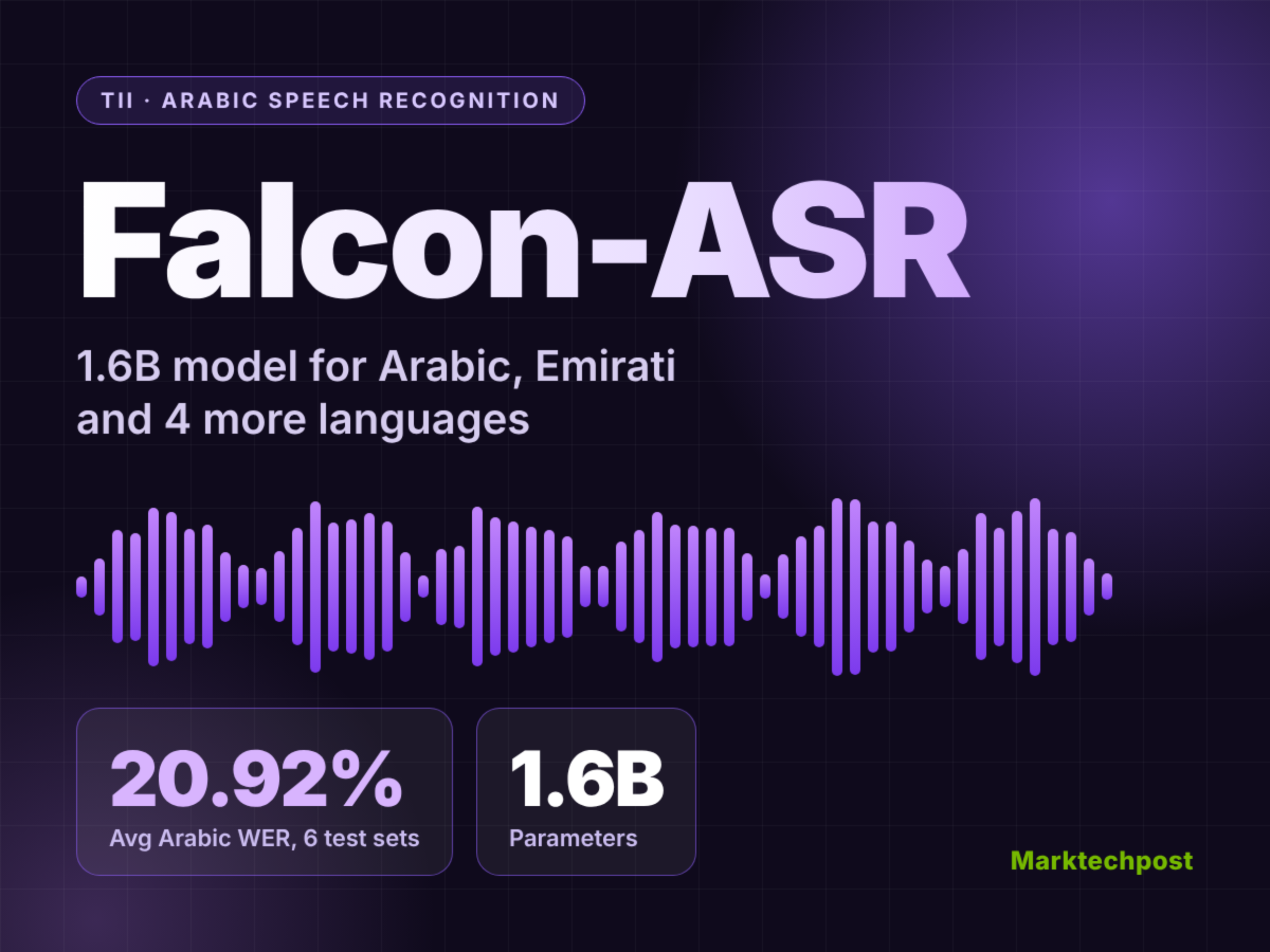
Falcon-ASR model transcribes Arabic and four languages
MarkTechPost: TII Releases Falcon-ASR: 1.6B Arabic Speech Model Hits 20.92% WER
The Technology Innovation Institute (TII) in Abu Dhabi has released Falcon-ASR, a 1.6B parameter Arabic speech recognition model. It focuses on the Emirati dialect and also transcribes English, French, Spanish and Portuguese. In TII’s evaluation, Falcon-ASR posts a 20.92% average word error rate (WER) across 6 Arabic test sets. That beats the best published entry in TII’s leaderboard snapshot by 2.25 points. For developers building Arabic voice products, the catch is access: today i
A speech recognition model called Falcon-ASR has been released for converting spoken Arabic and four other languages into text with word-level timestamps. The model achieved a 20.92% word error rate on Arabic benchmarks, outperforming comparable systems, and was specifically trained on Emirati dialect alongside Modern Standard Arabic and other regional varieties. Currently the model is only available as a hosted demonstration with no published weights or license, though an API is planned for future release. The model's compact size of 1.6 billion parameters allows it to match or exceed the performance of larger competing systems on Arabic and Emirati speech recognition tasks.
Explainer: How to Actually Read an AI Benchmark (Without Being Fooled)
One short email a day with the stories that matter. Free. Unsubscribe with one click.
Want to go deeper than the news? Explore live, cohort-based AI courses taught by practitioners.
Browse AI courses on Maven
Introducing GPT-6.2 Astra and Sol
Introducing GPT‑6.2 Astra and Sol, with better professional outputs, coding, computer use, and efficiency at lower cost across ChatGPT Work, Codex, and the API.
Also reported by MarkTechPost and SiliconANGLE
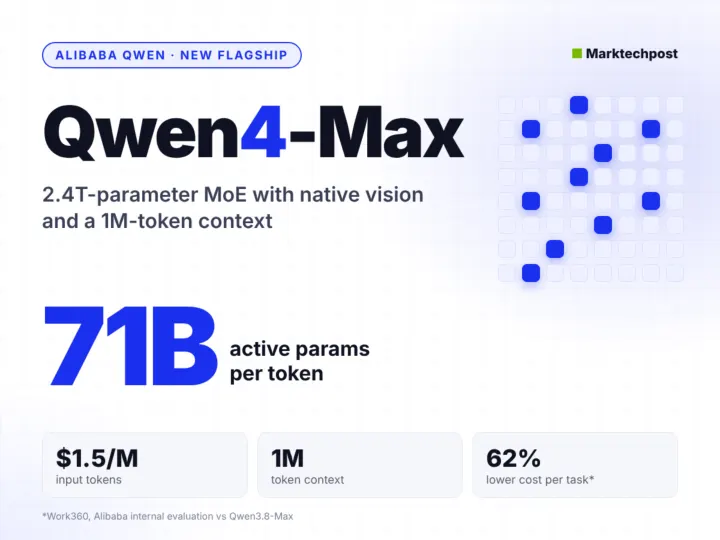
Alibaba Releases Qwen4-Max: 2.4T MoE, 71B Active, 1M Context
Alibaba’s Qwen team has released Qwen4-Max, the first model of its Qwen4 generation. Qwen4-Max is a proprietary sparse MoE model with a 2.4T-parameter backbone and 71B parameters active per token. It accepts text, images and video, and supports a 1M-token context window. Alibaba also cut API prices and reports a 62% drop in average cost per task. TL;DR Size: 2.4T backbone parameters, 71B active per token, plus 328B N-gram Embedding parameters. 1M context, 393K max output tokens.
Also reported by SiliconANGLE

Microsoft rolls out new first-party models and updates to agentic AI continuous improvement
Microsoft Corp. today rolled out new generative artificial intelligence models and updates to Foundry, the company’s unified enterprise platform that helps developers and organizations ground, test and deploy AI applications and autonomous agents. Updates to Foundry IQ, part of Microsoft IQ, now provide an enterprise knowledge graph out of the box, delivering a full estate […] The post Microsoft rolls out new first-party models and updates to agentic AI continuous improvement appeared firs
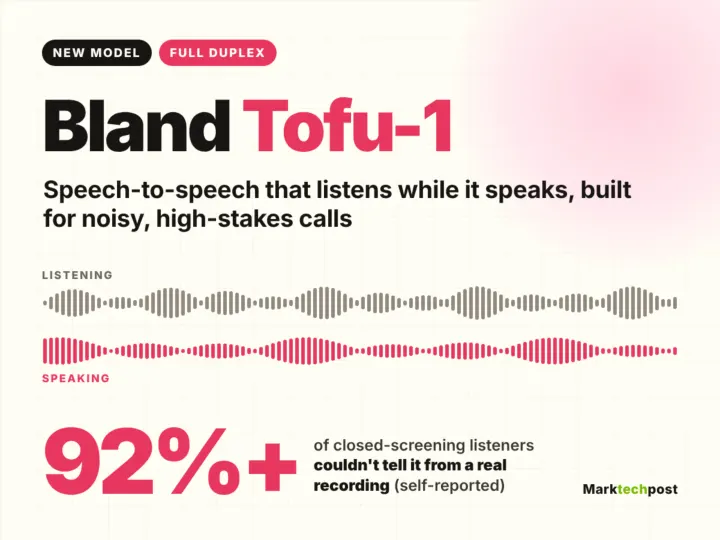
Bland Launches Tofu-1, a Full-Duplex Speech-to-Speech Model for Calls
Bland, the San Francisco voice-AI company, has released Tofu-1, a full-duplex speech-to-speech model in research preview. The Tofu-1 speech-to-speech model targets calls from moving cars, hospital rooms and weak-signal lines. It listens while it speaks and reasons while it talks. For phone-agent teams, one model now handles audio in and audio out, with no transcript between. You can check the deployment options and specs here through our GPULeaderboard.com chrome extension. What is Tofu-1?
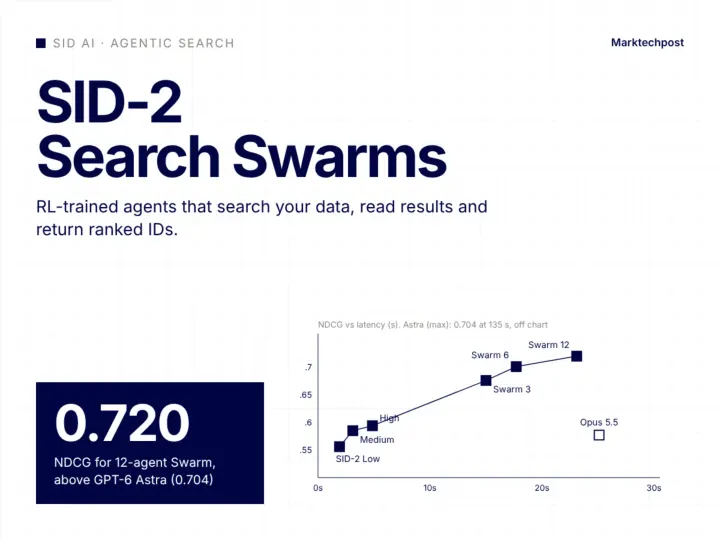
SID AI Releases SID-2 Agentic Search Model With 0.720 NDCG Swarm Mode
SID AI has released SID-2, its second-generation agentic search model, alongside SID-2 Swarm. SID-2 is an agentic search model from SID AI that searches your data, reads results and returns ranked document IDs. It replaces fixed RAG pipelines with a model that decides what to search next. TL;DR Size: Context window is 262k tokens per the report (256k on sid.ai/models). Runs on: Hosted API at platform.sid.ai, plus Baseten and SageMaker reference paths. SID’s latency figures assu

Cmpnd Releases dspy-wsp: Weight-Space Programming Comes to DSPy
Cmpnd has released dspy-wsp, a prototype optimizer that brings weight-space programming to DSPy. Weight-space programming is a technique in which a frontier LLM reads another model’s weights and edits them directly. There are no gradients, no training loop and no fine-tuning dataset. dspy-wsp packages this as WeightSpace, an optimizer that plugs into any DSPy program and metric. In Cmpnd’s tests, about $5 to $10 of GPT-6-Astra calls improved every decision model they tried. You can