
AssemblyAI launches text-to-speech API
MarkTechPost: AssemblyAI Ships AssemblyAI-TTS-1: A $15 per 1M Character Text-to-Speech API for Voice Agents
AssemblyAI has released AssemblyAI-TTS-1, its first text-to-speech model, now generally available. The AssemblyAI-TTS-1 text-to-speech API targets voice agents running on live phone calls. In that setting, latency and pronunciation decide whether a caller stays on the line. Pricing is $15 per 1M characters, with no annual contract and no concurrency tier to buy. For developers already using AssemblyAI speech-to-text, it closes the voice loop with one vendor. TL;DR Size: It is a hosted AP
Get smart on it
A text-to-speech API has been released that converts written text into spoken audio for voice agents used in live phone calls. The service costs $15 per 1 million characters with unlimited concurrent requests and no contract requirements. Performance testing shows it achieves 93.7% accuracy on difficult targets like phone numbers and codes, with a 47 millisecond delay before audio begins, though independent benchmarks report mixed results compared to competing services. The API supports 4,000+ voices, instant voice cloning, and six languages at launch.
Relevant courses
Want to go deeper than the news? Explore live, cohort-based AI courses taught by practitioners.
Browse AI courses on MavenRelated news

Gemini 4 Carbon: Our next frontier model
Google's latest offering suggests the company is prioritizing efficiency and environmental impact alongside raw capability gains.
Also reported by Ars Technica, MarkTechPost, The Verge and The Decoder

Introducing GPT-6.1 Terra
Bringing fast and capable computer use to everyone
Also reported by SiliconANGLE, MarkTechPost and The Decoder

Genie 4: A new generation of world simulation
Genie 4: our new world model unlocking unprecedented realism in real-time simulation.
Also reported by TechCrunch, Ars Technica, SiliconANGLE and MarkTechPost
NVIDIA Nemotron 3.5 Transcribe and Granary v2: Intelligent Multilingual Transcription You Can Prompt and Adapt
Customizable transcription tools could help organizations reduce manual annotation costs while handling multiple languages simultaneously.
Also reported by TechCrunch, SiliconANGLE, The Decoder and MarkTechPost
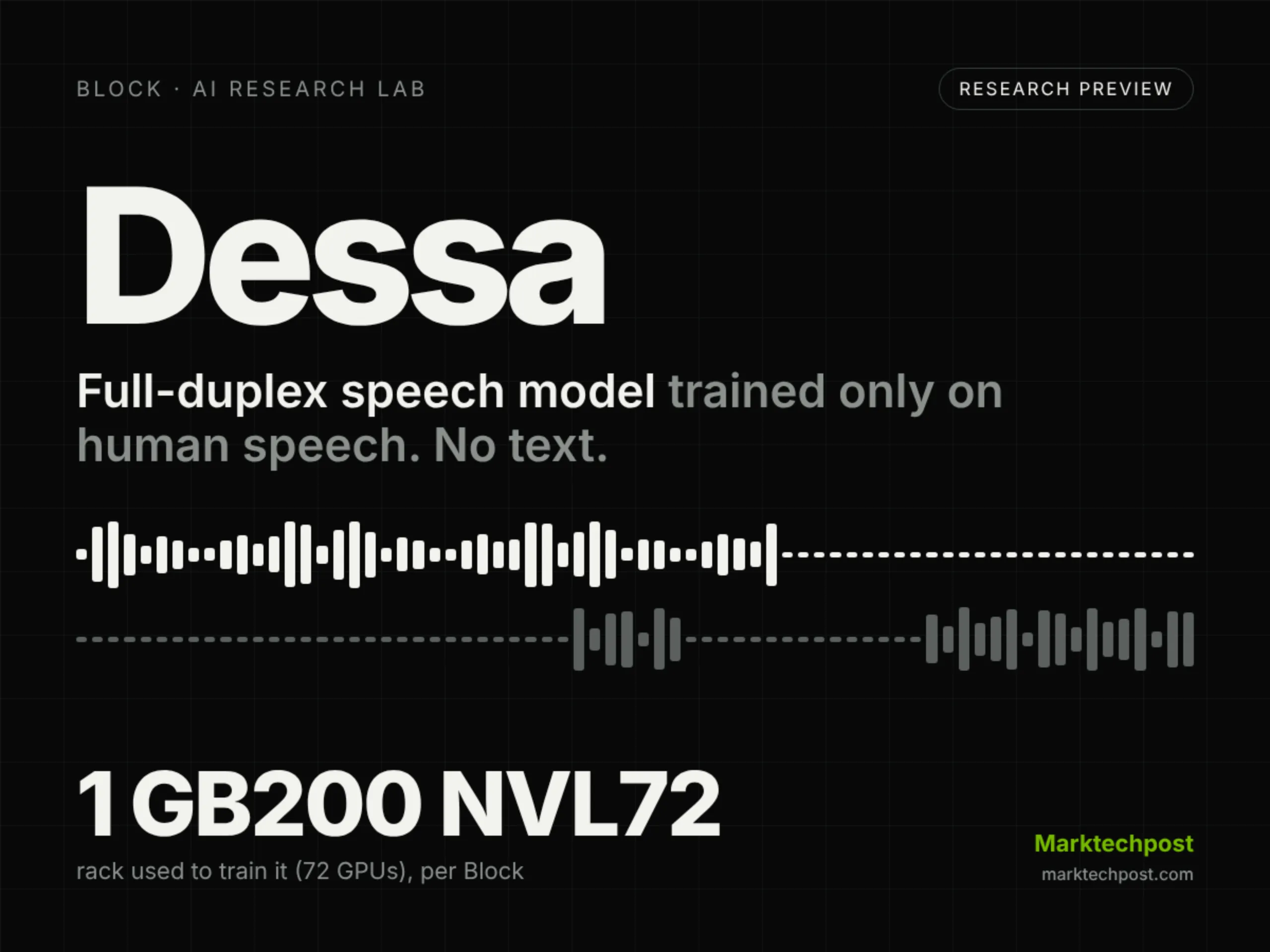
Block Unveils Dessa, a Full-Duplex Speech Model Trained Only on Speech
Block’s AI research lab has released Dessa, a full-duplex speech model trained only on human conversation. Block announced it on October 23, 2026 as a research preview. Dessa is a speech-to-speech model from Block that listens and talks at the same time. Block says it used no text and no pretrained models. That is a different design from the text-first stacks behind most voice agents today. TL;DR Runs on: A MacBook Pro M4 Max or better, locally, faster than real time. Performan

Google’s next Genie AI model generates more realistic experiences
Google announced today its Genie 4 world model for generating interactive experiences using AI. The company says the model has four main updates: It allows for more realistic worlds, lets users update an experience in real time with a natural language prompt, can generate audio, and uses Gemini 3.8 Flash under the hood to help with its simulations. It also can create experiences that are about two minutes long, up from one minute for the previous Genie 3 model. Google is pitchi