
Google DeepMind releases Gemini 4 Carbon AI model
Google DeepMind: Gemini 4 Carbon: Our next frontier model
Google's latest offering suggests the company is prioritizing efficiency and environmental impact alongside raw capability gains.
What happened
Google DeepMind announced Gemini 4 Carbon, a new frontier artificial intelligence model that ranks first on an updated intelligence benchmark. The model shows improved performance in coding, cybersecurity, vulnerability detection, and secure code generation compared to its predecessor Gemini 4 Argon, released two weeks earlier. It is being rolled out gradually through a government-coordinated testing process to cybersecurity specialists and trusted partners, with broader access to developers and consumers planned for later.
What each outlet adds
- Google DeepMind ↗: The model is priced at two dollars per million input tokens and ten dollars per million output tokens, matching the previous generation's pricing structure.
- Ars Technica ↗: The model demonstrates strong resistance to prompt-injection attacks and Google has not committed to a timeline for broad public access.
- MarkTechPost ↗: Gemini 4 Carbon ranks number one on the updated v5.0 Artificial Analysis Intelligence Index with a score of 59 and is designed for long-horizon agentic coding and cybersecurity defense.
Why it matters
The model's focus on cybersecurity and coding capabilities addresses critical infrastructure defense needs. Google's staged release approach prioritizes government and cyber defense programs before making the technology available more broadly to developers and businesses.
Get smart on it
Gemini 4 Carbon is a new artificial intelligence model described as the strongest in its line, with particular focus on cybersecurity and the ability to handle complex, multi-step tasks over extended periods. The model ranks first on a recently updated intelligence benchmark and shows significant performance gains in coding, vulnerability detection, and secure code generation compared to its predecessor. It is being rolled out gradually to cybersecurity specialists and trusted partners through a government-coordinated testing process before becoming available to developers and consumers. The pricing structure matches that of the previous generation model at two dollars per million input tokens and ten dollars per million output tokens.
Relevant courses
Want to go deeper than the news? Explore live, cohort-based AI courses taught by practitioners.
Browse AI courses on MavenRelated news

Introducing GPT-6.1 Terra
Bringing fast and capable computer use to everyone
Also reported by SiliconANGLE, MarkTechPost and The Decoder

Genie 4: A new generation of world simulation
Genie 4: our new world model unlocking unprecedented realism in real-time simulation.
Also reported by TechCrunch, Ars Technica, SiliconANGLE and MarkTechPost

NVIDIA Nemotron 3.5 Transcribe and Granary v2: Intelligent Multilingual Transcription You Can Prompt and Adapt
Customizable transcription tools could help organizations reduce manual annotation costs while handling multiple languages simultaneously.
Also reported by TechCrunch, SiliconANGLE and The Decoder

Google’s next Genie AI model generates more realistic experiences
Google announced today its Genie 4 world model for generating interactive experiences using AI. The company says the model has four main updates: It allows for more realistic worlds, lets users update an experience in real time with a natural language prompt, can generate audio, and uses Gemini 3.8 Flash under the hood to help with its simulations. It also can create experiences that are about two minutes long, up from one minute for the previous Genie 3 model. Google is pitchi
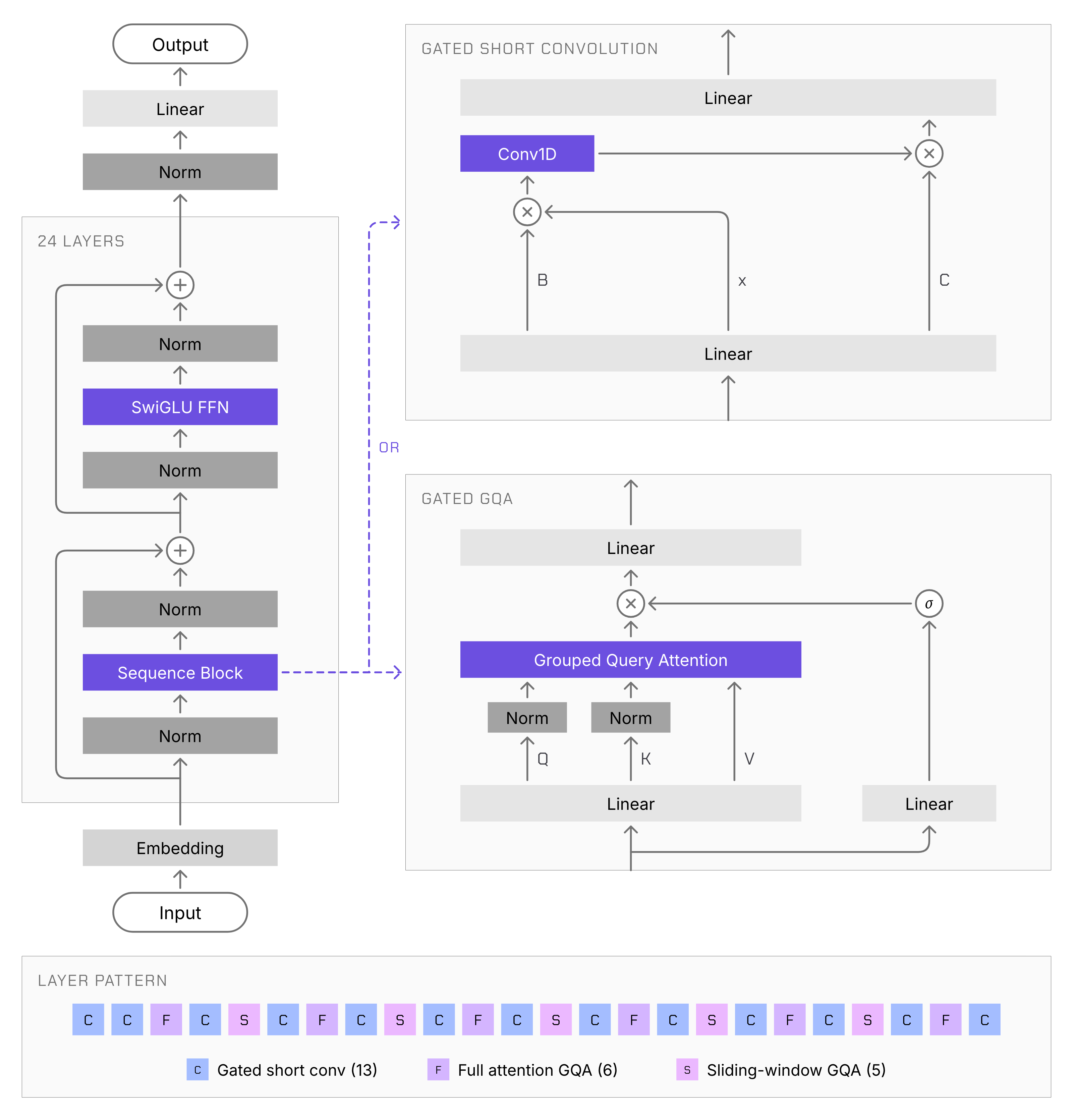
Build specialized multimodal models with LFM3
Organizations can now create custom AI systems combining text, images, and video without building from scratch, lowering barriers to deployment.
Also reported by MarkTechPost
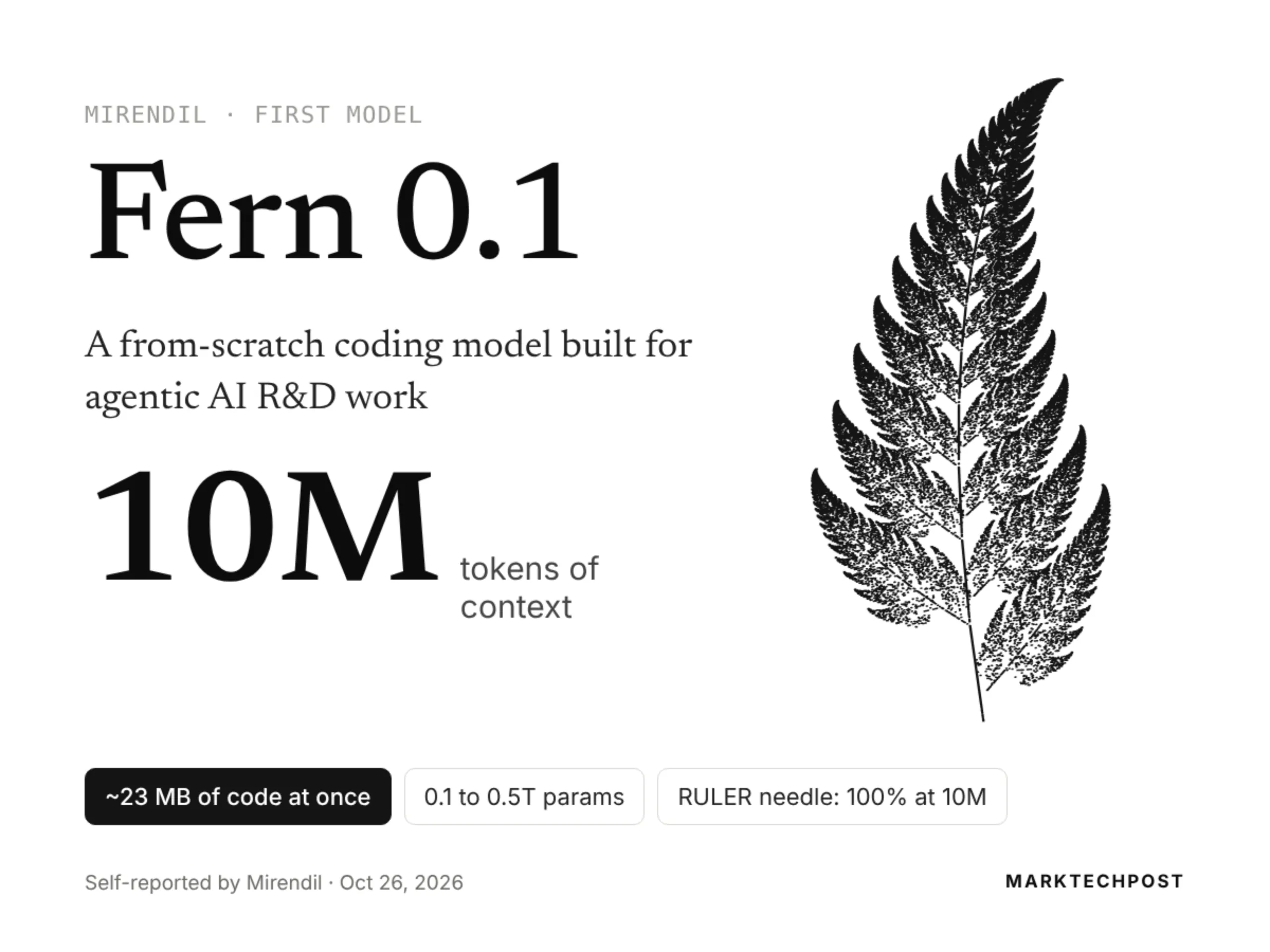
Mirendil Launches Fern 0.1, Its First Model, With 10M-Token Context
Mirendil has released Fern, its first AI model. Mirendil Fern is a from-scratch coding model with a context window of up to 10M tokens. Mirendil explains how that equals about 23 MB of code, or roughly half a million lines. That is a codebase on the scale of Megatron-LM, held in context at once. Fern 0.1 is the first version, built from Mirendil-Base after a short round of post-training. For developers, its like, you load a whole repo, a full training log or days of agent traces at once. TL;