
Google announces Genie 4 AI model
The Verge: Google’s next Genie AI model generates more realistic experiences
Google announced today its Genie 4 world model for generating interactive experiences using AI. The company says the model has four main updates: It allows for more realistic worlds, lets users update an experience in real time with a natural language prompt, can generate audio, and uses Gemini 3.8 Flash under the hood to help with its simulations. It also can create experiences that are about two minutes long, up from one minute for the previous Genie 3 model. Google is pitchi
Get smart on it
Google announced a new AI model called Genie 4 that generates interactive digital worlds with improved realism and can now create accompanying audio. The model can produce experiences about twice as long as its predecessor, allows users to modify simulations in real time using natural language commands, and uses an underlying AI system to power its simulations. The company suggests potential applications for filmmakers doing pre-visualization, game developers prototyping ideas, and robot training scenarios, though it notes that longer simulations may experience shifts in details and object permanence over time. The tool is launching initially as a research preview for trusted testers, with availability coming to Google AI Ultra subscribers.
Relevant courses
Want to go deeper than the news? Explore live, cohort-based AI courses taught by practitioners.
Browse AI courses on MavenRelated news
Introducing GPT-6.1 Terra
Bringing fast and capable computer use to everyone
Also reported by SiliconANGLE, MarkTechPost and The Decoder

Genie 4: A new generation of world simulation
Genie 4: our new world model unlocking unprecedented realism in real-time simulation.
Also reported by TechCrunch and Ars Technica
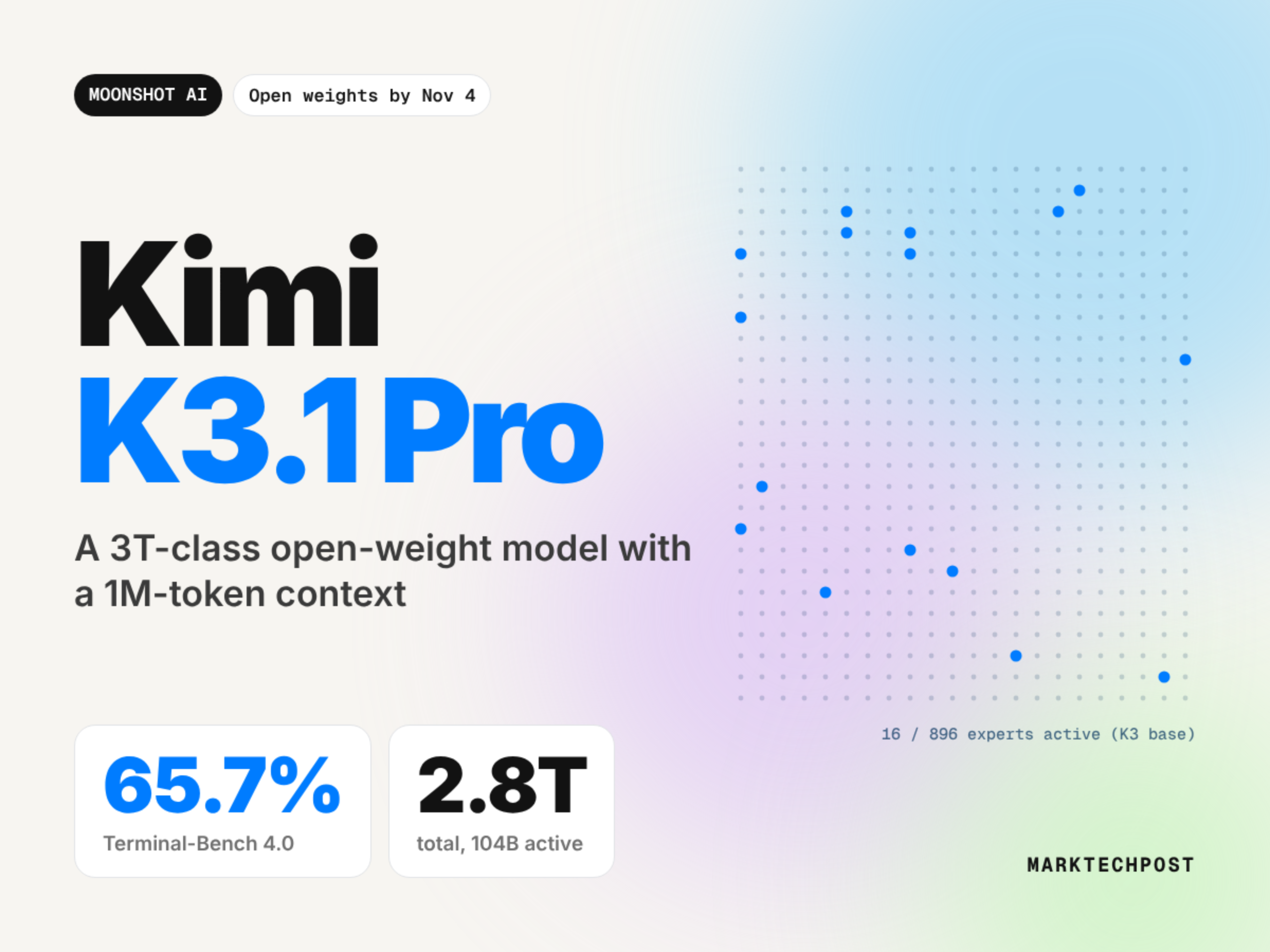
Moonshot AI Releases Kimi K3.1 Pro: A 2.8T Total/104B Active Params (MoE) Model with 1M Context
Moonshot AI has just released Kimi K3.1 Pro, the first model in its K3.1 series. Kimi K3.1 Pro is a 3T-class open-weight* model with a 1-million-token context window. Moonshot team positions it against the strongest proprietary models on coding, agentic and knowledge benchmarks. For developers, it is cheaper API pricing than K3 and open weights yet not available. *open weights are expected to release in November 2026. TL;DR Size: 2.8T total, 104B active parameters (MoE), 1M-token context
Also reported by SiliconANGLE and The Decoder
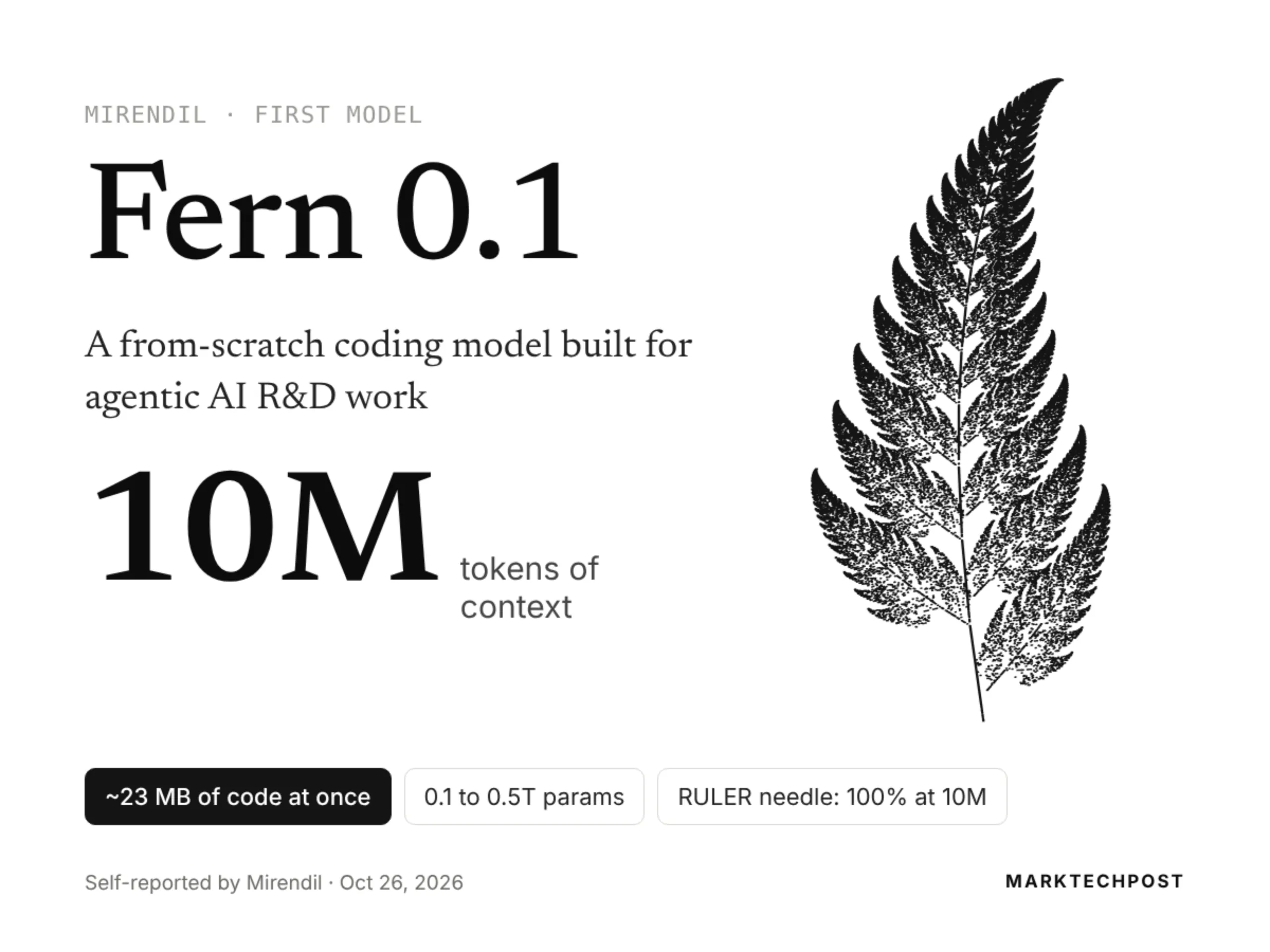
Mirendil Launches Fern 0.1, Its First Model, With 10M-Token Context
Mirendil has released Fern, its first AI model. Mirendil Fern is a from-scratch coding model with a context window of up to 10M tokens. Mirendil explains how that equals about 23 MB of code, or roughly half a million lines. That is a codebase on the scale of Megatron-LM, held in context at once. Fern 0.1 is the first version, built from Mirendil-Base after a short round of post-training. For developers, its like, you load a whole repo, a full training log or days of agent traces at once. TL;

Jack Dorsey’s Block made an AI model that talks to you like an awkward new friend
Jack Dorsey's Block announced an AI model called Dessa that's trained "from scratch on nothing but human conversation," and to show off the model, Block shared chats it has had with humans that can occasionally be a little awkward and uncanny. Take this one, for example, shared by Dessa lead Ragavan Thurairatnam. The conversation between the model and the speaker does have a mostly natural back and forth (though for some reason, the model initially mistakes the speaker for some
Also reported by TechCrunch and The Decoder

Canva releases its first image generation model
Canva is making its new image model available to all users, promising better, more customizable performance at lower costs.
Also reported by The Verge and The Decoder