Apertus 1.5 adds image and audio skills
Hugging Face: Apertus 1.5 Release Notes
The update reveals how developers are addressing limitations in reasoning and multimodal capabilities that affect real-world deployment.
Get smart on it
Apertus 1.5 is an updated version of an open-source AI model available in two sizes that adds the ability to understand images and audio alongside text, includes an optional "thinking mode" for reasoning tasks, expands its context window to four times the previous length, and improves instruction-following and tool use. The models were trained through multiple stages including continued pretraining on trillions of tokens of text and multimodal data, followed by five post-training stages designed to improve specific capabilities and align the model with stated values. The release matters because it demonstrates how open-source AI development can extend model capabilities across multiple modalities while maintaining transparency through open weights, open data, and detailed documentation of training and evaluation methods. The models are made available under a permissive license and include comprehensive evaluation results across text, image, audio, and reasoning tasks to allow for reproducible benchmarking.
Relevant courses
Want to go deeper than the news? Explore live, cohort-based AI courses taught by practitioners.
Browse AI courses on MavenRelated news

Gemini 4 Argon: Built to solve your hardest problems
The new model aims to handle complex reasoning tasks where current systems often struggle or fail completely.
Also reported by The Verge, Ars Technica, The Decoder and SiliconANGLE

Meta releases its first frontier model, Muse Wonder
Meta's Superintelligence Lab released a pair of new state-of-the-art models on Monday, Muse Wonder and Muse Wonder Full, the company's first attempt at a frontier model.
Also reported by The Verge, Wired AI, The Decoder and SiliconANGLE

OpenAI will reportedly ship at least one model this year but its flagship still needs alignment work
OpenAI is racing to finish its next flagship model, which uses the same looped transformer technique as Astra to boost math and coding performance. The tradeoff is that looping makes safety monitoring harder. Microsoft accidentally revealed details about how the technique works on a public page. Whether or not the flagship is ready in time, employees say one or two new models will likely ship by year's end. The article OpenAI will reportedly ship at least one model this year but its fla
AI Came for Math. Now It’s Chasing the Rest of Science
AI may soon be the default way to solve theoretical problems in economics, high-energy physics, and other fields, MIT researchers tell WIRED.
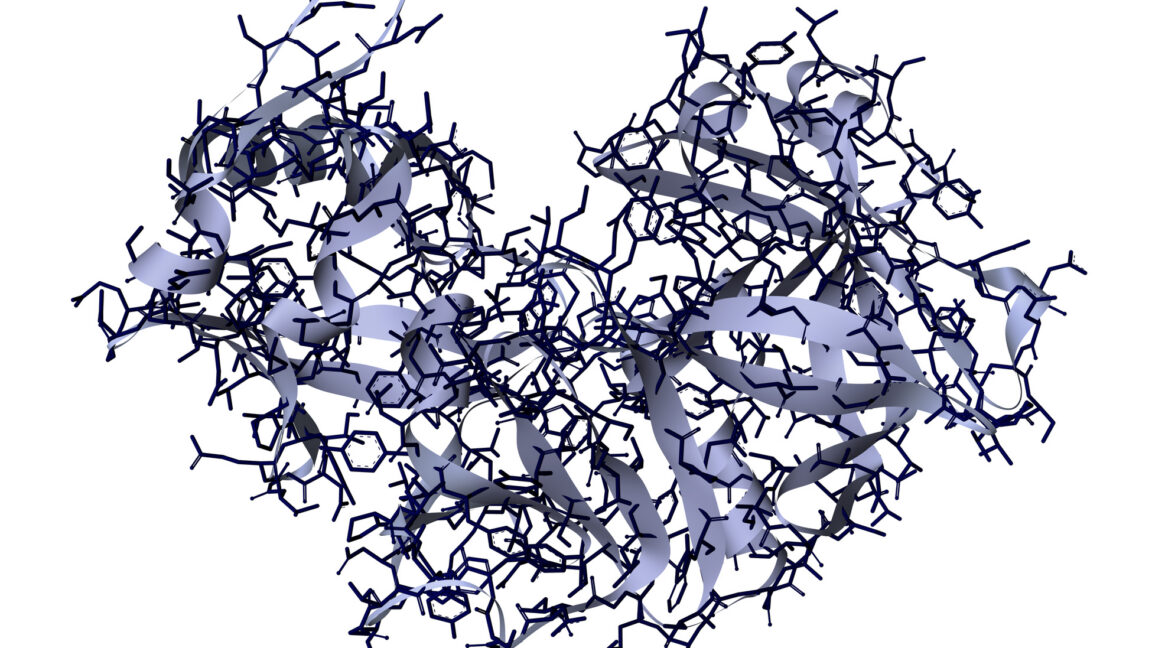
Researchers use AI to design proteins that cut up other proteins
A protein is a chain of amino acids held together by what are called peptide bonds. On their own, those bonds are extremely stable; they're estimated to have a half-life of several hundred years. But in Earth's environment, most proteins don't last nearly that long. That's because organisms have evolved a handful of ways to catalyze the break-up of peptide bonds, which have diversified into countless specialized protein-digesting enzymes. Proteases are everywhere and generally make short work of

Higgsfield takes AI video from 1 minute to over 10
Higgsfield brings creators longer videos with GPT-6 Astra, precise visuals with GPT-Image-2.5, and a path to voice filmmaking with GPT-Live.