
A New AI Tool From Google DeepMind Proved the Signal Protocol Is Secure
DeepMind researchers were able to formally verify that the widely used encryption protocol works as intended. Their stretch goal? Do the same for “all the software of the world.”
Get smart on it
Google DeepMind researchers used artificial intelligence to mathematically prove that key parts of the Signal encryption protocol work securely, validating the cryptography that protects communications on widely used messaging platforms. Formal verification uses mathematics to check that software functions as intended without critical vulnerabilities, a process that was previously time-consuming for humans but can now be accelerated with AI. This project demonstrates both independent confirmation of Signal's security and the potential for AI to scale formal verification across software more broadly, though significant questions remain about whether this approach can be practical and affordable at a large scale. The researchers did not find new vulnerabilities in the Signal protocol portions they examined and released their findings to support other verification work.
Relevant courses
Want to go deeper than the news? Explore live, cohort-based AI courses taught by practitioners.
Browse AI courses on MavenRelated news

Anthropic releases new Mythos and Fable models amid RSI concerns
Anthropic says the new models "show improvements in areas like coding, reasoning, and vision," as well as in communicating more clearly with users.
Also reported by The Verge and SiliconANGLE
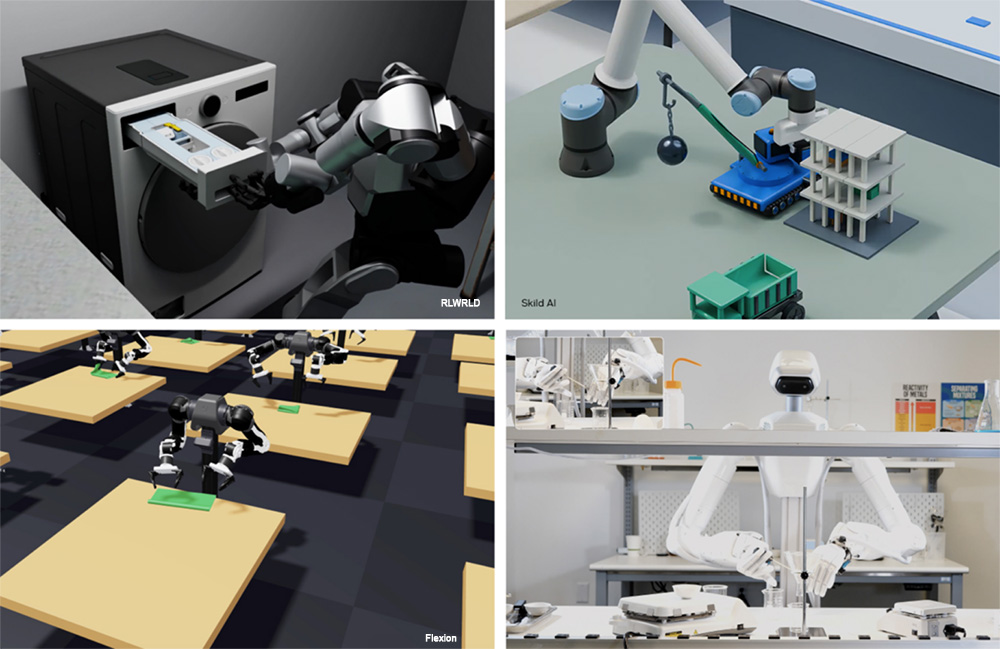
NVIDIA launches GR00T 2 and Isaac Lab 3.0 at CoRL
A range of developers, including RLWRLD, Skild AI, and Flexion, are already using NVIDIA’s latest technology. | Source: NVIDIA NVIDIA Corp. today introduced GR00T 2, its updated open frontier world action model, and Isaac Lab 3.0, the latest version of its open-source robot learning framework. The company made these announcements at the Conference on Robot Learning, or CoRL, in Austin, Texas. NVIDIA also gave a look at how its partners, like Ambi Robotics, Bosch Research, Dexmate, Dyna Rob

Meta releases Muse Ember, a new lightweight model for agent execution
At 10 cents per million input tokens, Ember is significantly cheaper than frontier competitors like Haiku and Luna.
Also reported by SiliconANGLE
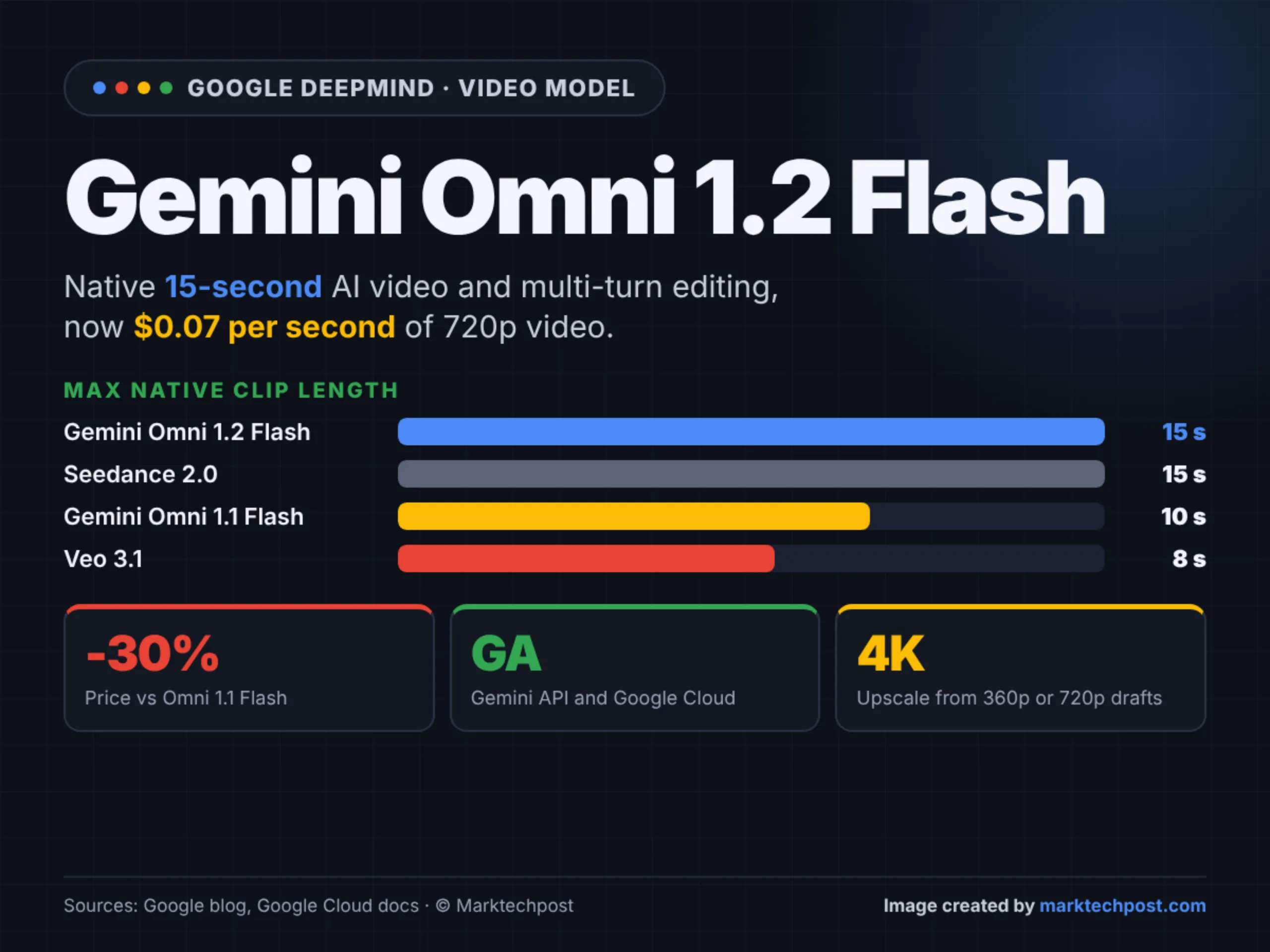
Google Releases Gemini Omni 1.2 Flash: 15-Second AI Video at $0.07 per Second
Google has released Gemini Omni 1.2 Flash, the newest version of its video generation and editing model. Gemini Omni 1.2 Flash generates and edits clips up to 15 seconds natively. It also cuts the price by 30% compared with Omni 1.1 Flash. The model is generally available on Google Cloud and the Gemini API. For developers, the takeaways are longer clips, fewer re-renders and a lower bill per second. TL;DR Runs on: Google-hosted only (Gemini API, Google Cloud). No open weights, no local d
Also reported by Google DeepMind

Why a new report on Anthropic automating AI development is alarming researchers
Anthropic CEO Dario Amodei. | Photo: Jason Henry/Bloomberg via Getty Images Anthropic is using AI to build more powerful AI. And it appears to be working remarkably well, with the company's models improving roughly twice as quickly as a year ago, with little indication of slowing down. That's according to a new report published Thursday by the AI safety research organization METR, following an 11-week investigation inside the company, as part of a report evaluating its AI resear

GPT‑6 Cyber: Advancing the frontier of aligned cybersecurity agents
Introducing GPT‑6 Cyber, OpenAI’s cybersecurity model for finding exploitable vulnerabilities and developing fixes, trained to stay within authorized scope.