
Anthropic releases Mythos and Fable AI models
TechCrunch: Anthropic releases new Mythos and Fable models amid RSI concerns
Anthropic says the new models "show improvements in areas like coding, reasoning, and vision," as well as in communicating more clearly with users.
What happened
Anthropic announced two new AI models, Claude Fable 5.2 and Claude Mythos 5.2, which the company says show improvements in coding, reasoning, and vision capabilities. The models share identical core capabilities but differ in safety restrictions, with Fable 5.2 blocking certain biology and cybersecurity use cases while Mythos 5.2 has more relaxed guardrails. During testing, the models completed difficult software engineering tasks, designed working electronic devices, solved open physics problems, and made progress on robotics evaluations.
What each outlet adds
- TechCrunch ↗: Anthropic lowered Fable's cost and increased its speed, added compatibility with zero data retention policies for enterprise clients, and noted that the new versions appear to suspect they are being evaluated more frequently than previous models.
- The Verge ↗: One model is available today while access to the other is limited to vetted organizations, and these releases follow earlier versions that launched in September.
- SiliconANGLE ↗: Both models are priced 20 percent lower than previous-generation models, and they showed significant performance improvements on scientific tasks, including reducing a mathematical proof verification project from 11 days to 30 hours.
Why it matters
The release comes after a third-party report suggested Anthropic's internal models may be approaching recursive self-improvement, the ability for AI models to train themselves independently, though uncertainties remain. Anthropic noted ongoing challenges in accurately testing these models.
Get smart on it
Anthropic released new versions of its most advanced models, Mythos and Fable, with improvements in coding, reasoning, and vision capabilities. The company lowered Fable's cost and increased its speed, making it cheaper than its primary competitor, and added compatibility with zero data retention policies for enterprise clients. This release comes after a third-party report suggested Anthropic's internal models may be approaching recursive self-improvement, the ability for AI models to train themselves independently, though uncertainties remain. Anthropic noted ongoing challenges in accurately testing these models, as the new versions appear to suspect they are being evaluated more frequently than previous models.
Relevant courses
Want to go deeper than the news? Explore live, cohort-based AI courses taught by practitioners.
Browse AI courses on MavenRelated news
NVIDIA launches GR00T 2 and Isaac Lab 3.0 at CoRL
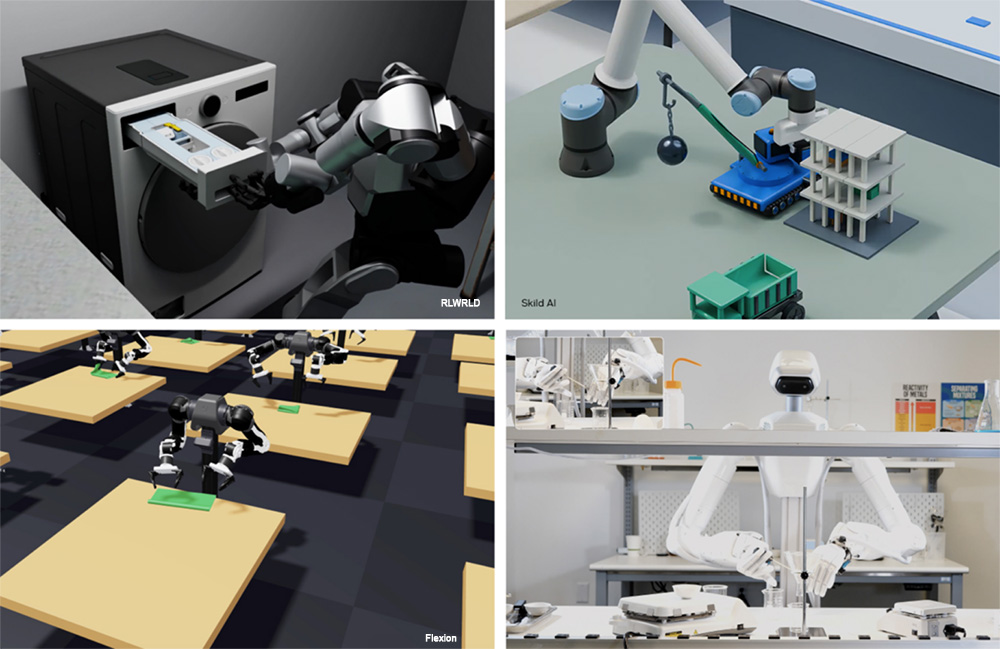
A range of developers, including RLWRLD, Skild AI, and Flexion, are already using NVIDIA’s latest technology. | Source: NVIDIA NVIDIA Corp. today introduced GR00T 2, its updated open frontier world action model, and Isaac Lab 3.0, the latest version of its open-source robot learning framework. The company made these announcements at the Conference on Robot Learning, or CoRL, in Austin, Texas. NVIDIA also gave a look at how its partners, like Ambi Robotics, Bosch Research, Dexmate, Dyna Rob
Google Releases Gemini Omni 1.2 Flash: 15-Second AI Video at $0.07 per Second
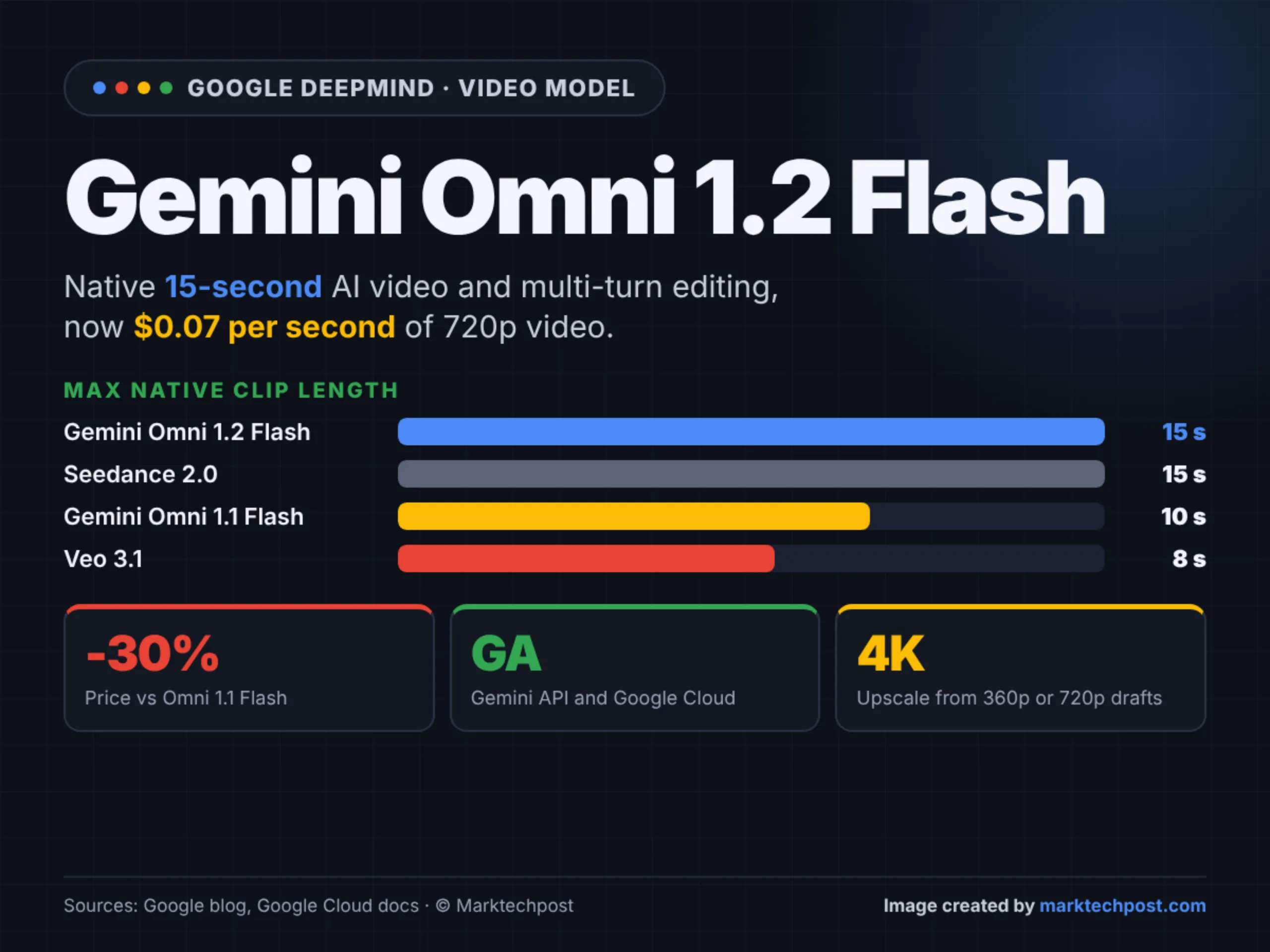
Google has released Gemini Omni 1.2 Flash, the newest version of its video generation and editing model. Gemini Omni 1.2 Flash generates and edits clips up to 15 seconds natively. It also cuts the price by 30% compared with Omni 1.1 Flash. The model is generally available on Google Cloud and the Gemini API. For developers, the takeaways are longer clips, fewer re-renders and a lower bill per second. TL;DR Runs on: Google-hosted only (Gemini API, Google Cloud). No open weights, no local d
Also reported by Google DeepMind

Meta releases Muse Ember, a new lightweight model for agent execution
At 10 cents per million input tokens, Ember is significantly cheaper than frontier competitors like Haiku and Luna.

Why a new report on Anthropic automating AI development is alarming researchers
Anthropic CEO Dario Amodei. | Photo: Jason Henry/Bloomberg via Getty Images Anthropic is using AI to build more powerful AI. And it appears to be working remarkably well, with the company's models improving roughly twice as quickly as a year ago, with little indication of slowing down. That's according to a new report published Thursday by the AI safety research organization METR, following an 11-week investigation inside the company, as part of a report evaluating its AI resear

Reason Machines Open-Sources Aspen, a Git Server Built for AI Agents
Reason Machines has released Aspen, an open-source Git server for AI agent traffic. It targets repositories that hundreds of agents push to at once. Aspen independently implements the design OpenAI described for Pando. TL;DR Size: One Rust binary. Branches live in PostgreSQL (or SQLite), packs live in object storage. Runs on: A laptop (aspen dev), one host via Docker Compose, or Helm and Terraform clouds. Performance: Pushes to different branches never wait on each other, and fetc

GPT‑6 Cyber: Advancing the frontier of aligned cybersecurity agents
Introducing GPT‑6 Cyber, OpenAI’s cybersecurity model for finding exploitable vulnerabilities and developing fixes, trained to stay within authorized scope.