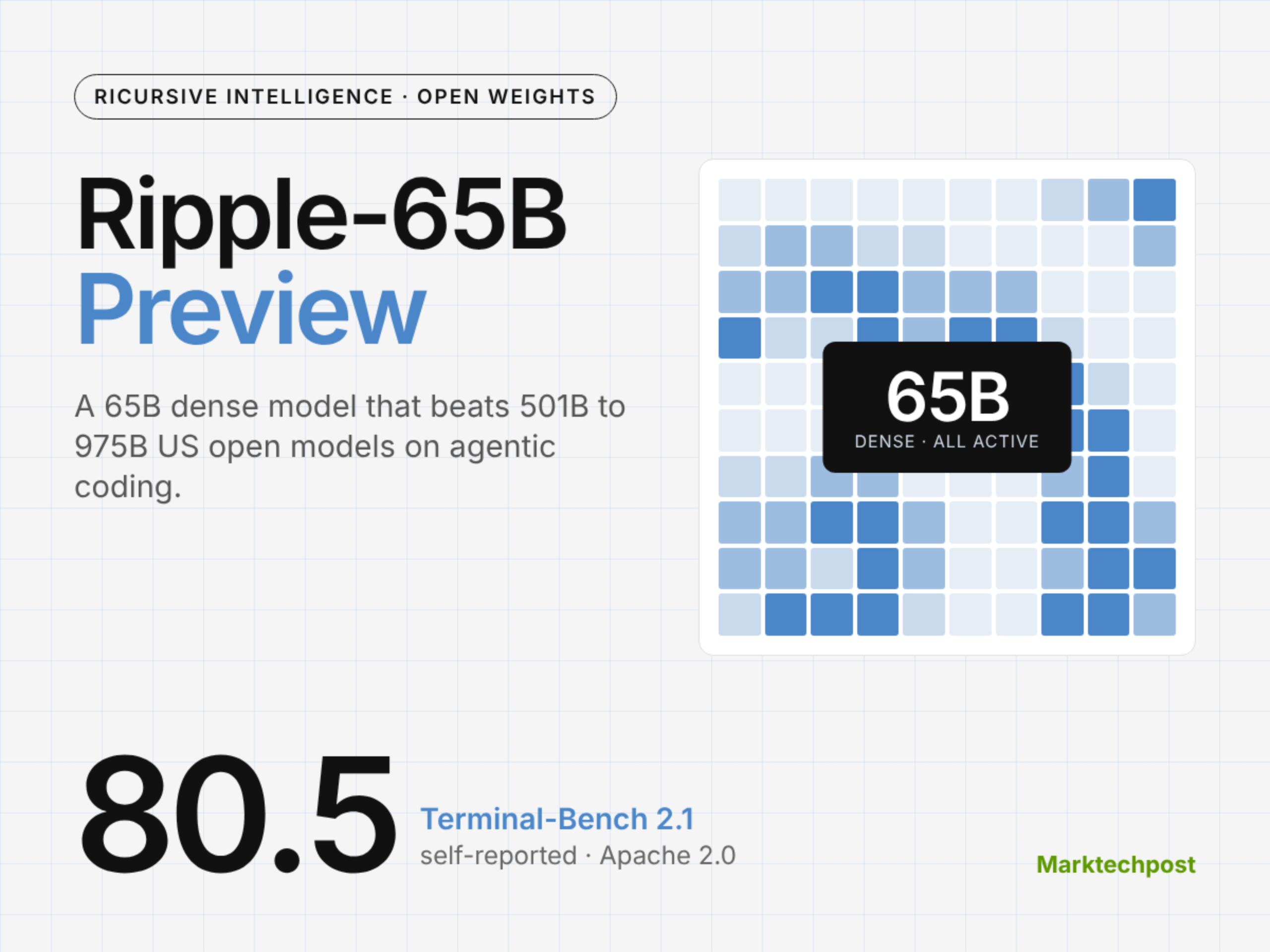
Ricursive AI releases Ripple-65B Preview model
MarkTechPost: Ricursive AI Releases Ripple-65B Preview: A 65B Dense Open-Weight Model Scoring 80.5 on Terminal-Bench 2.1
Ricursive Intelligence just released Ripple-65B Preview. Ripple-65B Preview is a 65B dense open-weight model from Ricursive, pretrained from scratch for agentic coding. It is a general-purpose variant of the proprietary model behind Ricursive’s AI chip design platform. The main claim: 80.52 on Terminal-Bench 2.1, the top self-reported score among US open-weight models. Every MoE rival it beats on that test carries 501B to 975B total parameters. TL;DR Size: 65B dense (65B active), p
Get smart on it
Ricursive AI released Ripple-65B Preview, a 65-billion-parameter open-weight model designed for coding tasks that achieved a score of 80.5 on Terminal-Bench 2.1, the highest among comparable open-weight US models. The model uses a dense Transformer architecture rather than a Mixture-of-Experts design, was pretrained on 12 trillion tokens with up to 1 million token context, and is available under an Apache 2.0 license. Ricursive reports the full research and development cost was 32 million dollars and used 1.4 million reinforcement learning rollouts to achieve its benchmark performance. While Ripple-65B performs well on coding benchmarks, it trails larger competitor models on science-focused and general knowledge tasks.
Relevant courses
Want to go deeper than the news? Explore live, cohort-based AI courses taught by practitioners.
Browse AI courses on MavenRelated news
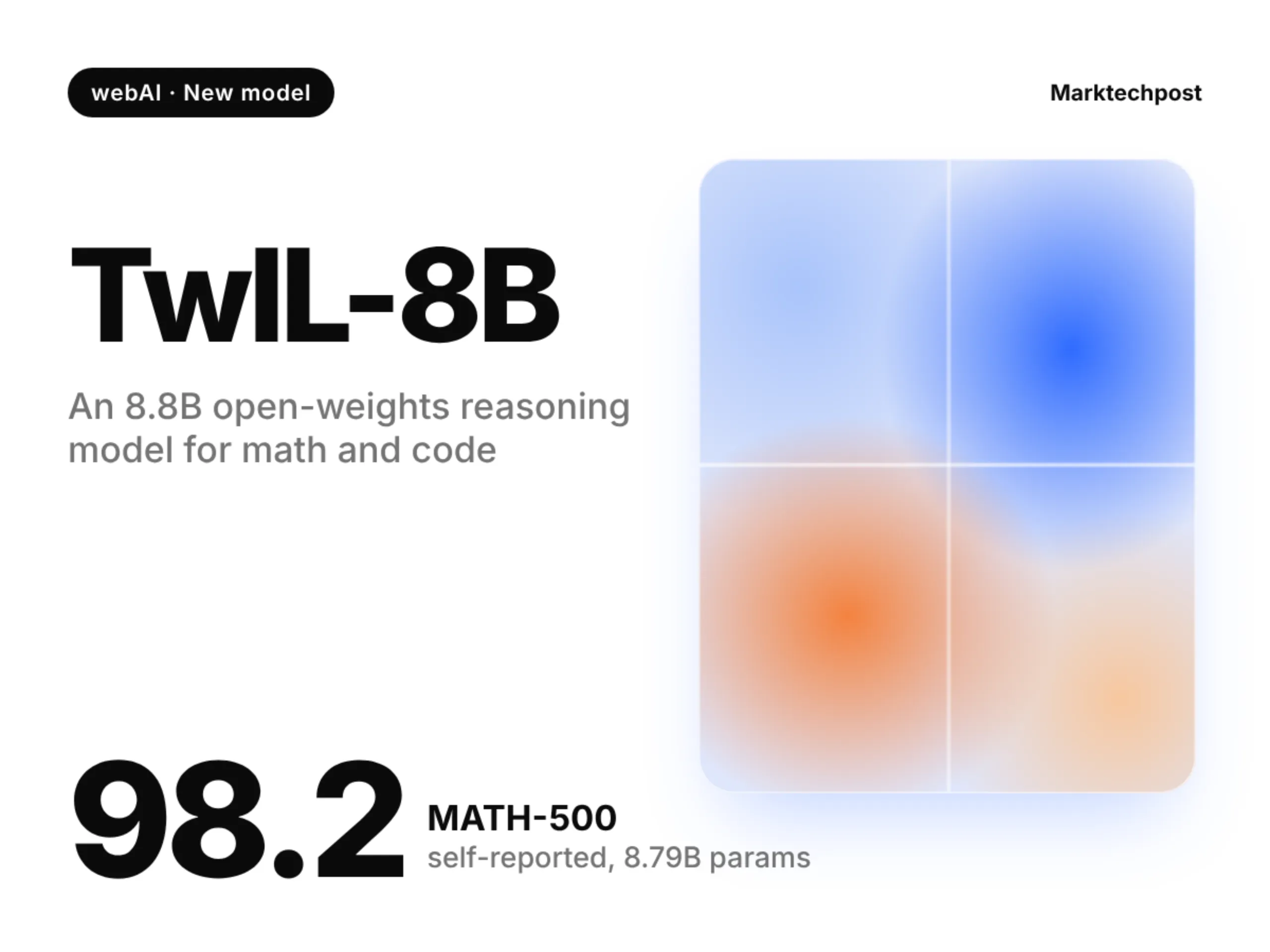
webAI Releases TwIL-8B, an 8.8B Reasoning Model Scoring 98.2 on MATH-500
webAI has released TwIL-8B, an 8.8B reasoning model for math, code and instruction following. The TwIL-8B reasoning model is post-trained from IBM’s Granite 4.2 8B. Weights are on Hugging Face under a non-commercial license. webAI’s launch post frames the pitch around cost per task, not raw scale. The 4-bit build is 4.98 GiB, sized for CPU or modest-VRAM GPU inference. TL;DR Size: 8.79B parameters, dense. 131,072-token context, inherited from the base model. Runs on: CPU o

LifeVal
Introducing LifeVal, a benchmark measuring how well AI helps people complete everyday tasks, from finding childcare to managing finances and government paperwork.

GDPx: Measuring Frontier Model Capabilities Across the Most Valuable Domains
GDPx is a benchmark that covers the most valuable domains for frontier intelligence. It aims to be the world’s best benchmark for measuring general agentic capabilities.We believe the first trillion dollars of AI revenue will be concentrated in sectors that can deploy frontier intelligence at high ROI, not broadly diffused throughout the whole economy. Building a general-purpose benchmark based on share of GDP or the SOC/O*NET occupational taxonomy is therefore a mistake. If your goal is t

AI Security Agents Compared: Claude, Codex, Mantis, Cloudflare
Anthropic, OpenAI, Cloudflare and Google now each ship an AI agent that hunts security bugs in source code. We checked the repos, docs and technical details behind each one. The key finding: all 4 tools converge on one design. One agent finds a bug, a separate agent tries to disprove it, and only survivors get a patch. The differences are in where they run, who can use them and how much proof they demand. Key Takeaways 4 labs, 1 pattern: find, independently disprove, then patch. Cl
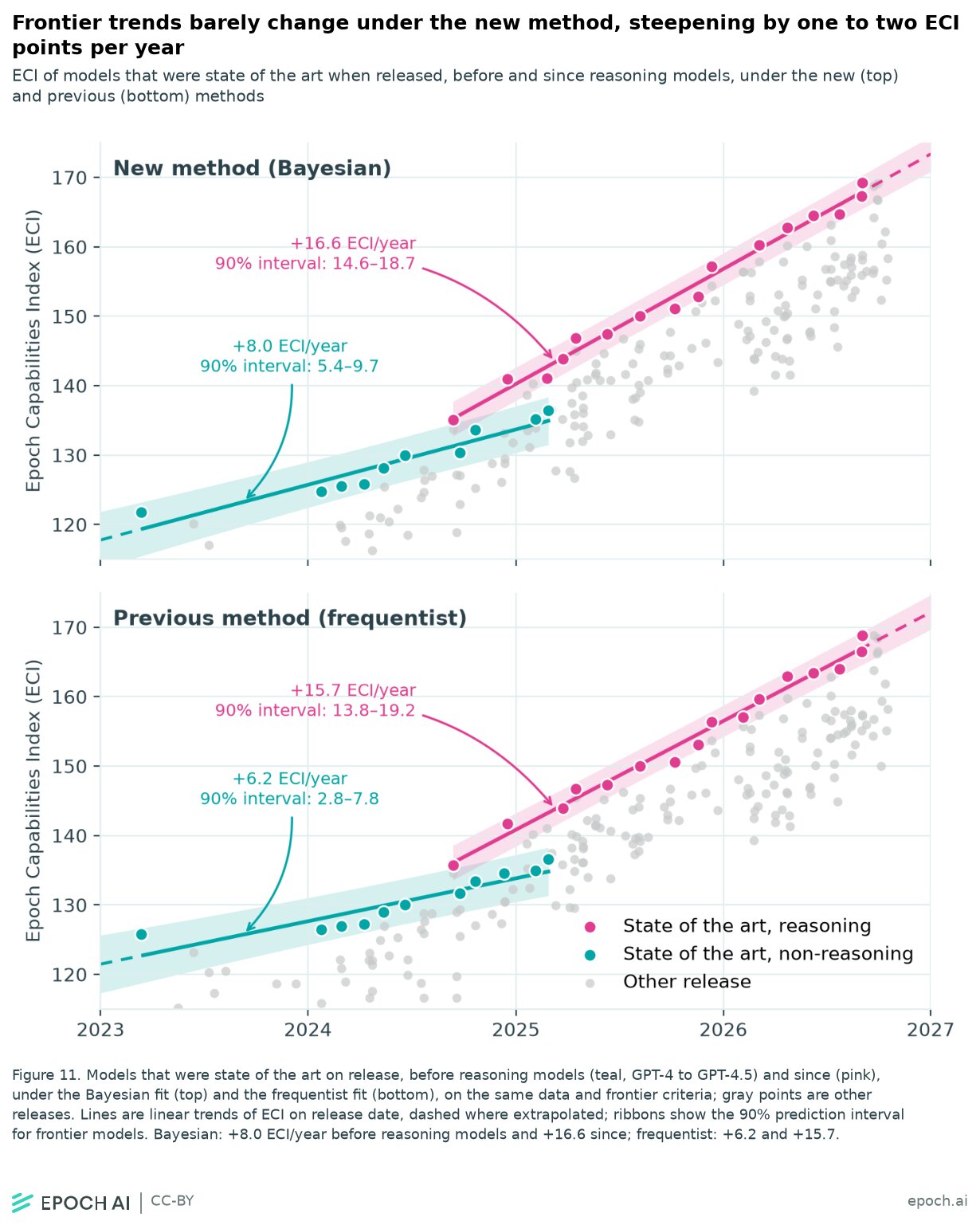
Updating the Epoch Capabilities Index methodology to use a Bayesian model
A Bayesian model gives the ECI better-justified uncertainty estimates and lets us compare models directly.

CWE-bench v2: More coverage, quality, and transparency
Better evaluation of software vulnerabilities helps developers identify and fix security flaws before they reach production.