Z.ai Releases GLM-5.3-Flash: A 320B-A18B Natively Multimodal MoE With a 1M-Token Context
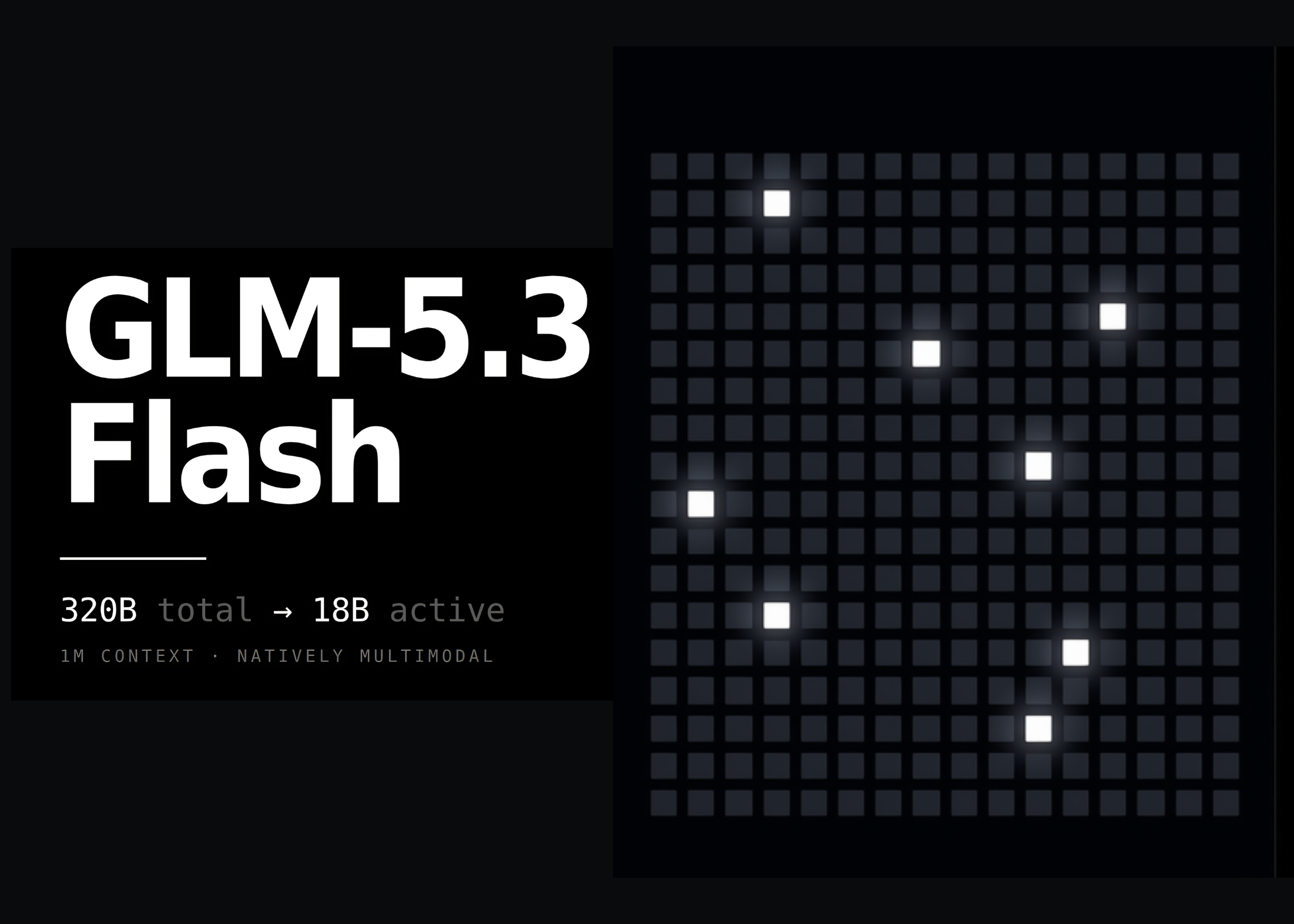
Z.ai has released GLM-5.3-Flash, the first natively multimodal model in the GLM-5 series and the cheapest capable coding model the lab has shipped. It is a mixture-of-experts model with 320B total parameters and 18B active per token, a 1,048,576-token context window, and image and video input — released under an MIT license with weights on Hugging Face. According to Z.ai reports, it beats GLM-5.2 across benchmarks and real workloads at roughly one-tenth the price, while landing within half a po
How it resolved
Will GLM-5.3-Flash appear on the Hugging Face open LLM leaderboard by September 3, 2026?
VoidedDeadline Sep 3, 2026
This prediction was voided because the outcome could not be settled from the source.
Get smart on it
Z.ai released GLM-5.3-Flash, a new artificial intelligence model designed to handle multiple types of input including text, images, and video. The model uses a mixture-of-experts architecture with a very large context window that allows it to process over one million tokens at once, and it performs comparably to other leading models while costing roughly one-tenth the price of its predecessor. The model matters because it makes capable AI more accessible and affordable for applications like coding, document analysis, and automation tasks, with deployment options available both through a hosted API and through self-hosting for organizations with sufficient hardware resources. The efficiency gains come from architectural innovations including a hybrid attention system that combines linear and sparse attention methods, a compression technique called IndexPool that reduces memory requirements at large context sizes, and design changes that reduce the number of active parameters needed per token.
Related news
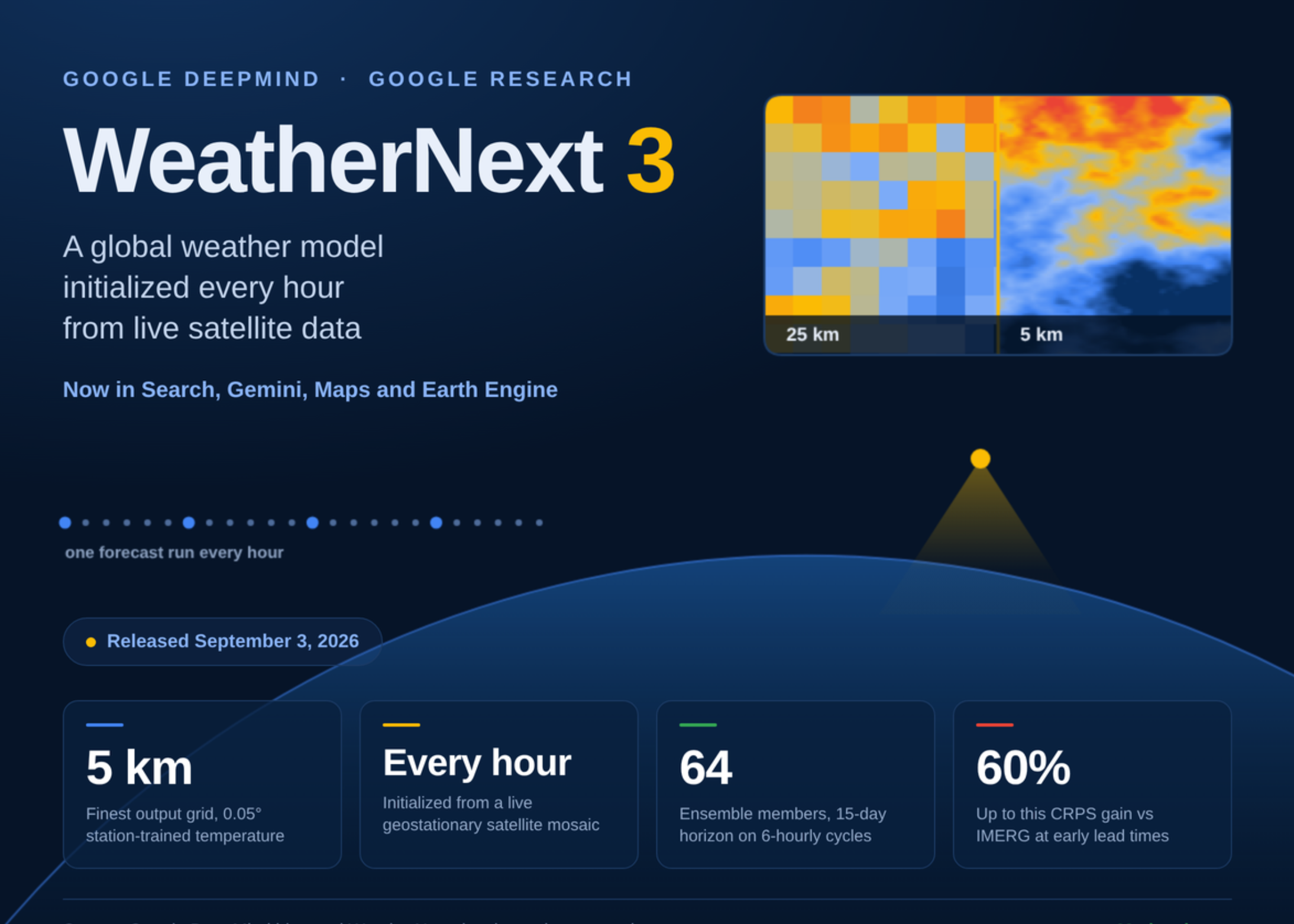
Google DeepMind’s WeatherNext 3 Trains on Weather Station Observations to Deliver 5 km Global Forecasts, Refreshed Every Hour
AI weather models have spent three years closing the gap with physics-based forecasting, but two problems stayed open: resolution too coarse for local terrain, and initialization tied to numerical weather prediction (NWP) analysis that arrives about six hours late. WeatherNext 3, released by Google DeepMind and Google Research, attacks both. It takes a live global geostationary satellite mosaic as a direct model input, re-initializes every hour, and emits forecasts down to 0.05° (~5 km) while t

OpenAI Releases GPT-6 Astra: A 1.05M-Context Computer-Use Model Gated Behind a ‘Critical’ Cyber Threshold
Today, OpenAI released GPT-6 Astra. The company calls it its most intelligent and aligned model, and positions it primarily as a computer-use system rather than a chat model. The pitch is that Astra operates software the way a person does, across browsers, spreadsheets, desktop applications and terminals, and finishes multi-step jobs instead of describing how to do them. Is it deployable? Partly, and not on your own hardware. Astra is a closed, hosted model with no released weights, so self