TypeSafe AI Releases Jev: A System One Model That Returns Typed, Calibrated Decisions Instead of Text
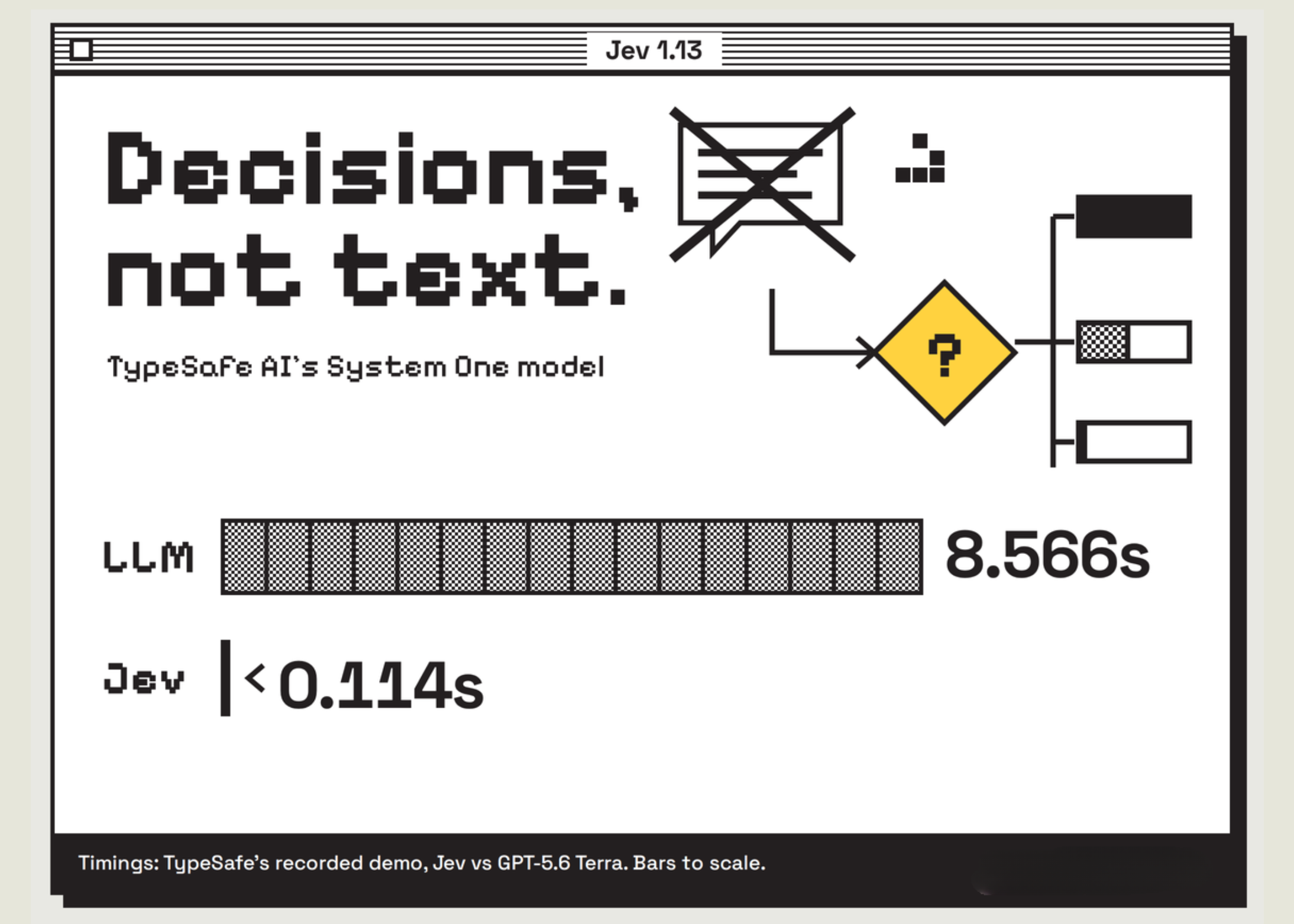
The ChatGPT moment in 2022 taught AI to talk to people. One of its builders now bets the next moment is AI that talks to software, not people. TypeSafe AI released Jev. Jev is transformer-based, but it is not a large language model. It does not generate text. You send a state and typed questions. It returns typed decisions with probabilities that code can branch on. Is it deployable? Yes, as a hosted API in early access behind a waitlist. TypeSafe has not published weights, a parameter count
Get smart on it
TypeSafe AI released Jev, a transformer-based model that differs fundamentally from large language models by returning typed decisions with probabilities instead of text. Rather than generating words for human readers, Jev accepts a state and typed questions, then outputs structured answers that code can use to make branching decisions. The model uses a new training approach called Reinforcement Learning for Calibrated Decisions instead of the RLHF tuning used in standard chat models, addressing issues like overconfidence and mode dropping that keep humans in the loop. Jev is available as a hosted API and costs $0.042 per million input tokens, with reported response times between 70 to 500 milliseconds, making it applicable to tasks like email triage, command safety, and agent guardrails where fast, reliable decisions matter more than natural language output.
Related news
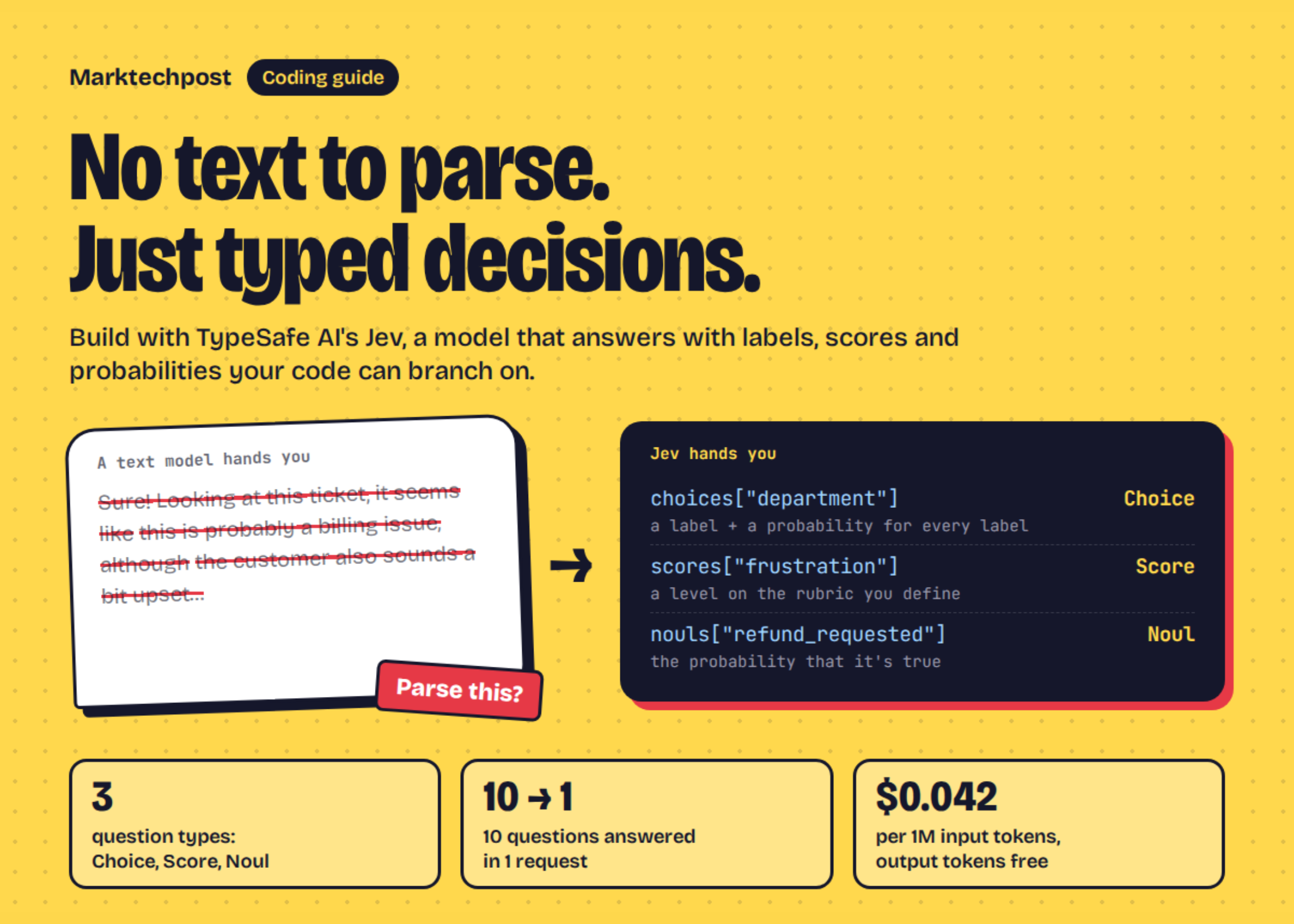
A Coding Guide to TypeSafe AI Jev: Typed Decisions, Calibrated Confidence, and Speculative Fan-Out with a System One Model
In this tutorial, we work with Jev, TypeSafe AI’s first System One model, which does not generate text at all: we send it a piece of program state and a set of typed questions, and it returns choices, scores, and yes/no probabilities that our code can branch on directly. We install the official Python SDK, make a first call that uses all three question primitives at once, and look at how the shape of the state changes what the model can know. We then recompute the published confidence sta
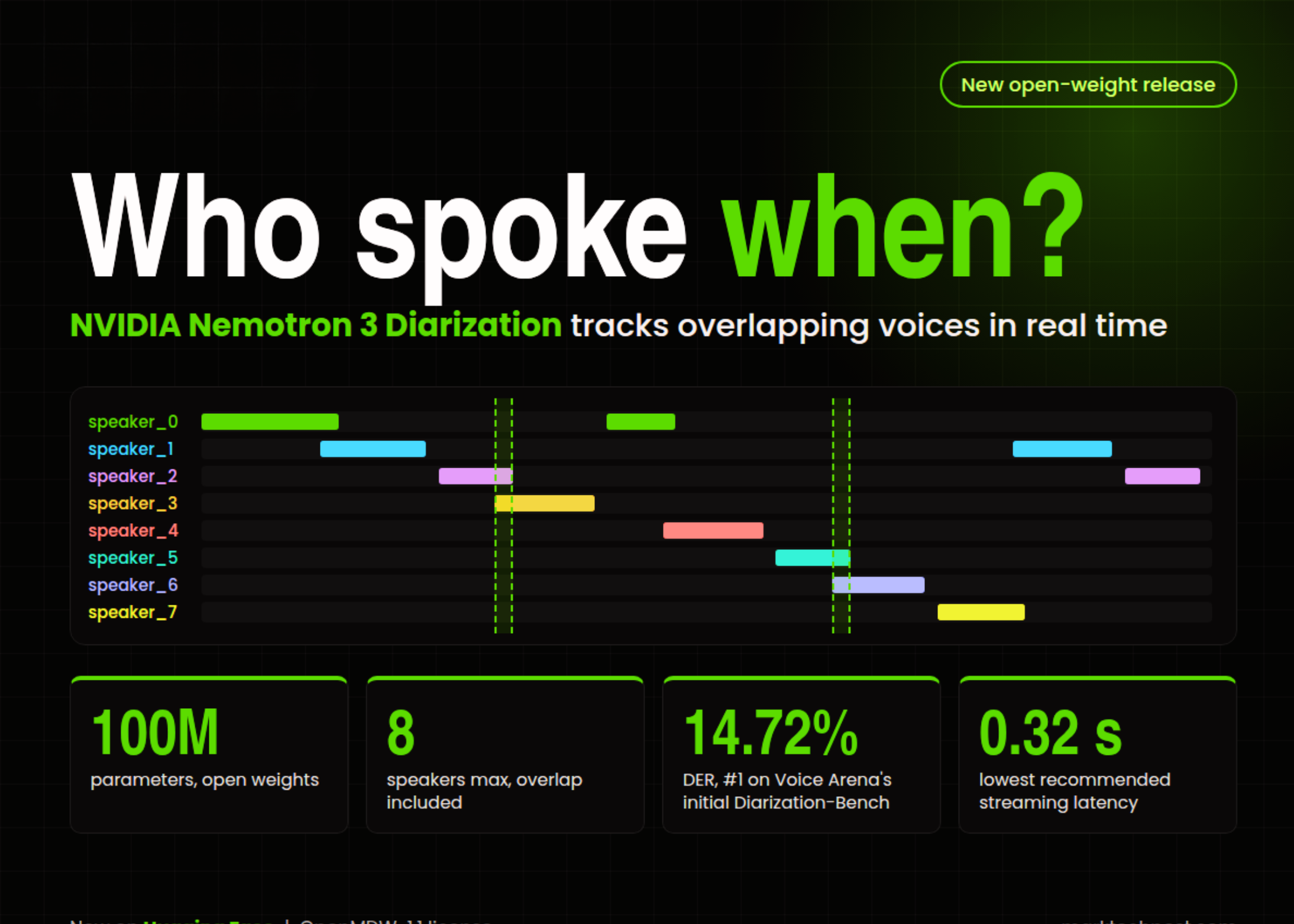
NVIDIA Releases Nemotron 3 Diarization: A 100M-Parameter Open-Weight Model That Tracks 8 Speakers in Real Time
NVIDIA has released Nemotron 3 Diarization, an open-weight speaker diarization model on Hugging Face. It answers one question about any conversation: who spoke when. The 100M-parameter model tracks up to 8 speakers, including when voices overlap. One checkpoint handles both offline recordings and real-time streaming. Is it deployable? Yes. The weights are released under the OpenMDW License 1.1, which permits commercial use. It runs on Linux through NVIDIA NeMo, using Ampere, Ada Lovelace, Ho