tokenizers v1: encode, decode and scaling, measured
Efficient text-to-number conversion is fundamental to how language models process and generate information at scale.
Get smart on it
A tokenizer converts text into sequences of integers that machine learning models can read. The upcoming version 1 of the tokenizers library focuses on making this conversion process significantly faster than the previous version, with improvements often measured in tens of times speedup. As models become faster and workloads scale, tokenization can become a bottleneck that prevents GPUs from being fully utilized, making performance improvements necessary. The speedups come from multiple changes including using bitstream operations instead of regex patterns for splitting text, caching repeated words to avoid reprocessing them, rewriting the merging loop to update indices instead of moving data, and enabling multiple threads to tokenize simultaneously without queuing on a single lock.
Related news
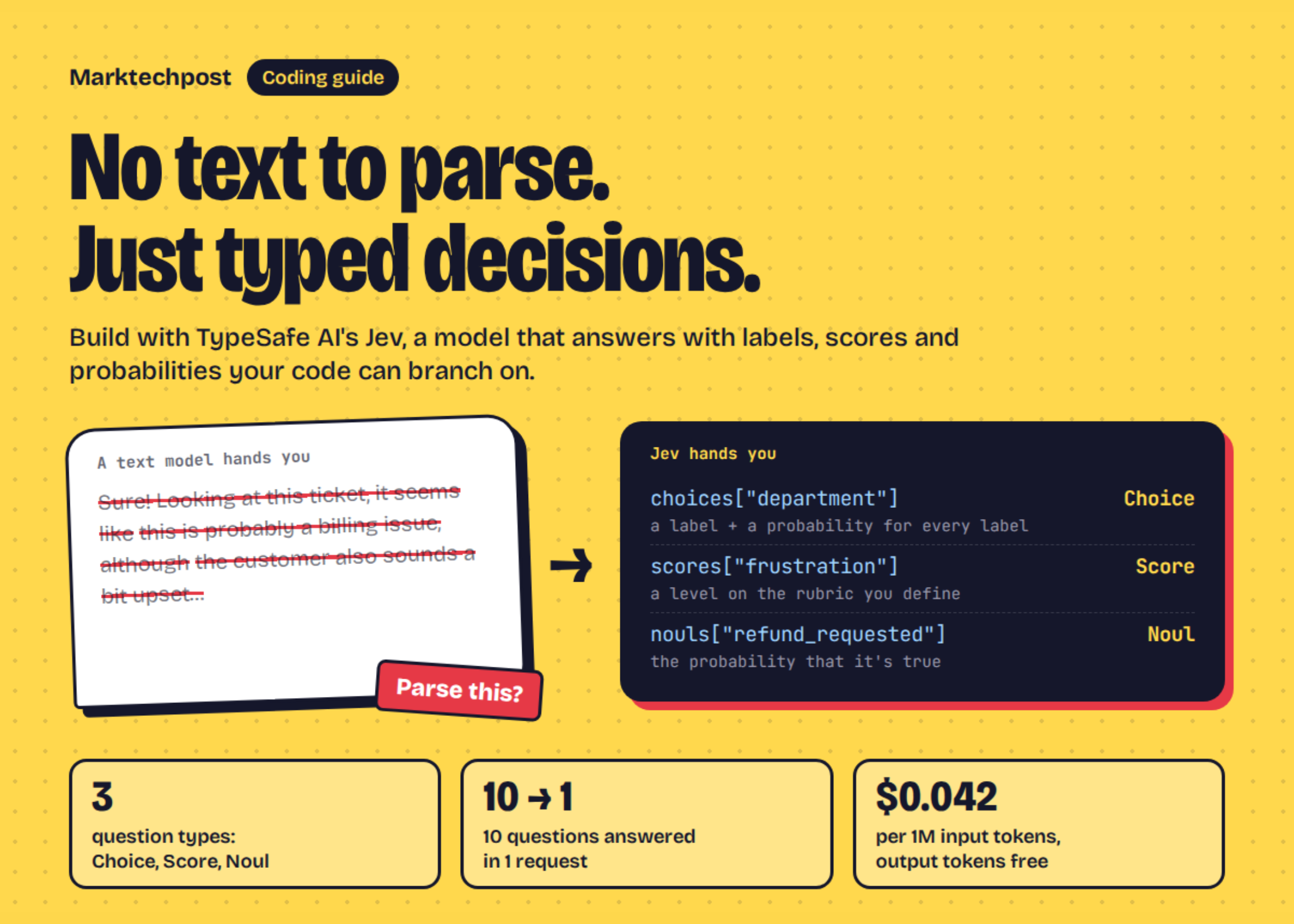
A Coding Guide to TypeSafe AI Jev: Typed Decisions, Calibrated Confidence, and Speculative Fan-Out with a System One Model
In this tutorial, we work with Jev, TypeSafe AI’s first System One model, which does not generate text at all: we send it a piece of program state and a set of typed questions, and it returns choices, scores, and yes/no probabilities that our code can branch on directly. We install the official Python SDK, make a first call that uses all three question primitives at once, and look at how the shape of the state changes what the model can know. We then recompute the published confidence sta
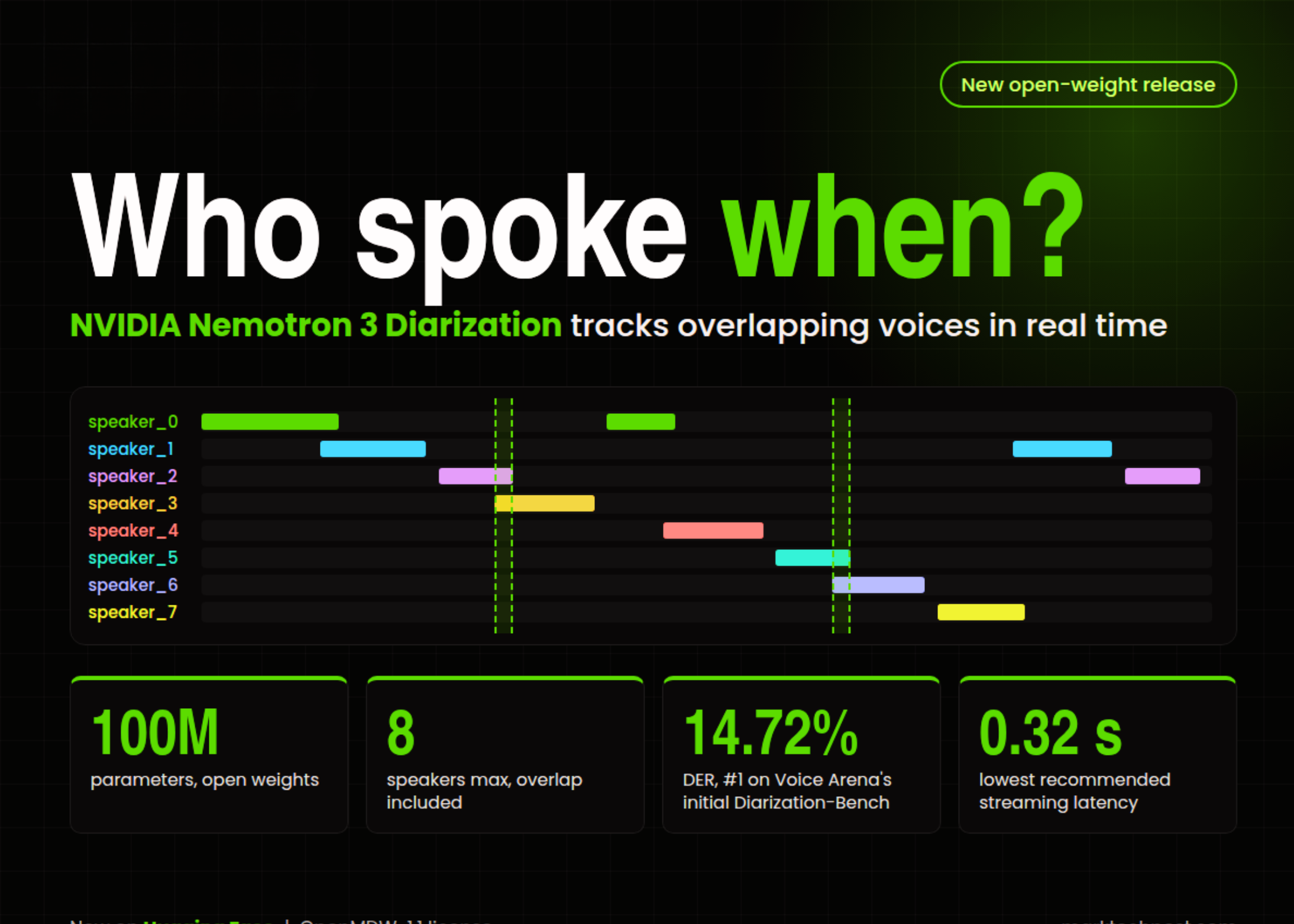
NVIDIA Releases Nemotron 3 Diarization: A 100M-Parameter Open-Weight Model That Tracks 8 Speakers in Real Time
NVIDIA has released Nemotron 3 Diarization, an open-weight speaker diarization model on Hugging Face. It answers one question about any conversation: who spoke when. The 100M-parameter model tracks up to 8 speakers, including when voices overlap. One checkpoint handles both offline recordings and real-time streaming. Is it deployable? Yes. The weights are released under the OpenMDW License 1.1, which permits commercial use. It runs on Linux through NVIDIA NeMo, using Ampere, Ada Lovelace, Ho