StepFun Launches Step 5 Preview: A 600B-Total, 27B-Active MoE Model With 1M Context for Long-Horizon Agentic Work
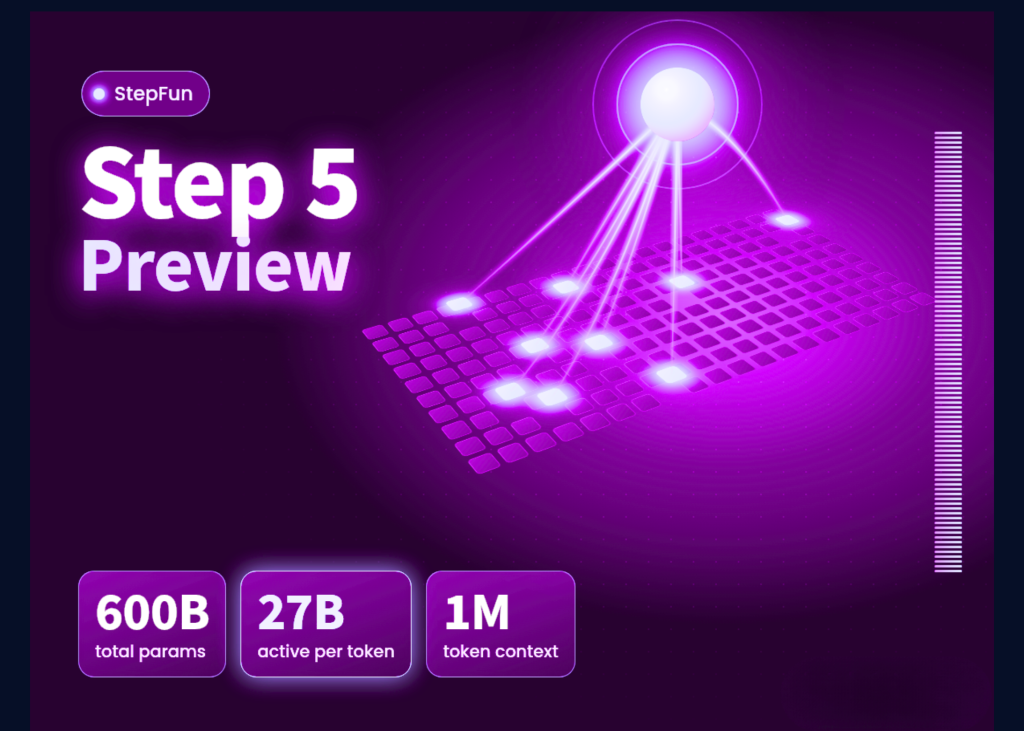
StepFun has released Step 5 Preview, its new flagship model for agentic work. The target workloads are software engineering, professional knowledge work, and finance. The main pitch is cost. StepFun team states the model delivers comparable intelligence at a substantially lower task cost. That is the ‘Pareto frontier’ framing in the launch title. Is it deployable? Yes, as a hosted API and on the StepFun platform. Self-hosting waits for open weights. StepFun says open weights land
Get smart on it
StepFun released Step 5 Preview, a new artificial intelligence model designed for tasks like software engineering, knowledge work, and finance. The model contains 600 billion total parameters but only activates 27 billion per token, making it sparse and potentially cost-efficient compared to rival models. It supports a 1 million token context window, accepts text, images, and video as input, and is available through an API at $1.00 per million input tokens and $2.70 per million output tokens. Open source weights are scheduled for release on October 15, 2026, allowing others to download and self-host the model on multi-GPU servers.
Related news
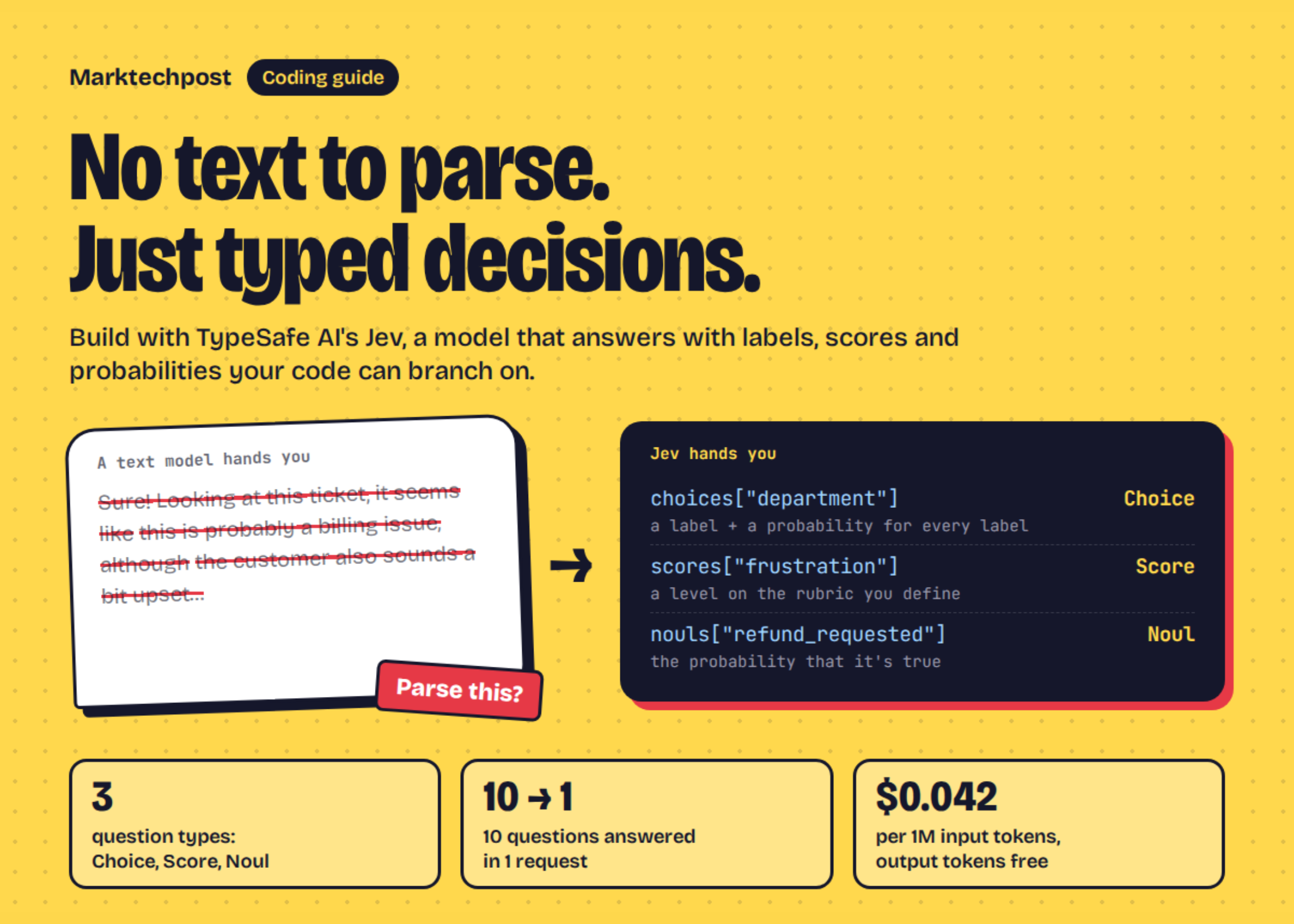
A Coding Guide to TypeSafe AI Jev: Typed Decisions, Calibrated Confidence, and Speculative Fan-Out with a System One Model
In this tutorial, we work with Jev, TypeSafe AI’s first System One model, which does not generate text at all: we send it a piece of program state and a set of typed questions, and it returns choices, scores, and yes/no probabilities that our code can branch on directly. We install the official Python SDK, make a first call that uses all three question primitives at once, and look at how the shape of the state changes what the model can know. We then recompute the published confidence sta
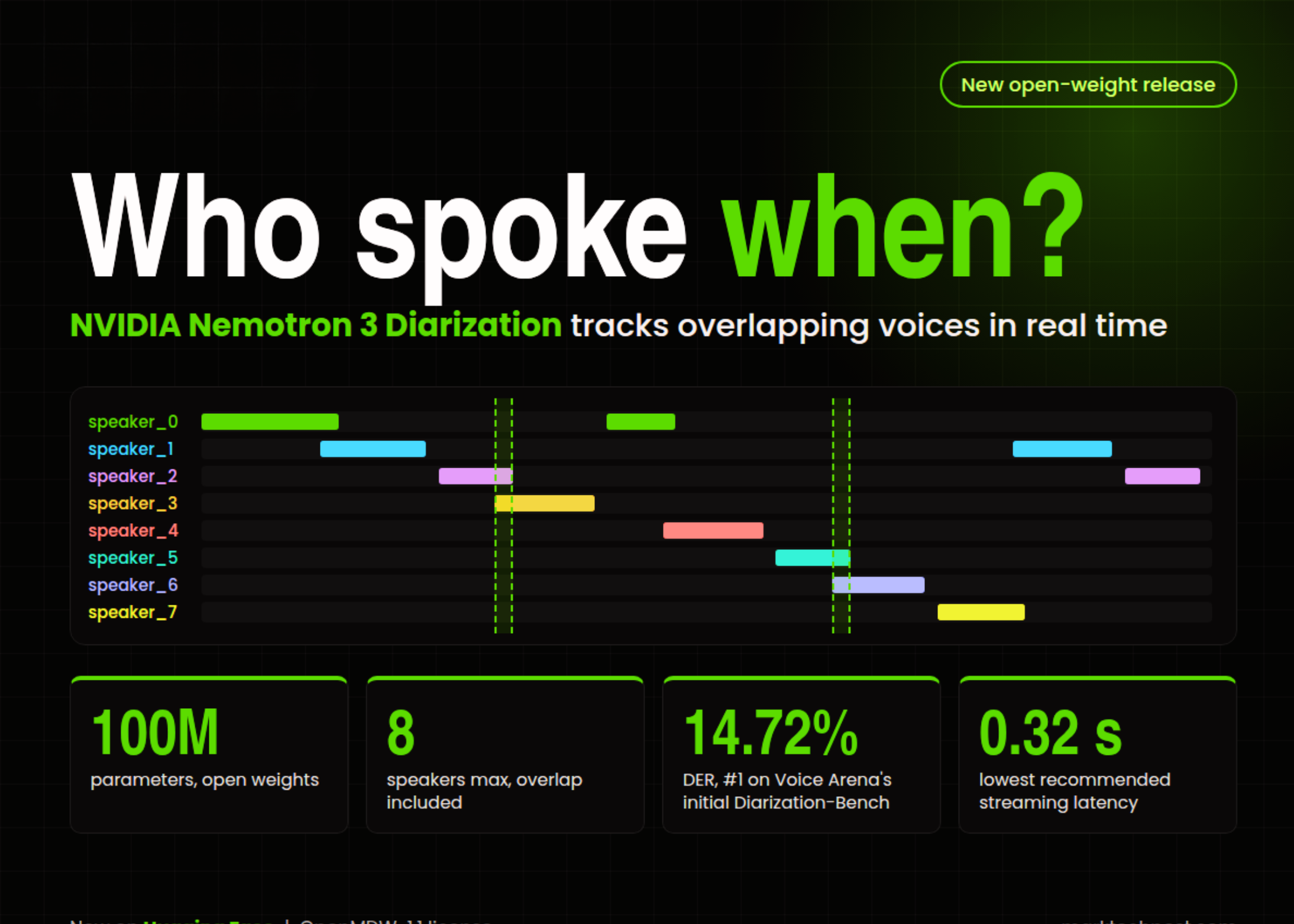
NVIDIA Releases Nemotron 3 Diarization: A 100M-Parameter Open-Weight Model That Tracks 8 Speakers in Real Time
NVIDIA has released Nemotron 3 Diarization, an open-weight speaker diarization model on Hugging Face. It answers one question about any conversation: who spoke when. The 100M-parameter model tracks up to 8 speakers, including when voices overlap. One checkpoint handles both offline recordings and real-time streaming. Is it deployable? Yes. The weights are released under the OpenMDW License 1.1, which permits commercial use. It runs on Linux through NVIDIA NeMo, using Ampere, Ada Lovelace, Ho