SpaceXAI Releases Grok Voice Transcribe 2.0: A Speech-to-Text API Claiming 2x Accuracy Over 1.0 at $0.10 per Hour
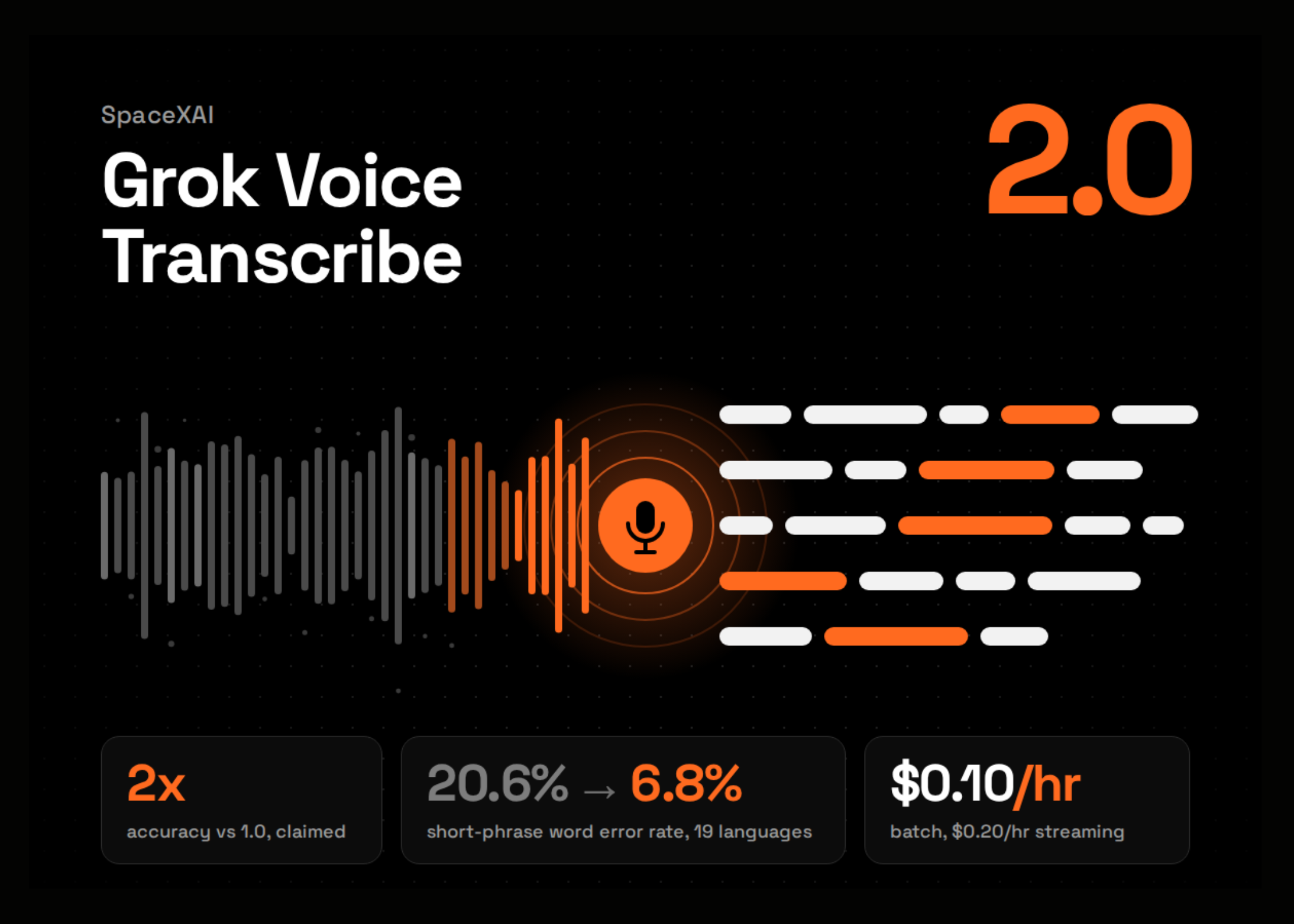
SpaceXAI has released Grok Voice Transcribe 2.0, its newest speech-to-text (STT) model. The development team claims it to be twice as accurate as Grok Voice Transcribe 1.0 at the same price. The model targets hard audio: noisy phone lines, competing voices, local accents, and spoken credentials. It runs in batch and real-time streaming modes through the Speech to Text API. Is it deployable? Yes, as a hosted API. It is live today under the model ID grok-voice-transcribe-2.0. SpaceXAI has not
Get smart on it
SpaceXAI has released Grok Voice Transcribe 2.0, a speech-to-text API that converts spoken audio into written text and claims to be twice as accurate as its previous version while maintaining the same pricing of $0.10 per hour for batch processing. The model is designed to handle challenging audio conditions including noisy phone lines, multiple speakers, accents, and credentials, and it supports dozens of languages with automatic language detection and mid-recording language switching. It matters because the update significantly reduces word errors in short phrases across 19 languages, dropping from 20.6% to 6.8% error rate, and the company reports it ranks first among 32 streaming models on a public accuracy benchmark. The API is available only as a hosted service rather than open-source weights, and it includes features like speaker identification, word-level timestamps, and multichannel transcription at no additional cost.
Related news
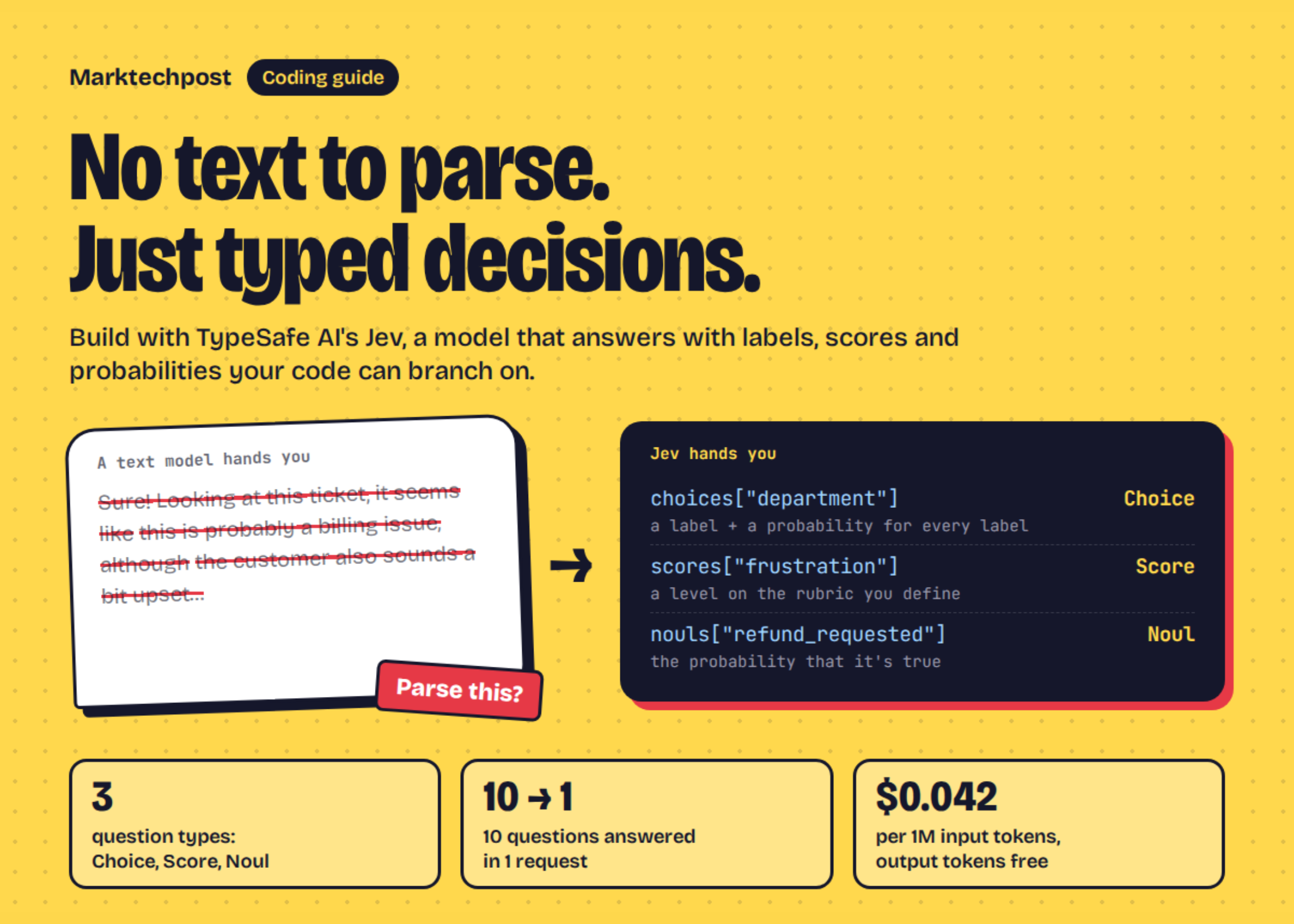
A Coding Guide to TypeSafe AI Jev: Typed Decisions, Calibrated Confidence, and Speculative Fan-Out with a System One Model
In this tutorial, we work with Jev, TypeSafe AI’s first System One model, which does not generate text at all: we send it a piece of program state and a set of typed questions, and it returns choices, scores, and yes/no probabilities that our code can branch on directly. We install the official Python SDK, make a first call that uses all three question primitives at once, and look at how the shape of the state changes what the model can know. We then recompute the published confidence sta
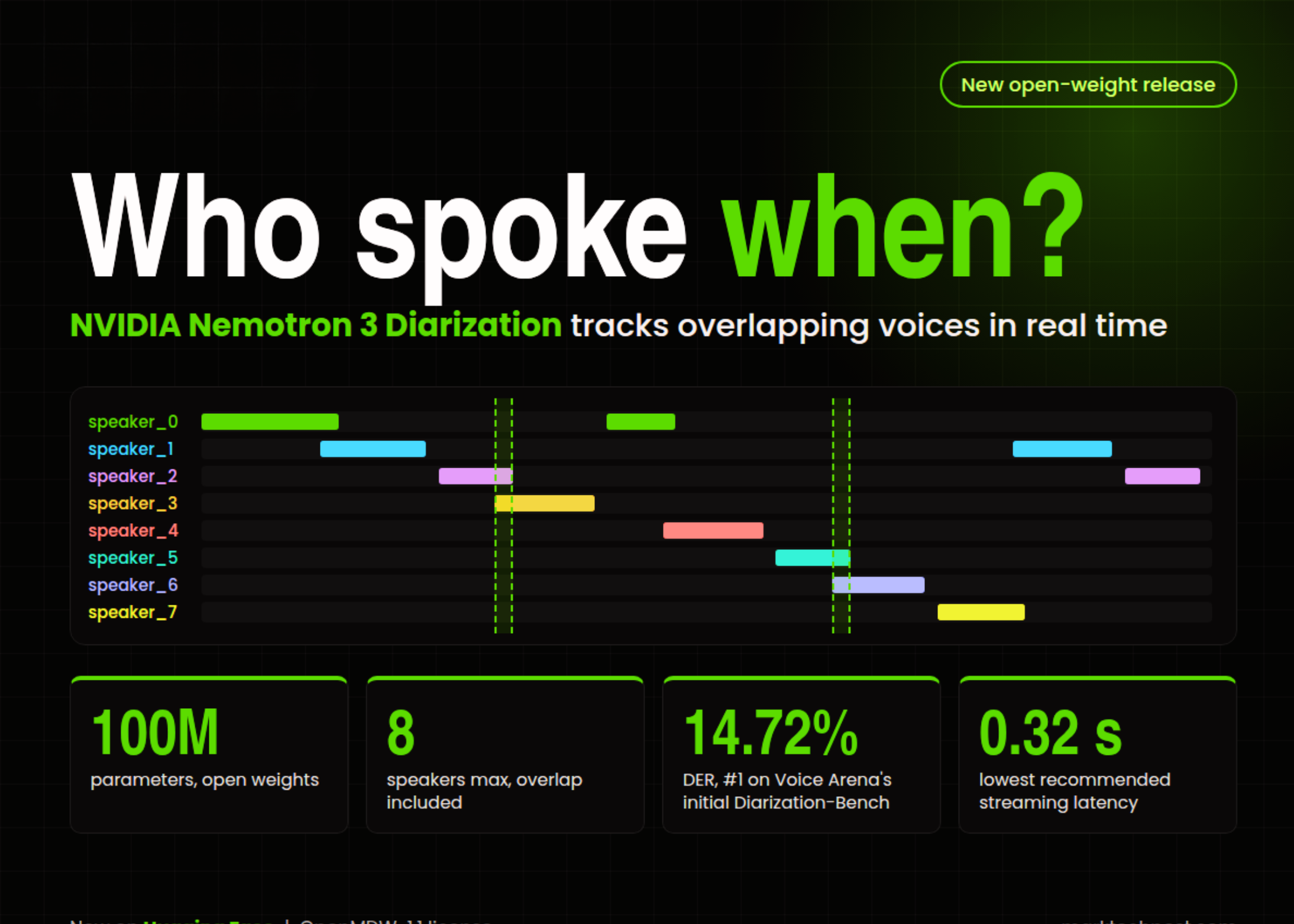
NVIDIA Releases Nemotron 3 Diarization: A 100M-Parameter Open-Weight Model That Tracks 8 Speakers in Real Time
NVIDIA has released Nemotron 3 Diarization, an open-weight speaker diarization model on Hugging Face. It answers one question about any conversation: who spoke when. The 100M-parameter model tracks up to 8 speakers, including when voices overlap. One checkpoint handles both offline recordings and real-time streaming. Is it deployable? Yes. The weights are released under the OpenMDW License 1.1, which permits commercial use. It runs on Linux through NVIDIA NeMo, using Ampere, Ada Lovelace, Ho