QuEra’s Libra Fault-Tolerant Quantum System Heading To Amazon Braket Service
Get smart on it
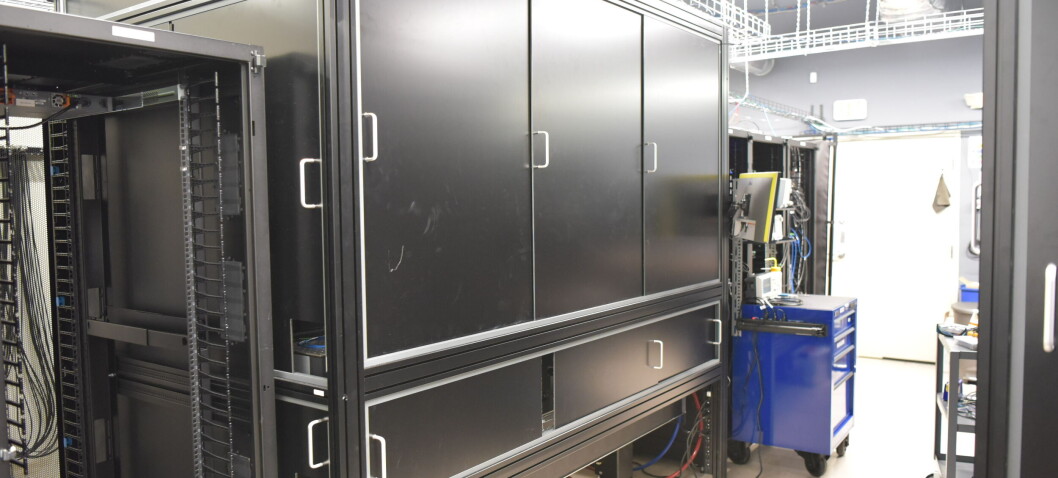
A quantum computing company is announcing a new fault-tolerant quantum system that will be available through a cloud service, representing progress toward practical quantum computers. The system will use thousands of physical qubits to create hundreds of error-corrected logical qubits, which is significant because quantum computers have historically produced too many errors to be useful for real problems. This matters because the industry has moved beyond proving quantum computers can exist and beyond demonstrating error correction to the critical phase of scaling up systems large enough to run useful applications. Recent advances in error correction techniques, improved qubits, and more efficient algorithms have narrowed the gap between current systems and commercially useful quantum computers, with some experts estimating truly useful applications may be only years away.
Related news

Vibe coding platform Base44 launches own model as AI startups seek defensibility
Wix-owned vibe coding platform Base44 has started rolling out its own AI model — with hopes that it will eventually outperform frontier models.

DiScoFormer: One transformer for density and score, across distributions
DiScoFormer is a transformer model that estimates both the density and score of a data distribution in a single forward pass without requiring retraining for new distributions. The density describes where data points cluster, while the score, the gradient of log-density, points toward more probable regions and is used in diffusion-based generative models, Bayesian sampling, and scientific simulations. Existing methods force a trade-off: classical kernel density estimation works on any distribution but loses accuracy in high dimensions, while neural score-matching models stay accurate in high dimensions but must be retrained for each new distribution. DiScoFormer significantly outperforms kernel density estimation, cutting score error by 6.5 times and density error by more than 37 times in 100 dimensions, while generalizing to distributions with shapes and complexities not seen during training.