Liquid AI Ships LFM2.5-230M with llama.cpp, MLX, vLLM, SGLang, and ONNX Support for On-Device Inference
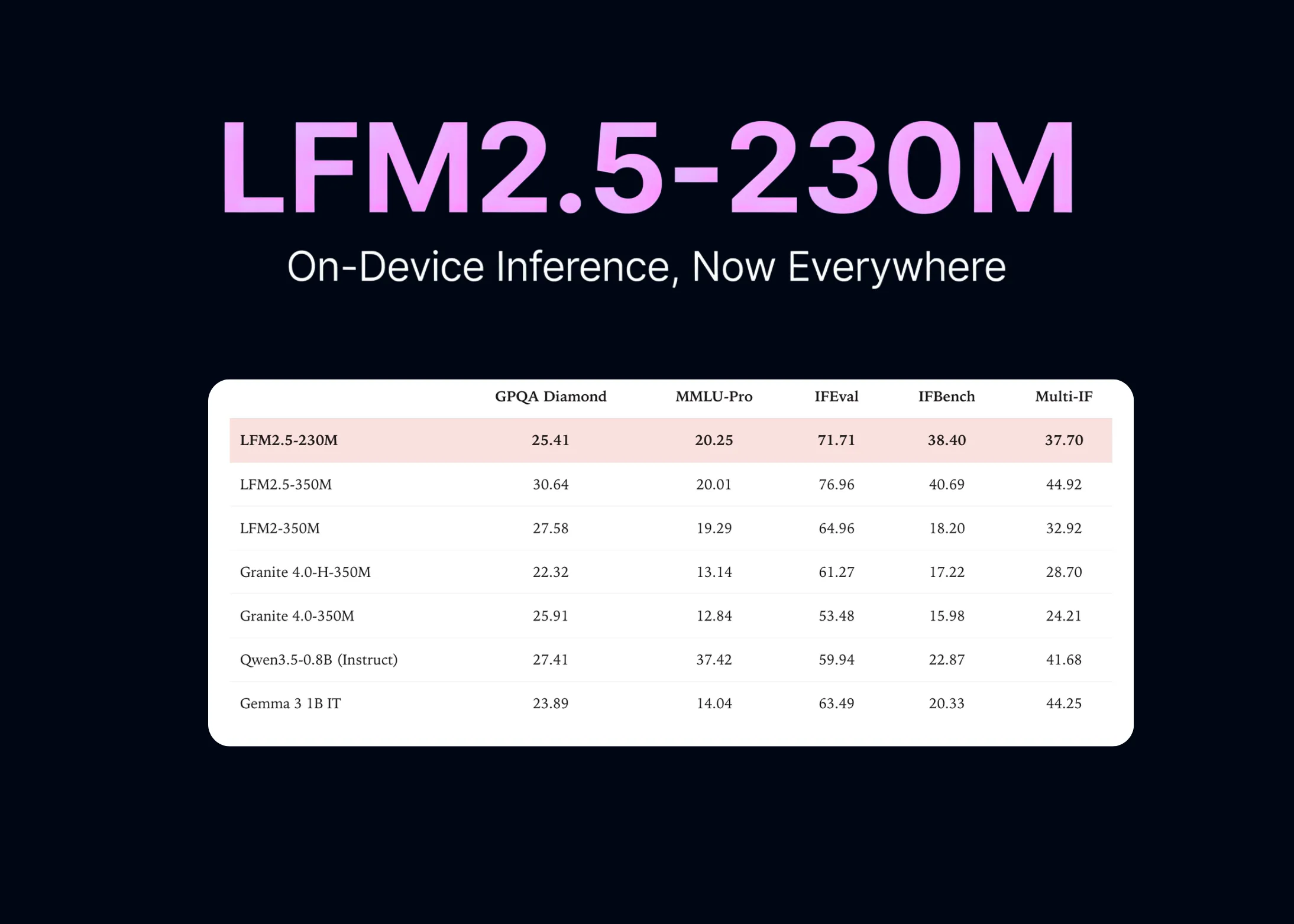
Liquid AI shipped LFM2.5-230M, it’s the company’s smallest model to date. The release targets a specific job: running agentic tasks on phones, robots, and automation devices. Both the base and instruction-tuned checkpoints are open-weight on Hugging Face. The pitch is narrow on purpose. This is not a general reasoning model. It is built for data extraction and tool use on edge hardware. TL;DR Liquid AI’s LFM2.5-230M is its smallest model yet: 230M params, open-weight
Get smart on it
Liquid AI released LFM2.5-230M, a small language model with 230 million parameters designed to run inference directly on phones, robots, and other edge devices rather than relying on cloud servers. The model is built on a hybrid architecture combining convolution blocks and attention mechanisms optimized for fast processing on CPUs, with a footprint of 293-375 MB. It performs well on instruction following and data extraction tasks, beating larger models on those benchmarks, but is not recommended for reasoning-heavy workloads like advanced math or code generation. The model ships with support across multiple inference frameworks and includes built-in function calling capabilities for tool use, making it suitable for applications like local data extraction pipelines and on-device automation tasks.
Related news
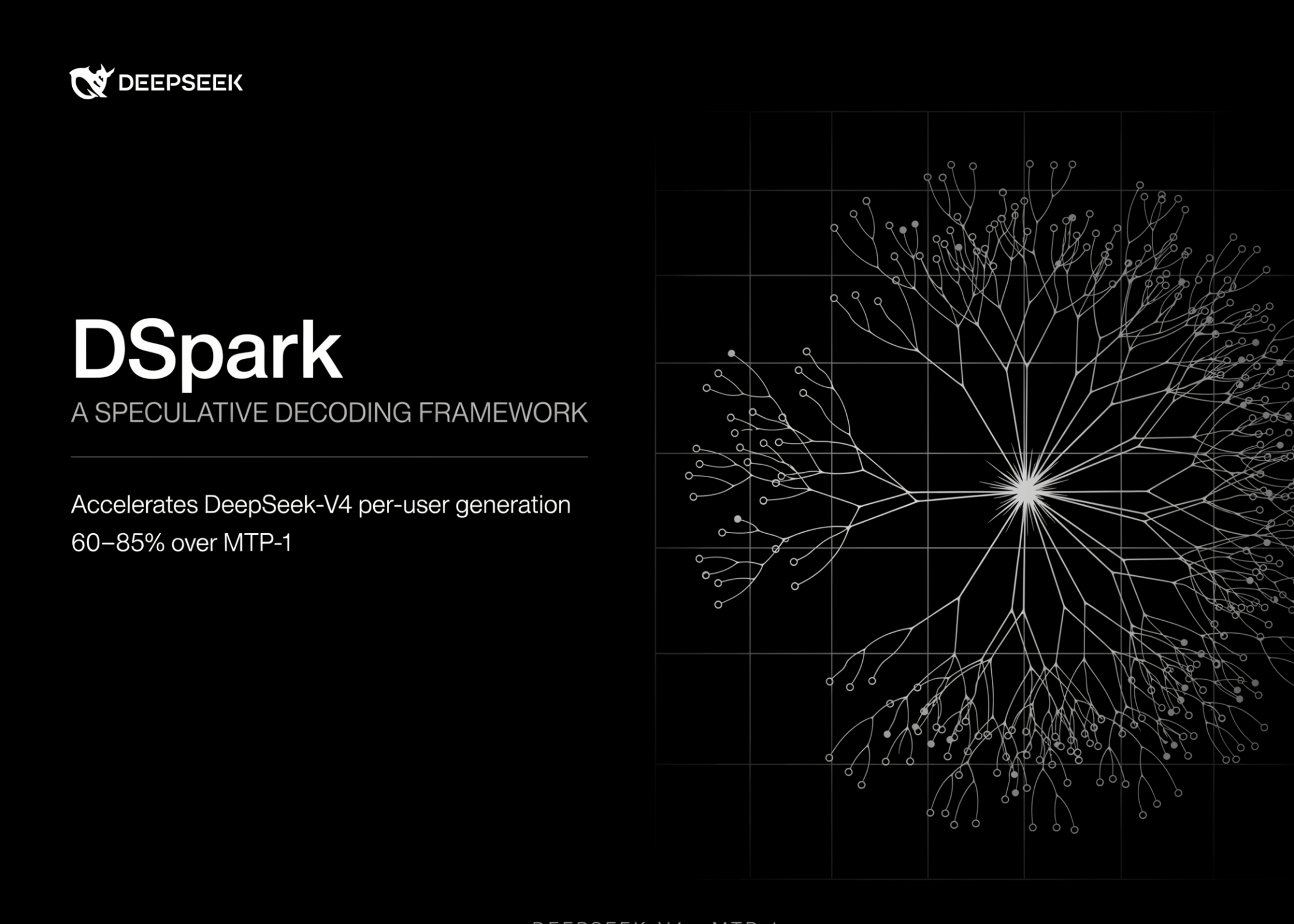
DeepSeek Releases DSpark, a Speculative Decoding Framework That Accelerates DeepSeek-V4 Per-User Generation 60–85% Over MTP-1
DeepSeek released DSpark, a speculative decoding framework, with open-source checkpoints and training code. It is a serving optimization, not a new model. The checkpoints DeepSeek-V4-Pro-DSpark and DeepSeek-V4-Flash-DSpark reuse the existing V4 weights, with a draft module attached. The DeepSeek research team also open-sourced DeepSpec, an MIT-licensed codebase for training and evaluating speculative decoding drafters. The work targets one problem: faster large-model inference in busy produc

Asian AI startups launch Mythos-like models as Anthropic’s export ban drags on
New models are launching in Asia that promise Mythos-like capabilities without fear of an export ban. U.S. AI labs may never recover this enormous market.