PrismML Releases Ternary Bonsai 2 27B: A 5.9 GB Apache 2.0 Model Retaining 98.2% of Qwen3.8 27B Performance
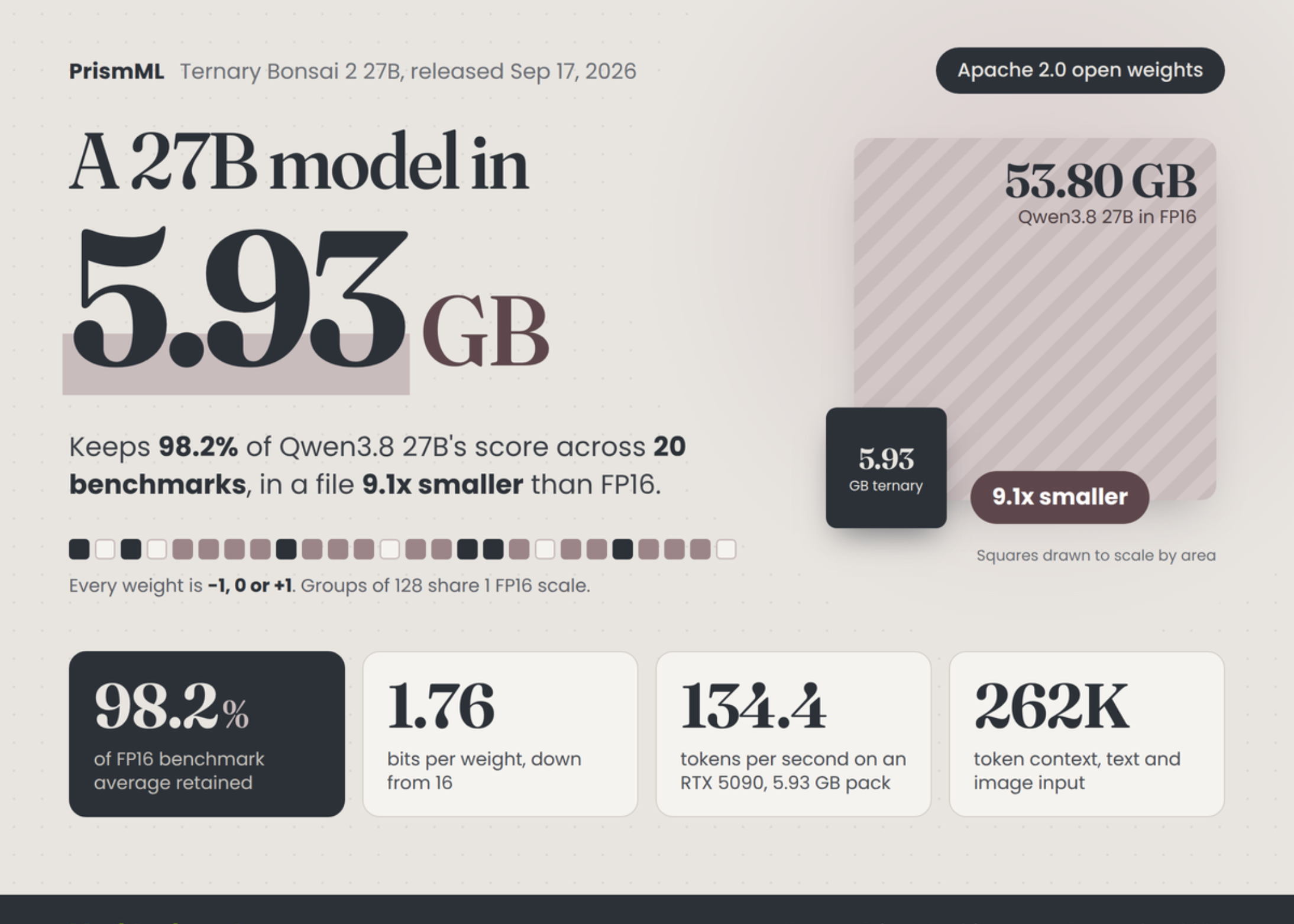
PrismML has released Ternary Bonsai 2 27B, a ternary-weight version of Qwen3.8 27B. The language model occupies 5.93 GB, against 53.80 GB in FP16. PrismML reports that it keeps 98.2% of the parent model’s average across 20 benchmarks. The model accepts text and images and supports a 262K-token context. PrismML demos it driving Cline coding agents and computer use on an RTX 5090. It arrives 2 months after the first Bonsai 27B, whose ternary variant retained about 95%. Is it deployable?
Get smart on it
PrismML released a compressed version of a large language model that reduces file size from 53.80 GB to 5.93 GB while retaining 98.2% of the original model's performance across 20 benchmarks. The model uses a ternary-weight format where each weight takes one of three values (negative one, zero, or positive one) instead of full-precision numbers, allowing it to run on standard laptops with 16 GB of memory or single GPUs with 24 GB. Performance losses are uneven across different tasks, with long-horizon agent work dropping to about 75% of the original model's capability, though speed improvements reach 142.5 tokens per second on high-end hardware. The model requires specialized software to run and cannot be loaded by standard tools, limiting its accessibility compared to conventional alternatives.
Related news
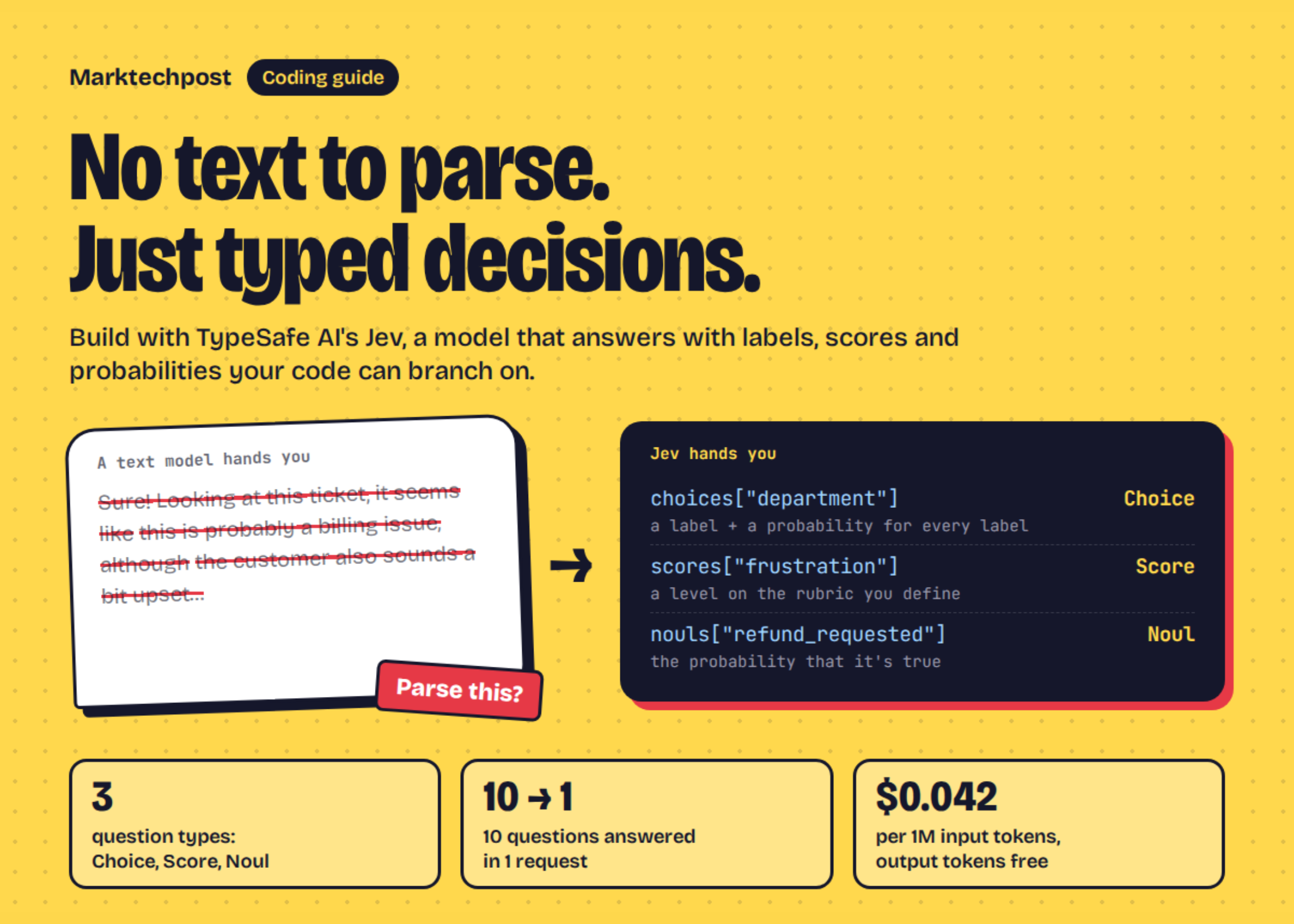
A Coding Guide to TypeSafe AI Jev: Typed Decisions, Calibrated Confidence, and Speculative Fan-Out with a System One Model
In this tutorial, we work with Jev, TypeSafe AI’s first System One model, which does not generate text at all: we send it a piece of program state and a set of typed questions, and it returns choices, scores, and yes/no probabilities that our code can branch on directly. We install the official Python SDK, make a first call that uses all three question primitives at once, and look at how the shape of the state changes what the model can know. We then recompute the published confidence sta
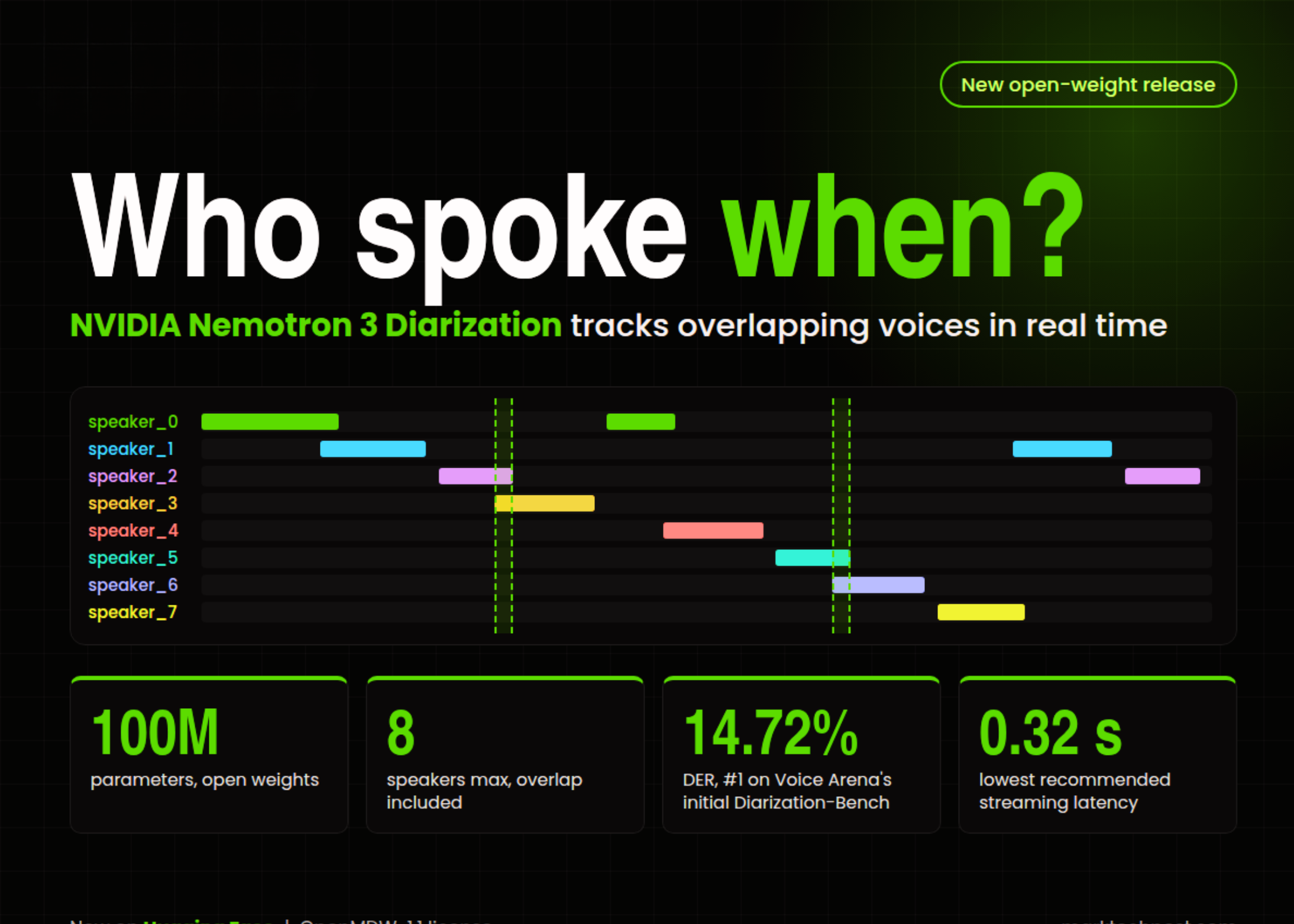
NVIDIA Releases Nemotron 3 Diarization: A 100M-Parameter Open-Weight Model That Tracks 8 Speakers in Real Time
NVIDIA has released Nemotron 3 Diarization, an open-weight speaker diarization model on Hugging Face. It answers one question about any conversation: who spoke when. The 100M-parameter model tracks up to 8 speakers, including when voices overlap. One checkpoint handles both offline recordings and real-time streaming. Is it deployable? Yes. The weights are released under the OpenMDW License 1.1, which permits commercial use. It runs on Linux through NVIDIA NeMo, using Ampere, Ada Lovelace, Ho