OpenAI Releases GPT-6 Sol and Luna: 50% Cheaper API Pricing and Benchmarks
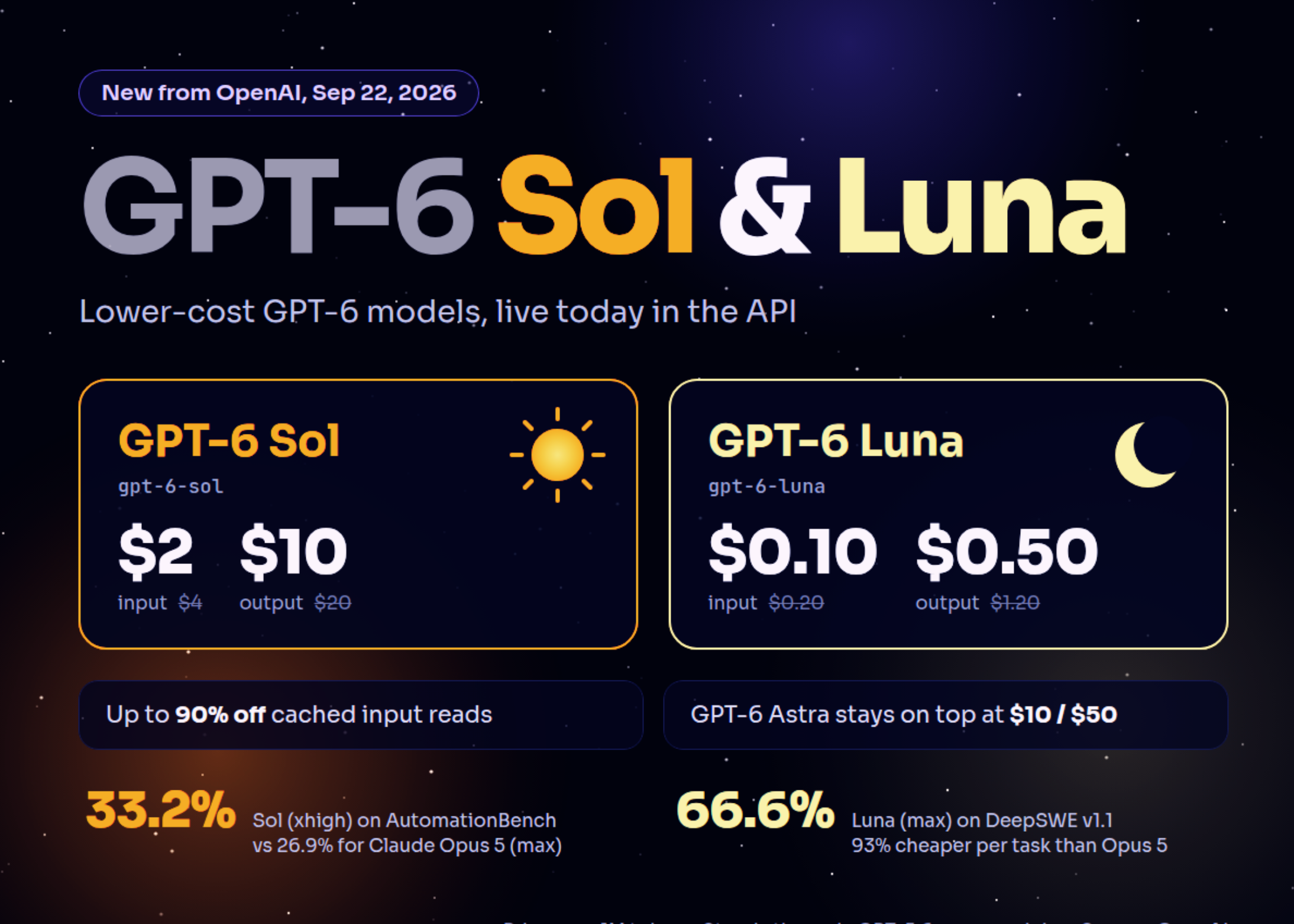
OpenAI has released GPT-6 Sol and GPT-6 Luna, 2 new models in its GPT-6 family. They sit below GPT-6 Astra, which launched earlier this month. OpenAI trained both with methods similar to Astra’s. The aim is to bring Astra’s advances to faster, more affordable models. Deployable today? Yes. Both models are live in the OpenAI API as gpt-6-sol and gpt-6-luna. They are API-only models, so there are no weights to self-host. Three tiers, one recipe The GPT-6 family now has 3 tier
Get smart on it
OpenAI has released two new models, Sol and Luna, positioned below its top-tier Astra model to offer faster performance at lower cost. Sol is designed for complex coding and professional tasks while Luna targets high-volume everyday work, with API pricing cut by 50% compared to their predecessors. Both models are available now through the OpenAI API and show competitive performance on various benchmarks compared to other models, while Luna's output pricing actually decreased by about 58%. The release also includes improved prompt caching for long-running agents, which can reduce costs on cached input reads by up to 90% and help applications respond faster.
Related news
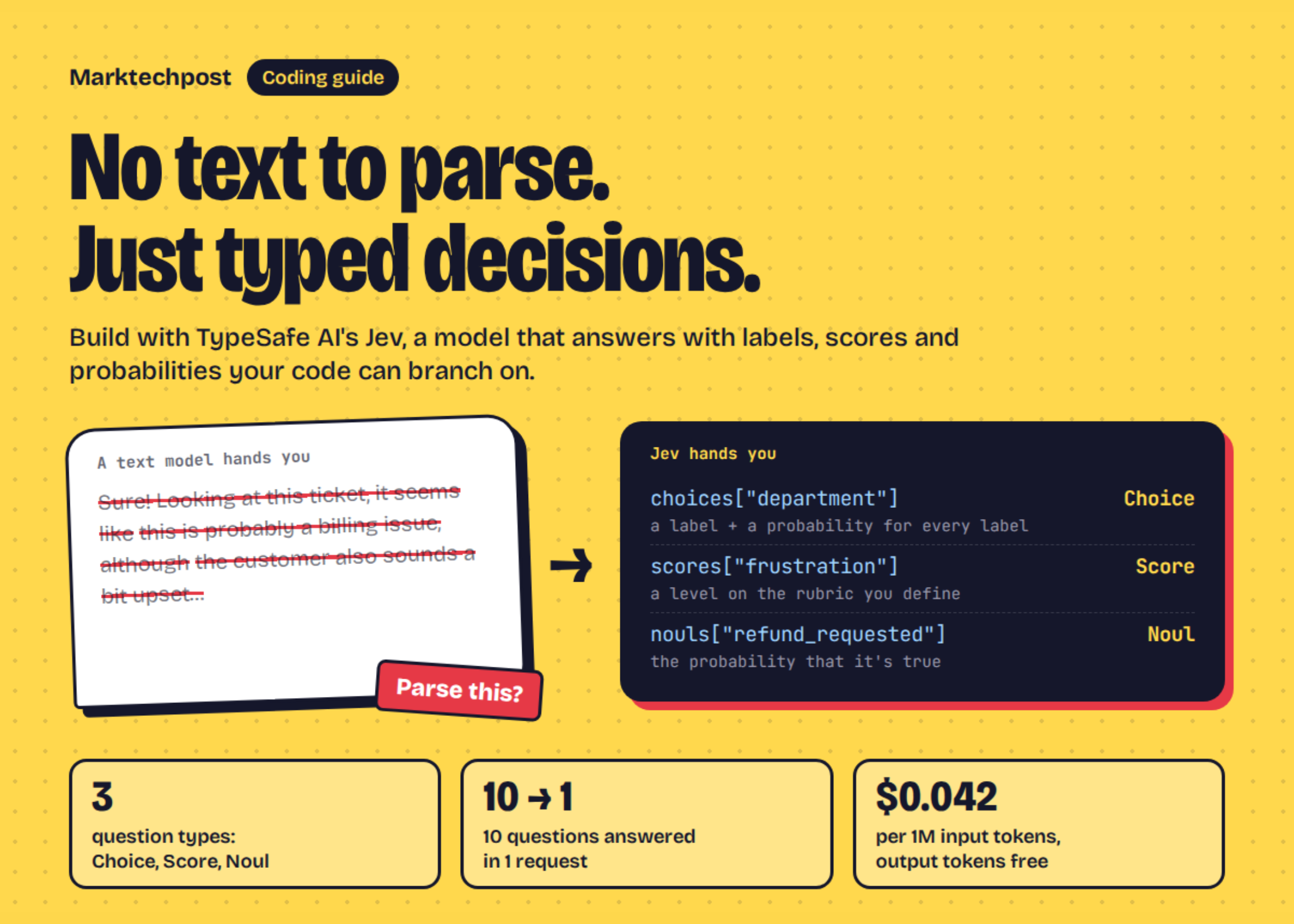
A Coding Guide to TypeSafe AI Jev: Typed Decisions, Calibrated Confidence, and Speculative Fan-Out with a System One Model
In this tutorial, we work with Jev, TypeSafe AI’s first System One model, which does not generate text at all: we send it a piece of program state and a set of typed questions, and it returns choices, scores, and yes/no probabilities that our code can branch on directly. We install the official Python SDK, make a first call that uses all three question primitives at once, and look at how the shape of the state changes what the model can know. We then recompute the published confidence sta
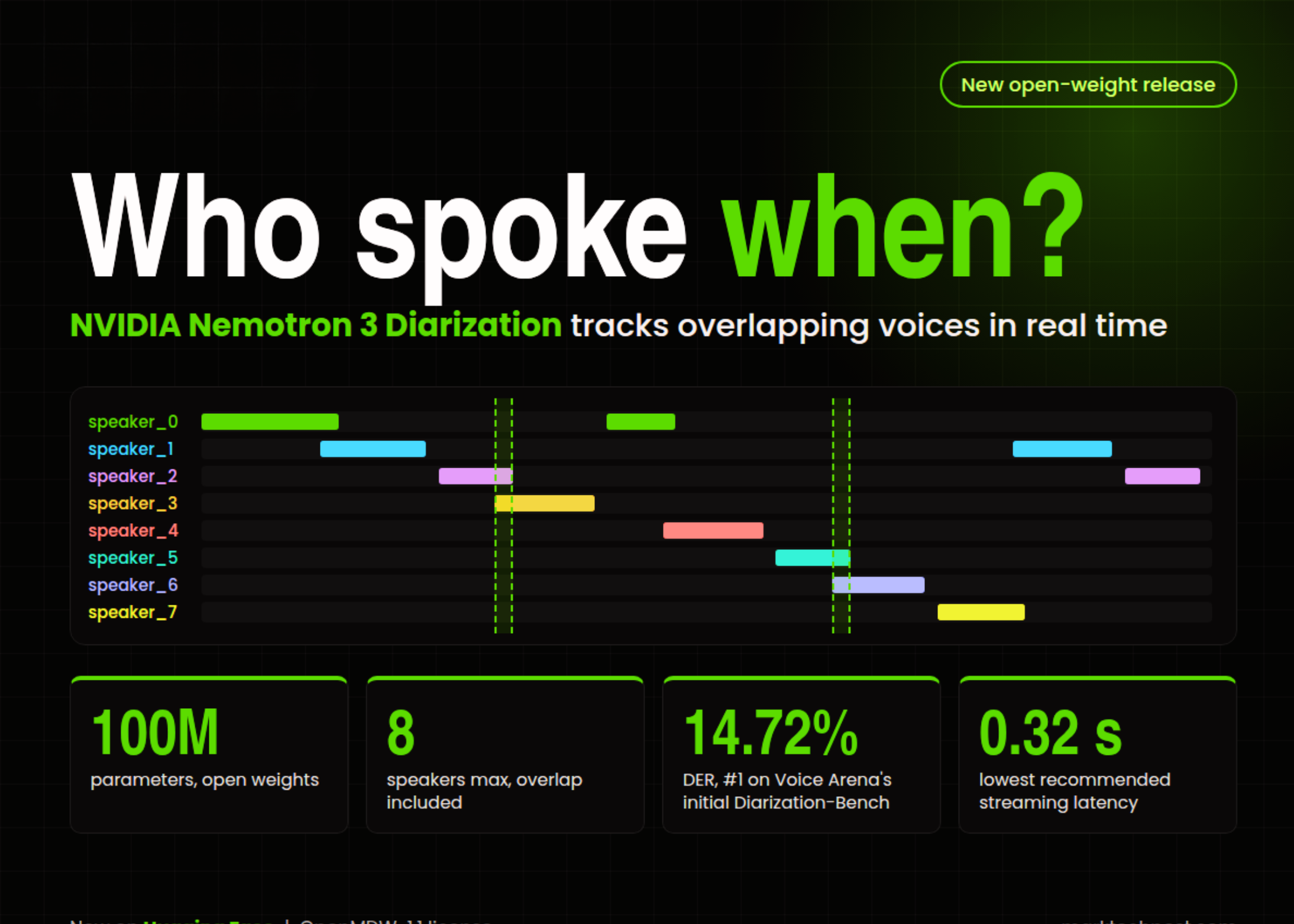
NVIDIA Releases Nemotron 3 Diarization: A 100M-Parameter Open-Weight Model That Tracks 8 Speakers in Real Time
NVIDIA has released Nemotron 3 Diarization, an open-weight speaker diarization model on Hugging Face. It answers one question about any conversation: who spoke when. The 100M-parameter model tracks up to 8 speakers, including when voices overlap. One checkpoint handles both offline recordings and real-time streaming. Is it deployable? Yes. The weights are released under the OpenMDW License 1.1, which permits commercial use. It runs on Linux through NVIDIA NeMo, using Ampere, Ada Lovelace, Ho