NVIDIA Releases Nemotron 3 Diarization: A 100M-Parameter Open-Weight Model That Tracks 8 Speakers in Real Time
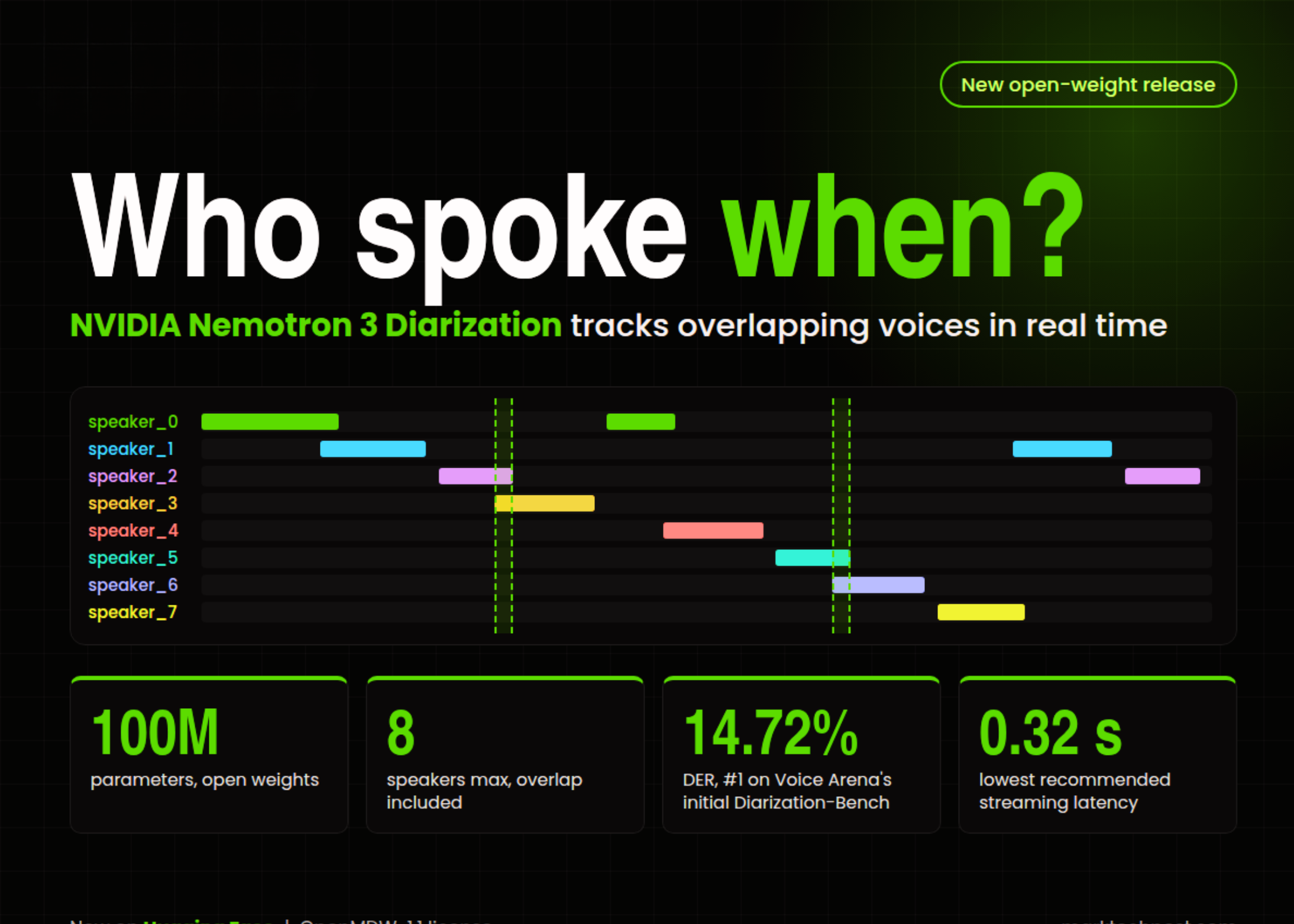
NVIDIA has released Nemotron 3 Diarization, an open-weight speaker diarization model on Hugging Face. It answers one question about any conversation: who spoke when. The 100M-parameter model tracks up to 8 speakers, including when voices overlap. One checkpoint handles both offline recordings and real-time streaming. Is it deployable? Yes. The weights are released under the OpenMDW License 1.1, which permits commercial use. It runs on Linux through NVIDIA NeMo, using Ampere, Ada Lovelace, Ho
Get smart on it
Speaker diarization is the process of identifying who spoke when in a conversation, which complements automatic speech recognition (that provides only the words without attribution). An open-weight model has been released that can track up to 8 overlapping speakers in real time, with a single checkpoint handling both offline recordings and live streaming across multiple latency settings. The model ranked first in benchmark testing, showing significant improvements over its predecessor while remaining deployable on specified GPU hardware under a license permitting commercial use. This capability matters for applications including meeting transcription, call analytics, and podcast processing, where knowing who said what is essential for downstream tasks like summarization and attribution.
Related news
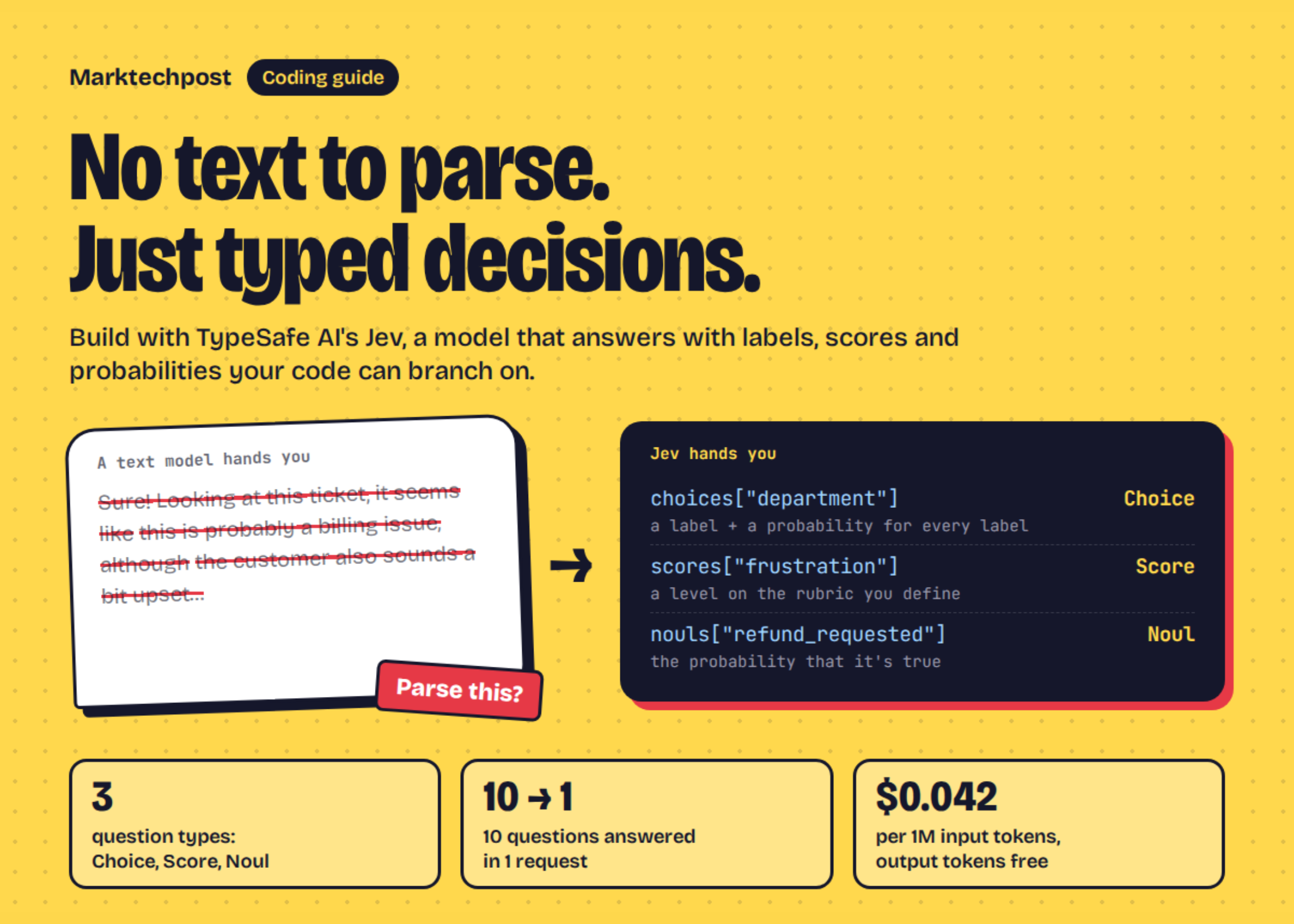
A Coding Guide to TypeSafe AI Jev: Typed Decisions, Calibrated Confidence, and Speculative Fan-Out with a System One Model
In this tutorial, we work with Jev, TypeSafe AI’s first System One model, which does not generate text at all: we send it a piece of program state and a set of typed questions, and it returns choices, scores, and yes/no probabilities that our code can branch on directly. We install the official Python SDK, make a first call that uses all three question primitives at once, and look at how the shape of the state changes what the model can know. We then recompute the published confidence sta
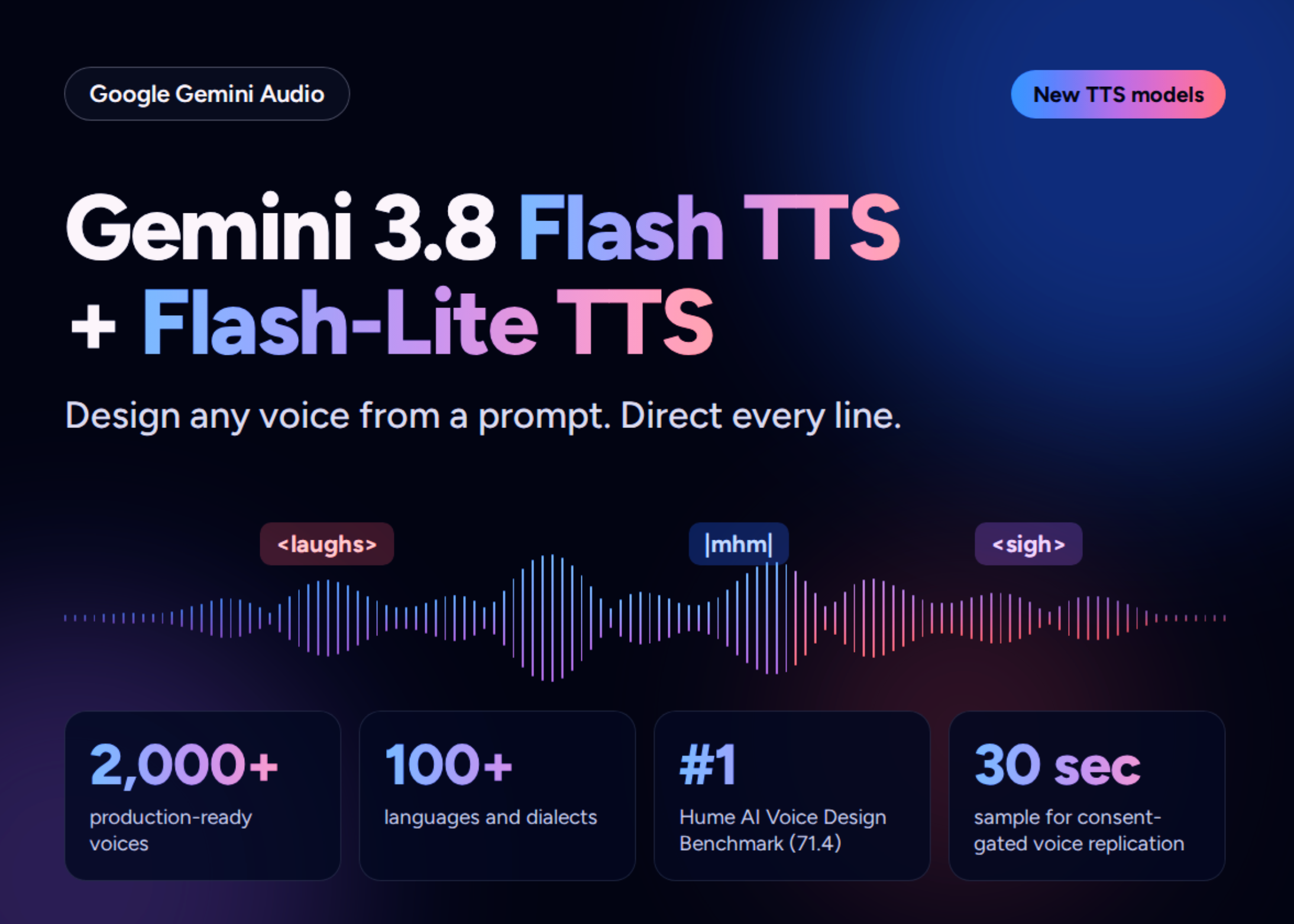
Google Releases Gemini 3.8 Flash TTS and Flash-Lite TTS With Prompt-Based Voice Design
Google has released Gemini 3.8 Flash TTS and Gemini 3.8 Flash-Lite TTS, 2 new text-to-speech models in its Gemini Audio family. Google calls them its most expressive audio generation models yet. Flash TTS targets creative direction and character voices. Flash-Lite TTS targets high-volume, cost-efficient production. Both let developers direct delivery line by line using natural language. Is it deployable? Yes, both models are rolling out now through the Gemini API and Google AI Studio. Access