Timestral launches time-series forecasting models
Mistral AI: Introducing Timestral
State-of-the-art probabilistic forecasting in four sizes (5M–209M params), CPU-efficient, zero-shot ready.
Get smart on it
Timestral is a family of time-series foundation models designed to forecast patterns in data that changes over time, such as sensor readings or financial metrics. The largest model contains 209 million parameters and ranks first on the field's main public benchmarks while using fewer parameters than competing models. Time-series forecasting matters because enterprises rely on these predictions to make decisions about capacity planning, maintenance, energy use, and supply chains. Unlike traditional forecasting models that are trained separately for each dataset, foundation models like Timestral are pre-trained on diverse data and can forecast accurately on new domains without additional training.
Relevant courses
Want to go deeper than the news? Explore live, cohort-based AI courses taught by practitioners.
Browse AI courses on MavenRelated news

Gemini 4 Argon: Built to solve your hardest problems
The new model aims to handle complex reasoning tasks where current systems often struggle or fail completely.
Also reported by The Verge, Ars Technica, The Decoder and SiliconANGLE

Meta releases its first frontier model, Muse Wonder
Meta's Superintelligence Lab released a pair of new state-of-the-art models on Monday, Muse Wonder and Muse Wonder Full, the company's first attempt at a frontier model.
Also reported by The Verge, Wired AI, The Decoder and SiliconANGLE

OpenAI will reportedly ship at least one model this year but its flagship still needs alignment work
OpenAI is racing to finish its next flagship model, which uses the same looped transformer technique as Astra to boost math and coding performance. The tradeoff is that looping makes safety monitoring harder. Microsoft accidentally revealed details about how the technique works on a public page. Whether or not the flagship is ready in time, employees say one or two new models will likely ship by year's end. The article OpenAI will reportedly ship at least one model this year but its fla
Open From Data Center to Desktop: NVIDIA Expands Nemotron Family With Highest Efficiency Super VL and Bolt Models
NVIDIA today released Nemotron 3.5 Super VL, an open 120-billion-parameter model that delivers the fastest task completion and highest accuracy for specialized always-on agents. Joining it are two new edge models: Nemotron 3.5 Bolt 74B-A9B 24GB, optimized to balance intelligence and speed per GB for local agentic workloads, and Nemotron 3.5 Bolt E4B 4GB, optimized for intelligence per GB for fast conversational agents. Super VL and Bolt 74B-A9B are available now, with Bolt E4B coming Oct. 23. T

AI Came for Math. Now It’s Chasing the Rest of Science
AI may soon be the default way to solve theoretical problems in economics, high-energy physics, and other fields, MIT researchers tell WIRED.
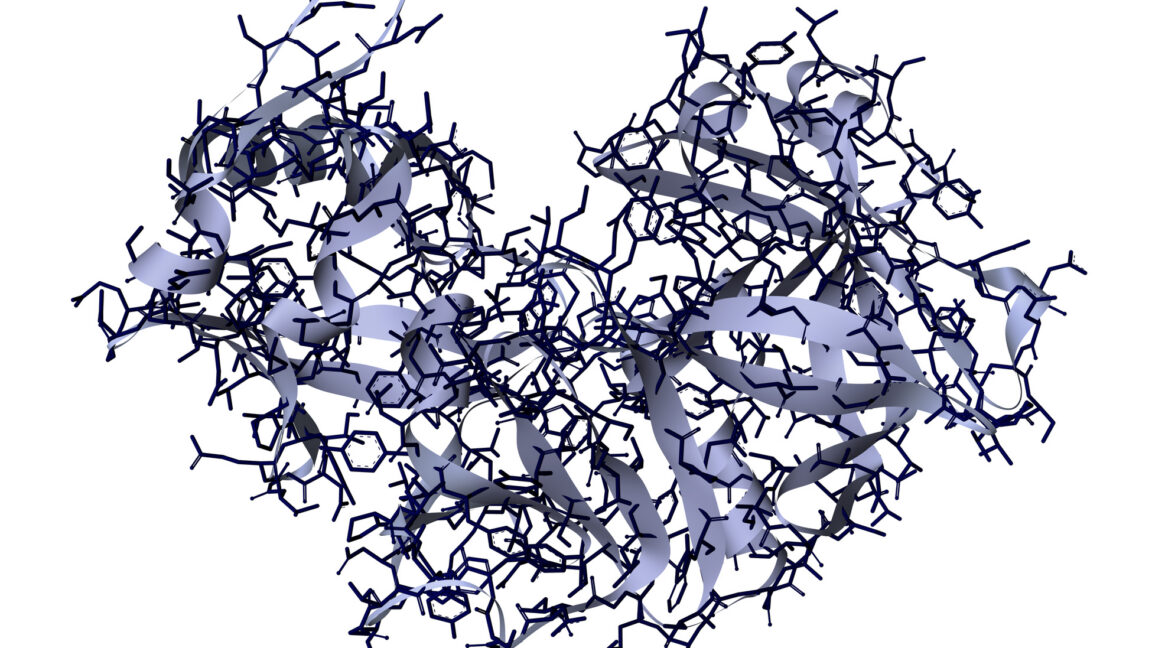
Researchers use AI to design proteins that cut up other proteins
A protein is a chain of amino acids held together by what are called peptide bonds. On their own, those bonds are extremely stable; they're estimated to have a half-life of several hundred years. But in Earth's environment, most proteins don't last nearly that long. That's because organisms have evolved a handful of ways to catalyze the break-up of peptide bonds, which have diversified into countless specialized protein-digesting enzymes. Proteases are everywhere and generally make short work of