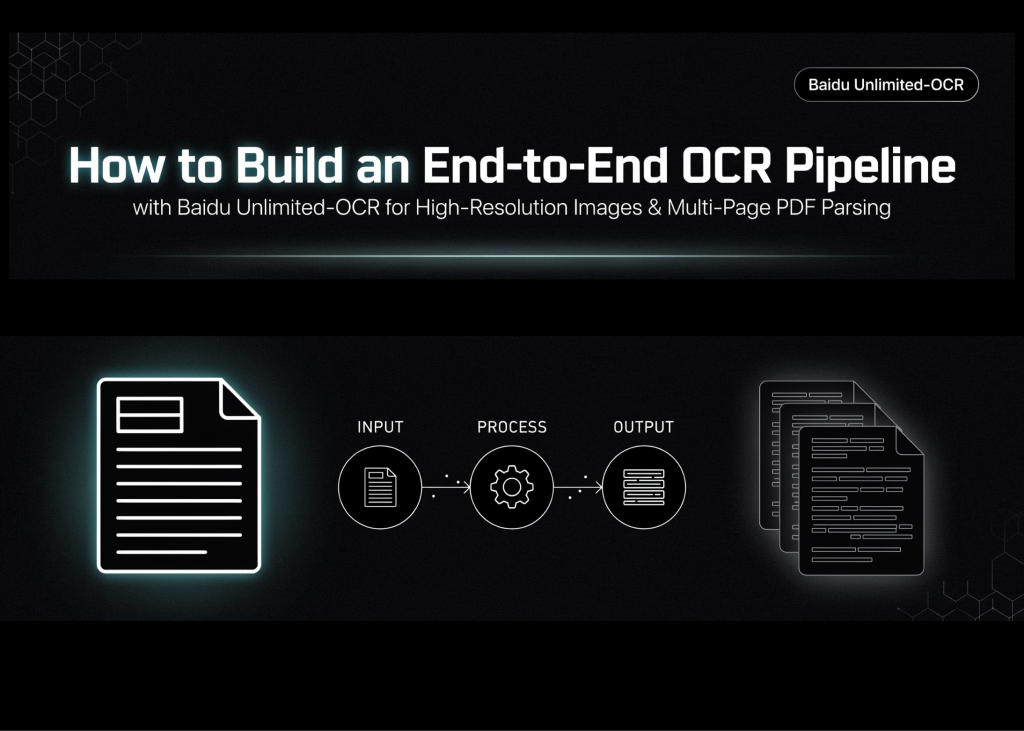
How to Build an End-to-End OCR Pipeline with Baidu’s Unlimited-OCR for High-Resolution Images and Multi-Page PDF Parsing
In this tutorial, we build a complete workflow for running Baidu’s Unlimited-OCR model on document images and multi-page PDFs. We configure the GPU environment, install the required dependencies, load the 3B-parameter vision-language model with automatic selection of bfloat16 or float16, and generate structured sample documents for testing. We then evaluate both the tiled Gundam inference mode and the faster Base mode for single-page OCR before extending the pipeline to multi-page PDF parsing w
Get smart on it
This tutorial demonstrates how to build an optical character recognition (OCR) pipeline that processes high-resolution document images and multi-page PDFs using a vision-language model. The pipeline involves configuring a GPU environment, loading a 3-billion-parameter model, and then running the model in two different inference modes: a tiled "Gundam" mode for detailed recognition and a faster "Base" mode for simpler layouts. The workflow preserves settings for long text generation and structured output handling to process dense layouts, tables, paragraphs, and content that spans across multiple pages in a single end-to-end pipeline.
Related news
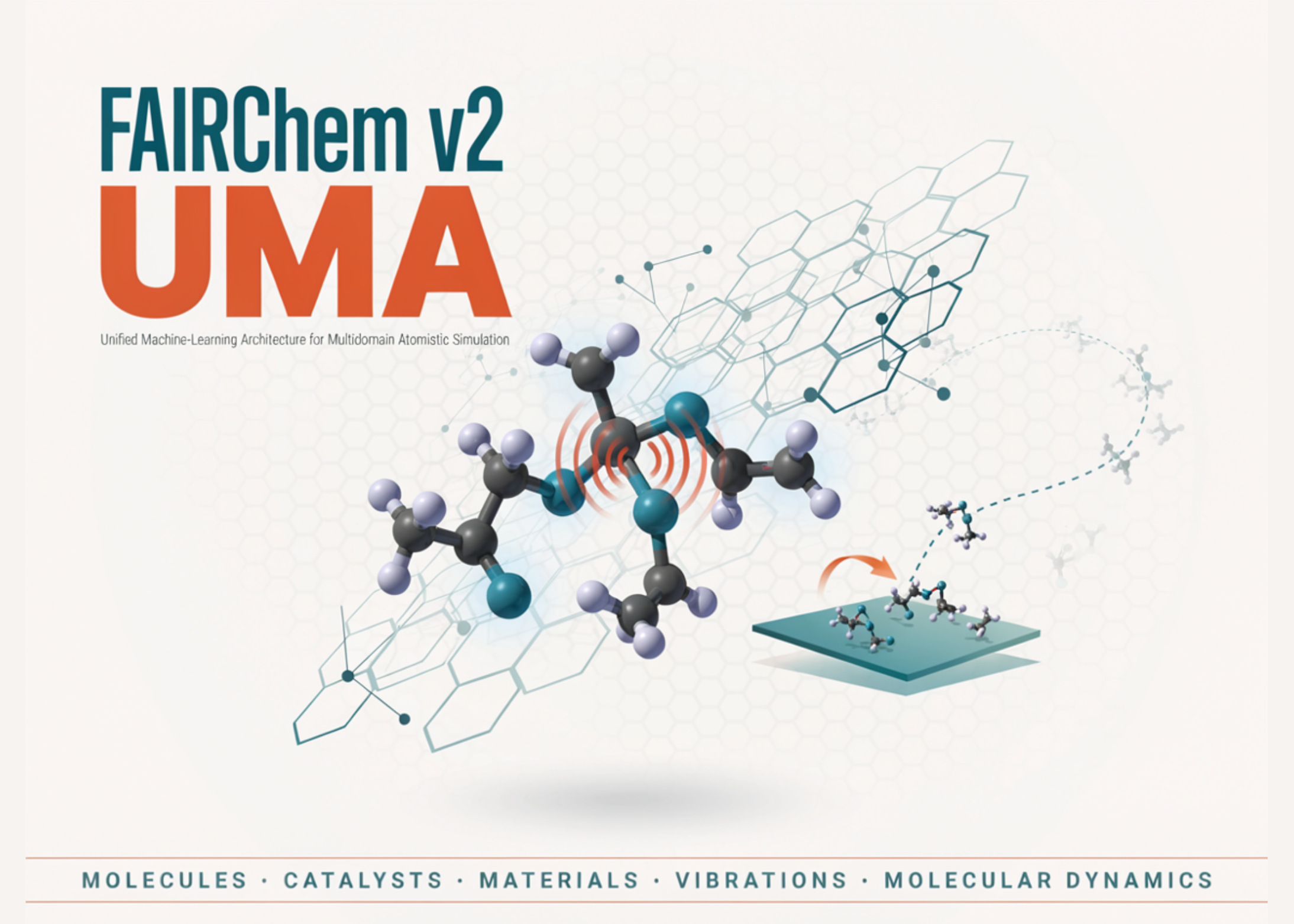
FAIRChem v2 UMA for Multidomain Atomistic Simulation across Molecules, Catalysts, Materials, Vibrations, and Molecular Dynamics
In this tutorial, we explore FAIRChem v2 and the UMA universal machine-learning interatomic potential as a unified framework for atomistic simulation across molecular chemistry, catalysis, and inorganic materials. We configure an environment, authenticate with Hugging Face to access the gated UMA model weights, and initialize task-specific calculators for the omol, oc20, and omat domains. We then apply the same pretrained potential to a broad set of computational chemistry workflows, including
Induction Labs Photon-1 Simulates Desktops, Plays Checkers, and Models Billiard Physics From One Pretraining Run
Most agents that learn from video need to know what action produced each frame. Induction Labs is arguing that this requirement is the bottleneck. Last week, they released imagination models, a foundation model architecture that pretrains on raw video with no action labels at all. Their test system is Photon-1, a sparse 106B-A5B mixture-of-experts (MoE) transformer trained on 18 years of computer demonstration video. On an internal computer use benchmark, Induction Labs reports that Photon-1