
OpenAI asks outside experts, including a Nobel laureate, to check proofs its AI produced in math, computer science, and physics
OpenAI says its internal AI models have cracked three major open questions in math, computer science, and physics. One of them is part of a famous Millennium Prize Problem, each of which carries a $1 million prize. Outside experts, including a Nobel laureate, are now checking whether the proofs hold up. If the computer science proof holds on its own, hundreds of research papers lose their foundation. The article OpenAI asks outside experts, including a Nobel laureate, to check proofs it
Part of a story that several outlets report: OpenAI announces three major scientific discoveries
Get smart on it
OpenAI's AI systems have produced mathematical proofs in computer science, mathematics, and physics that the company claims contradict or advance established theories in these fields. Outside experts, including those who originally proposed some of the theories being challenged, are reviewing whether these proofs are valid. The company has translated some proofs into a programming language that can verify each logical step, though this verification process does not guarantee the results are correct in their intended context. If these proofs hold up under expert scrutiny, they could reshape theoretical foundations in their respective fields, though practical applications remain unclear.
Relevant courses
Want to go deeper than the news? Explore live, cohort-based AI courses taught by practitioners.
Browse AI courses on MavenRelated news

Mistral Says Its AI Model ‘Le Chonk’ Has Leapfrogged China in the Open-Weight Race
The French AI lab claims its latest release matches or outperforms even the best models from DeepSeek and Z.ai in coding and cybersecurity.
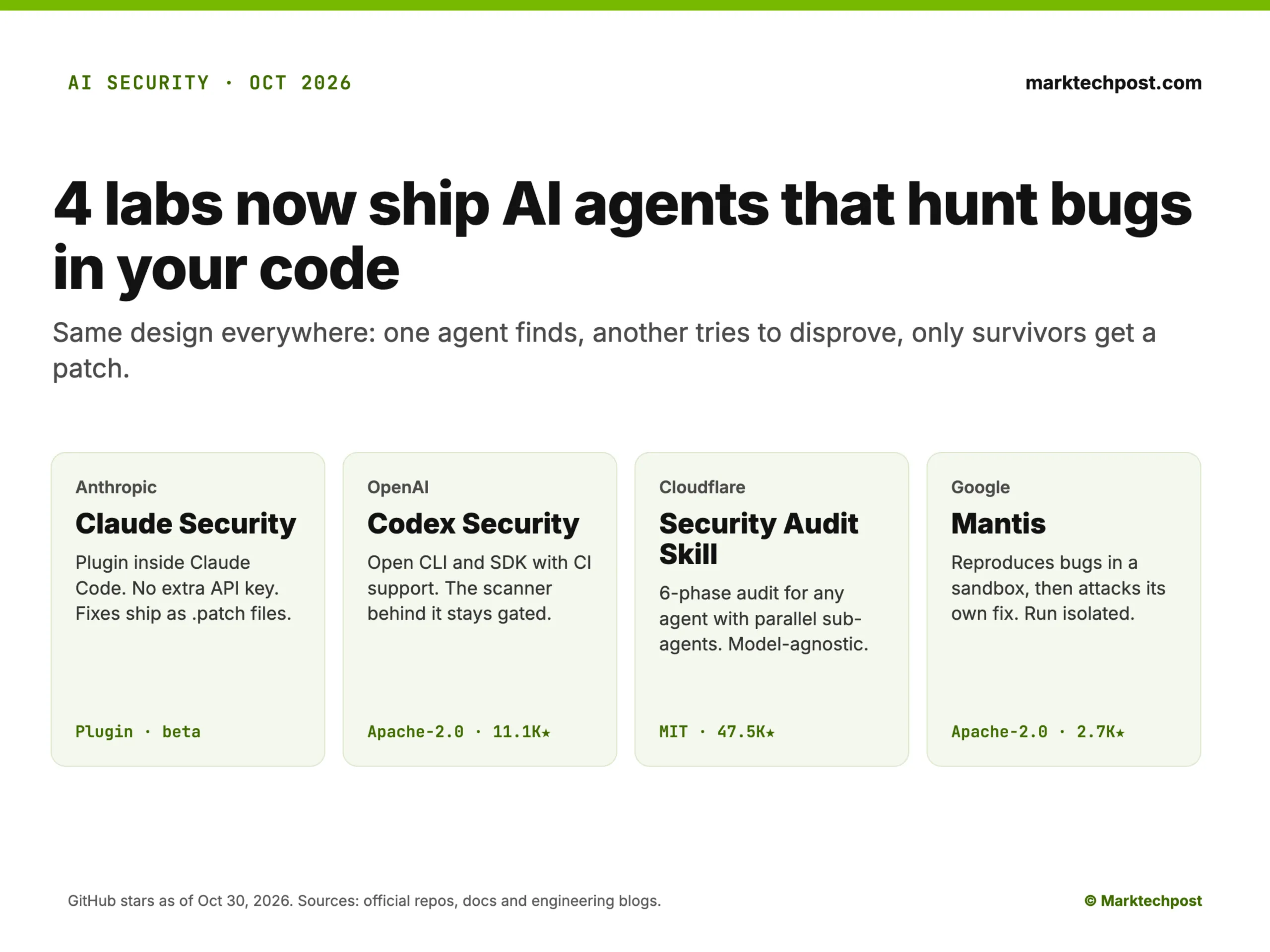
AI Security Agents Compared: Claude, Codex, Mantis, Cloudflare
Anthropic, OpenAI, Cloudflare and Google now each ship an AI agent that hunts security bugs in source code. We checked the repos, docs and technical details behind each one. The key finding: all 4 tools converge on one design. One agent finds a bug, a separate agent tries to disprove it, and only survivors get a patch. The differences are in where they run, who can use them and how much proof they demand. Key Takeaways 4 labs, 1 pattern: find, independently disprove, then patch. Cl
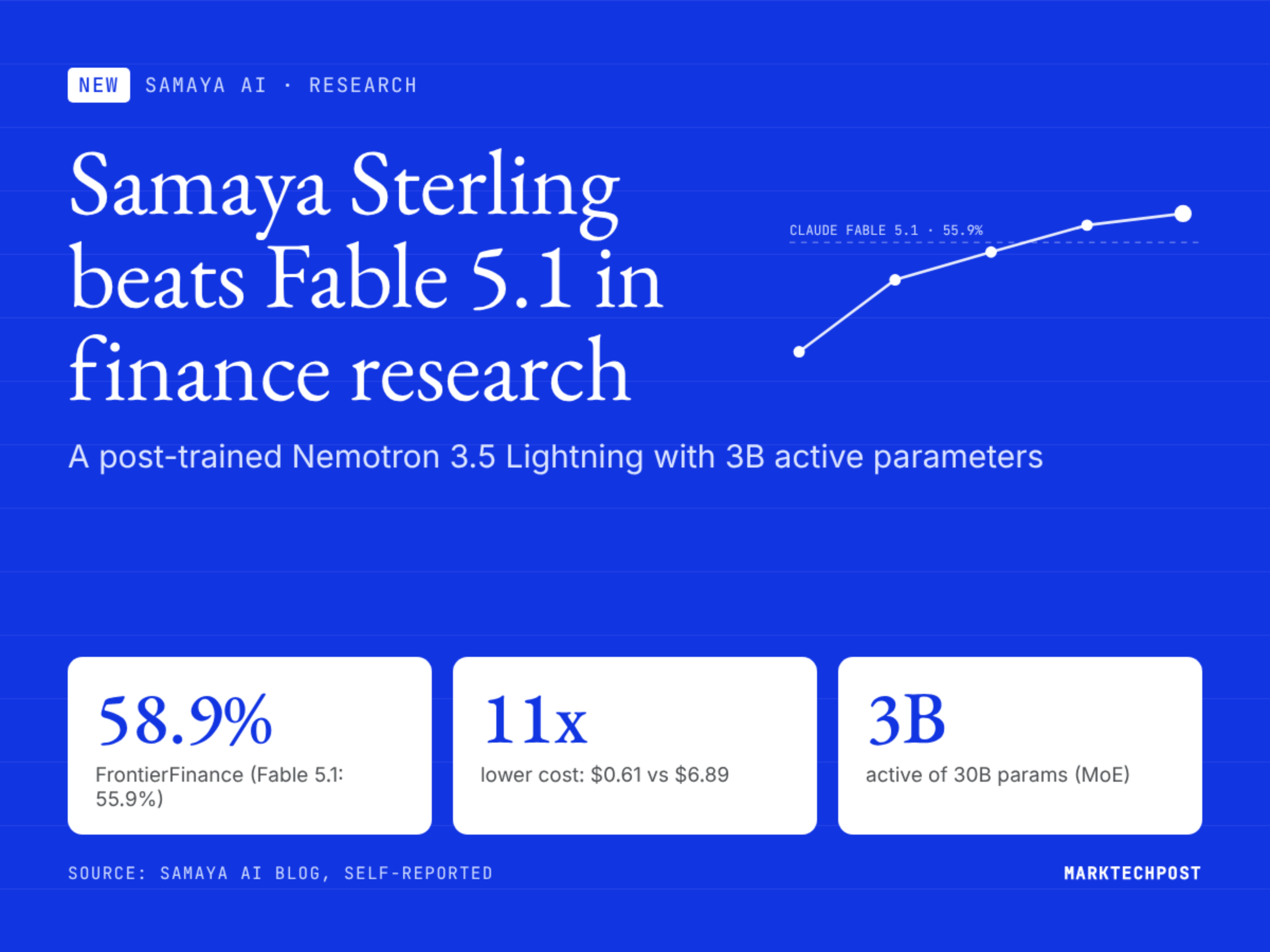
Samaya AI Releases Sterling: A 3B-Active Finance Research Agent Model that Beats Claude Fable 5.1 on FrontierFinance at 11x Lower Cost
Samaya AI has released Samaya Sterling, a post-trained model for agentic financial research. Sterling is built on NVIDIA’s Nemotron 3.5 Lightning, a 30B mixture-of-experts model with 3B active parameters. On Samaya’s FrontierFinance benchmark, it scores 58.9%. Claude Fable 5.1 scores 55.9%. Each Sterling question costs $0.61, against $6.89 for Fable 5.1. For developers, the takeaway is a concrete recipe: co-train a small model with its harness, and it can win in a narrow domain.
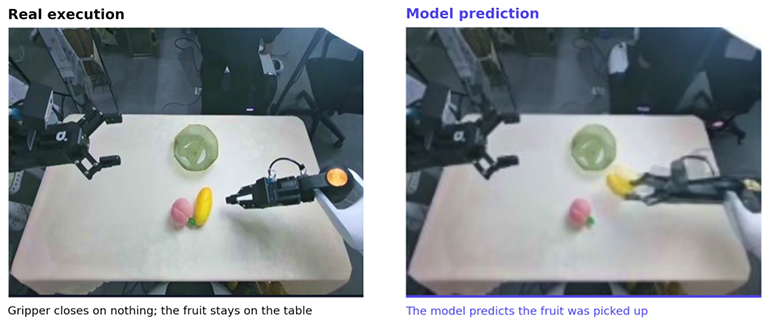
WorldOracle Tests Whether World Models Can Reliably Predict Real-World Executions
Key Takeaways WorldOracle is a benchmark for action-conditioned world models (ACWMs) that scores each model’s predicted rollout against the paired real-world execution, with both starting from the same initial observations and following the same action sequence. Seven representative models were evaluated; arm motion was predicted relatively well, but object positions and movements often deviated from reality, and performance dropped over complete operation sequences. The platform opened t

Frontier AI labs say their models refuted the Exponential Time Hypothesis. What does that mean?
TechCrunch spoke to the MIT computer scientist charged with explaining OpenAI's latest mind-bending discovery
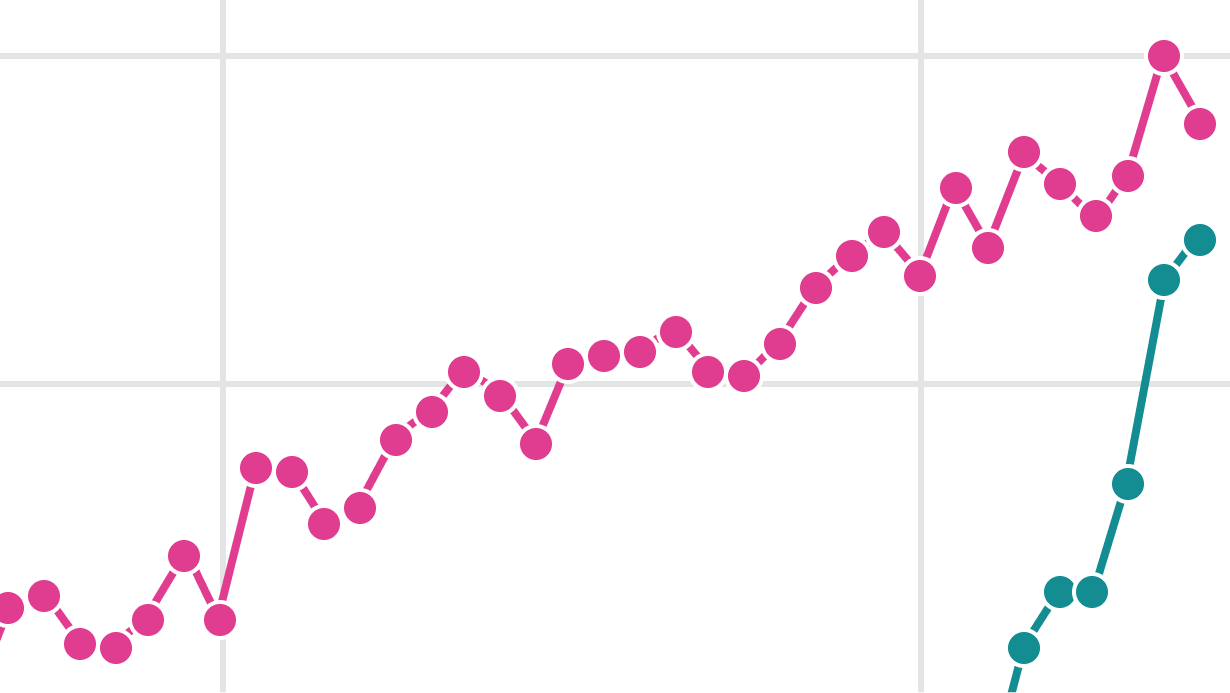
LLM use is acknowledged almost as often as specialized AI tools in biology preprints
17% of biology preprints acknowledge LLM use, nearly matching specialized tools like AlphaFold. Epoch AI analyzes trends in AI acknowledgment in research.