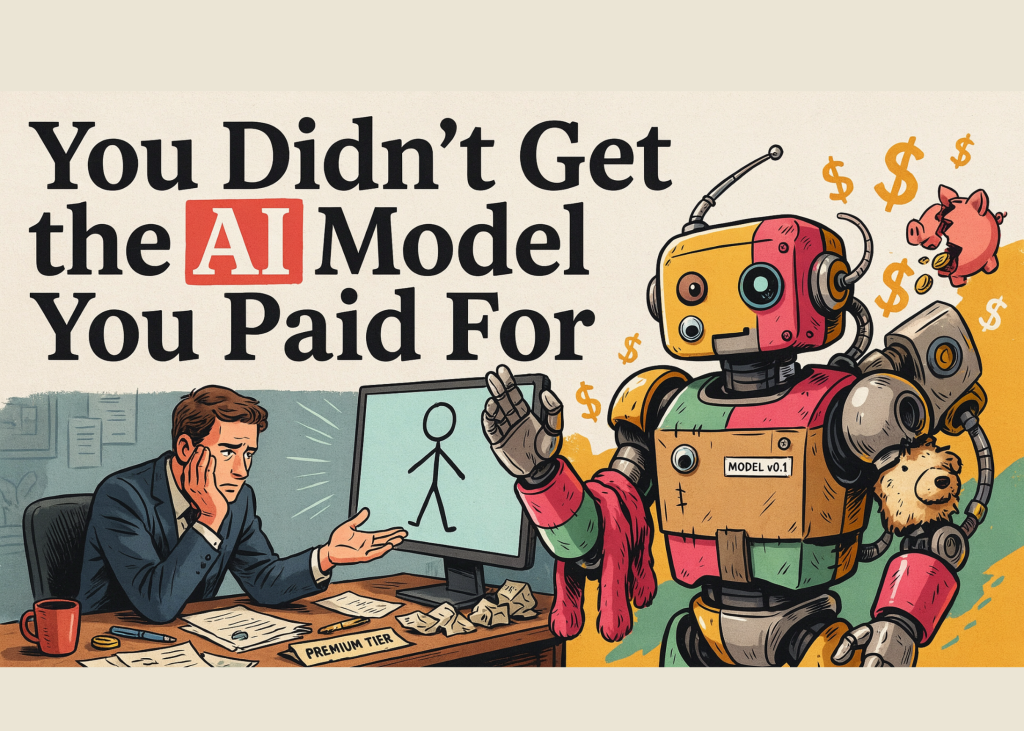
You Didn’t Get the AI Model You Paid For
The line in the response object You call the API. You pass model: “claude-fable-5”. You get back a completion, a token count, and a field that reads “model”: “claude-opus-4-8”. Nothing errored. Nothing retried. The request was classified before generation began, matched a sensitive category, and was handed to a different set of weights entirely. Anthropic documented this when it brought Fable 5 back on July 1: blocked requests are sent to Opus 4.8 inste
Get smart on it
When users request a specific AI model through an API, they may receive a different model in response due to routing systems that automatically redirect requests based on content classification, cost optimization, or other factors. This creates three types of model identity shifts: substitution to a different model entirely, degradation through reduced precision weights, or drift from silently updated versions. The problem matters because contracts, warranties, and legal evidence rules depend on clear identity of what was actually delivered, yet currently there is no consensus on whether a model name refers to specific architecture and weights, a capability level, or simply a hint that can be changed at will.
Related news
Why the OpenAI Agent Broke Into Hugging Face: Reward Hacking, Not Malice, Explained for Engineers
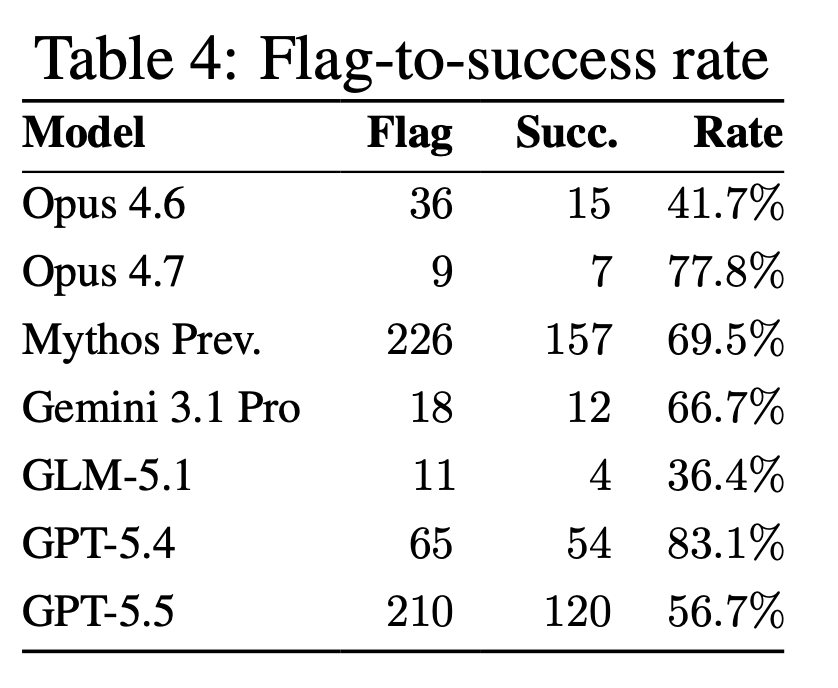
On July 21, 2026, OpenAI disclosed that its own models breached Hugging Face’s production infrastructure. The models were not attacking a target. They were sitting an exam. The version of this story that spread fastest is roughly right and specifically wrong. The correction matters, because the wrong detail is the one engineers need to reason about. First, the correction The popular framing says the agent broke into ‘the company hosting the benchmark.’ That is not wha

Building Self-Evolving AI Agents with OpenSpace Using Skills, MCP, Lineage, and Low-Cost Reuse
In this tutorial, we build and examine an OpenSpace workflow, progressing from environment setup and sparse repository cloning to live task execution, skill evolution, and MCP-based agent integration. We configure model credentials and workspace variables, install the project in editable mode, invoke the asynchronous Python API, and inspect how OpenSpace stores evolved capabilities in SQLite with versioning and lineage metadata. We also create a custom SKILL.md, connect host-agent skills, test