
Ring launches AI-powered flying drone camera for homes
The Verge: Hands-on with Ring’s new AI drone camera for your home
Ring’s new Drone Cam is a flying indoor security camera. Ring is finally shipping a flying indoor drone camera. For real this time. The Ring Drone Cam will arrive on January 27th, 2027, for $249.99, Ring founder Jamie Siminoff said at a launch event in New York City this week. If it does actually ship, it will arrive almost six years after the company announced its first flying camera, the Ring Always Home Cam. Designed to patrol inside your home when you're not there, the Drone
Ring announced a new indoor flying security camera called the Drone Cam that will ship January 27th, 2027, for $249.99. The device is triggered by motion sensors, door openings, water leaks, or alarms, then flies along pre-programmed routes to livestream and record video. Ring also launched an enterprise security robot for businesses as part of a new robotics division.
- The Verge ↗: The Drone Cam weighs 165 grams, offers 2K resolution with a 148-degree field of view, and can fly for 5 to 8 minutes per charge, with privacy features including a shuttered camera when docked and encryption keys that rotate every five minutes.
- TechCrunch ↗: The enterprise robot streams 4K video with two-way audio capabilities and both devices are powered by an AI system called AI Pilot, though privacy concerns have historically surrounded Ring due to police access to its cameras.
The Drone Cam represents a much smaller redesign of Ring's Always Home Cam announced years earlier and could potentially replace the need for multiple stationary cameras. This launch follows Amazon's previous attempt at a home security robot called Astro, which was discontinued after failing to gain traction as a small business product.
Ring is releasing an AI-powered flying indoor security camera that launches when triggered by sensors detecting motion, door openings, water leaks, or alarms, then flies along pre-programmed routes to livestream and record video. The drone weighs 165 grams, offers 2K resolution with a 148-degree field of view, and can fly for 5 to 8 minutes per charge. The product represents a much smaller redesign of Ring's Always Home Cam announced years earlier, with built-in privacy features including a shuttered camera when docked and an encryption system that rotates keys every five minutes and deletes Ring's copies after 24 hours. Ring pitched the device as potentially replacing the need for multiple stationary cameras while monitoring a home during absences.
One short email a day with the stories that matter. Free. Unsubscribe with one click.
Want to go deeper than the news? Explore live, cohort-based AI courses taught by practitioners.
Browse AI courses on Maven
OpenAI’s quarterly revenue reportedly crosses $10B for the first time
Sales of $10B represents an almost 50% jump from revenue of $6.7 billion the company recorded in the second quarter.

Agents that build their own databases are forcing a data foundation rethink
AI agents are changing how enterprises create, move and govern information, and data observability is turning into a prerequisite rather than a nice-to-have. Models get most of the attention, but the data beneath them decides whether they hold up in production. That pressure is now reaching the cloud-native community, where KubeCon organizers added a dedicated […] The post Agents that build their own databases are forcing a data foundation rethink appeared first on SiliconANGLE.

OpenAI rolls out new business profiles, making ChatGPT just a little bit more like Google
OpenAI is looking to make ChatGPT a more robust consumer discovery engine, and a host of new features seek to empower businesses to help it do that.
Also reported by The Verge

AI agents carry memory and storage like people, so their data needs guarding while in use
As AI agents move into production on Kubernetes, cloud engineering teams at financial companies face a security problem that encryption alone can’t solve. Container orchestration has become the default foundation for AI workloads, and the data those agents use is now the main target. Payment networks feel that pressure more than most because every transaction […] The post AI agents carry memory and storage like people, so their data needs guarding while in use appeared first on Silic
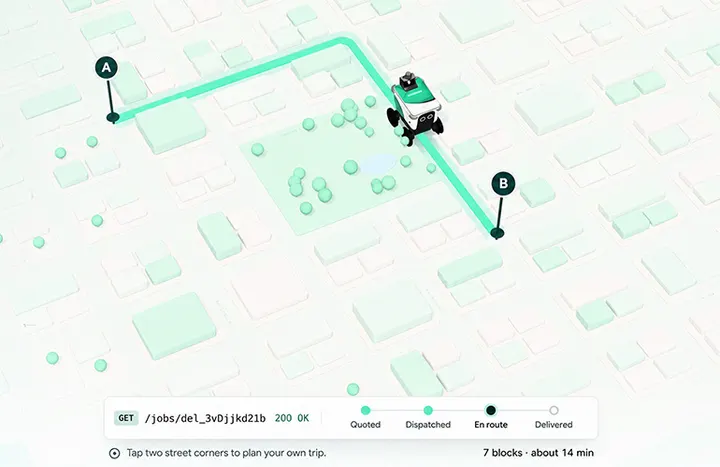
Serve Robotics opens robot delivery network for others to build on
The AV Delivery Developer Portal enables anyone to call robots from Serve’s delivery fleet. Source: Serve Robotics Serve Robotics Inc. today launched the AV Delivery Developer Portal, which it said gives developers, businesses, hobbyists, and AI assistants the opportunity to programmatically summon its sidewalk delivery robots. The company said its public application programming interface, or API, allows others to work with its autonomous robot fleet. It also released a sandbox environment

Cogent and OpenAI build cyber defense factories for enterprises
Cogent combines OpenAI models with enterprise context to help automatically remediate vulnerabilities with agents.