The sameness problem behind those unappetizing AI-generated menus
While restaurant owners might look to generative AI as a shortcut to sprucing up their menu, customers can viscerally sense that something is wrong with the food.
Get smart on it
AI image generators trained on vast datasets tend to produce menus with an unnaturally uniform, overly polished aesthetic because the models learn patterns from existing restaurant menus that already share similar styles, and this homogenization gets reinforced when AI-generated images are fed back into training data. When restaurants repeatedly edit these AI-generated menu images to adjust details like prices or item names, the food illustrations become progressively smoother and rounder with each iteration, creating an unsettling effect that people recognize as artificial even if they cannot explain why. Researchers have found that AI-generated food images trigger an "uncanny valley" response, where images that look almost but not quite real produce more disgust than obviously fake ones. This problem reflects a broader issue where AI systems tend to remove distinctive details and edges from outputs, raising questions about how people can trust what they see when AI-generated content becomes indistinguishable from real images.
Related news
.gif&s=kx7H9a1S3ZIMP7WHNPT2XBlIq6uwDsVvpMZbLf-dnSA)
Nobody Is Saying Why OpenAI and Anthropic Had Outages Today
ChatGPT, Claude, and Grok all suffered outages at nearly the exact same time for reasons that remain murky.
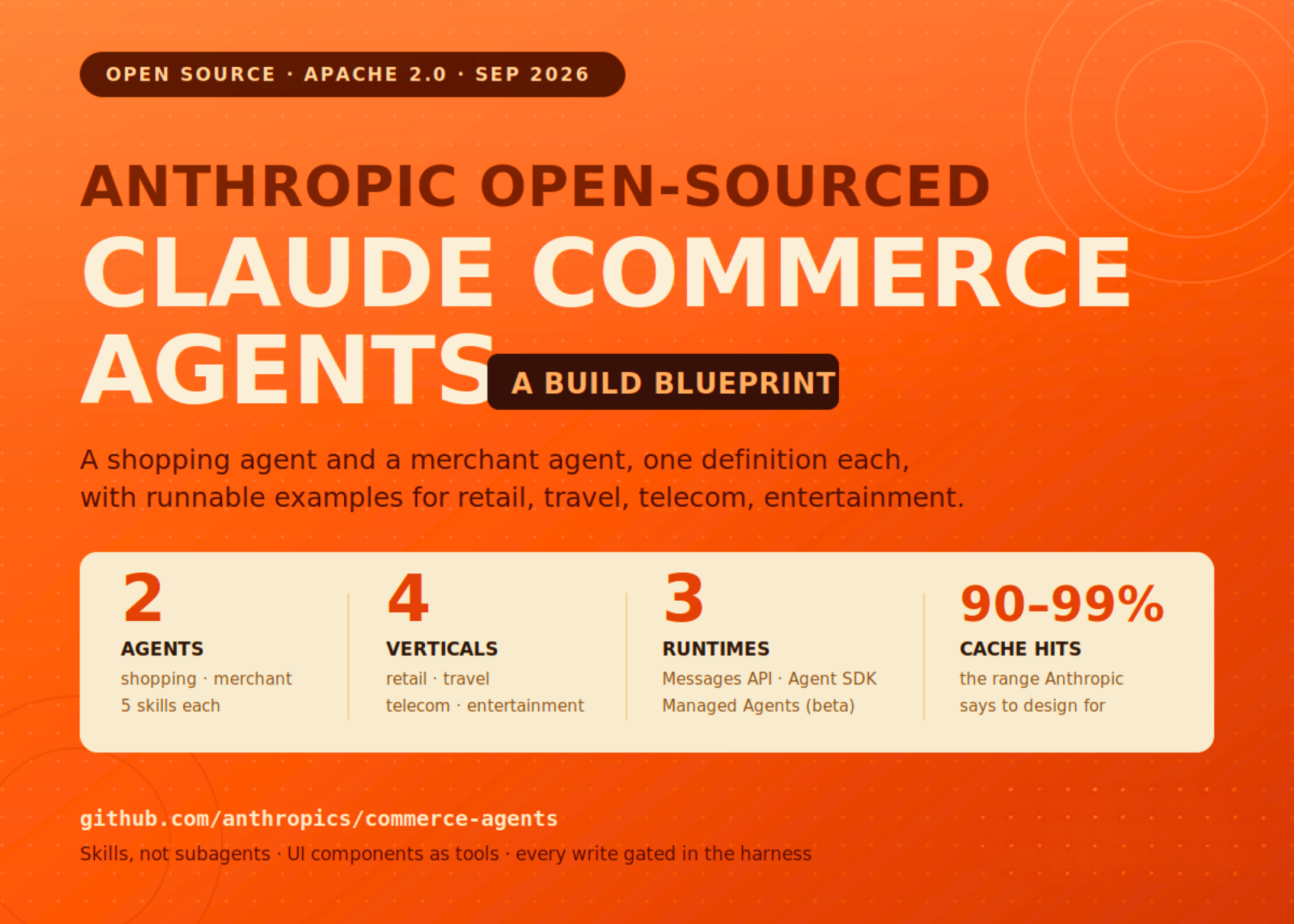
Anthropic Released Claude Commerce Agents: An Apache-2.0 Blueprint for Shopping and Merchant Agents Across Retail, Travel, Telecom and Entertainment
Most teams building a shopping assistant or agent rebuild the same scaffolding: an agent loop, a tool layer over the catalog, an approval gate, and an eval suite. Anthropic has now released that scaffolding as code. This week, they published anthropics/commerce-agents, a reference blueprint containing a shopping agent and a merchant agent, along with four runnable verticals: retail, travel, telecom and entertainment. It ships alongside two write-ups: a product announcement and an engineering de