PyGraphistry Implementation Workflow for Interactive Graph Intelligence Pipelines in Security Analytics and Risk Investigation
In this tutorial, we build an advanced, Colab-ready workflow around PyGraphistry for interactive graph analytics and visualization. We start by creating a realistic enterprise-style access dataset, transforming it into nodes and edges, and enriching the graph with risk scores, anomaly indicators, centrality metrics, community detection, and layout embeddings. We then use PyGraphistry to bind graph structure, visual encodings, labels, tooltips, and filtered subgraphs, and to generate local inter
Get smart on it
This tutorial demonstrates how to build an interactive graph visualization system for security analytics using PyGraphistry, a tool for graph intelligence. The workflow creates a realistic enterprise access dataset with users, devices, IP addresses, and services, then enriches this graph with risk scores, anomaly detection, and community analysis to identify suspicious patterns. Graph intelligence helps investigators examine risky relationships between users, devices, and services by transforming raw access data into visual, interactive networks that reveal behavioral patterns. The implementation works both with local visualization and with Graphistry Hub when credentials are configured.
Related news

OpenClaw Releases iOS and Android Companion Node Apps That Connect a Phone to a Self-Hosted AI Agent Gateway
OpenClaw just released native companion apps for iOS and Android. The iOS app is listed as ‘OpenClaw – AI that does things.’ Both apps are free to download. They are not standalone chatbots. Each phone becomes a node in a self-hosted agent network. The assistant itself runs on a separate Gateway. That separation is the whole design. TL;DR OpenClaw’s iOS and Android apps are companion nodes, not standalone assistants. The Gateway runs the agent; phones add came
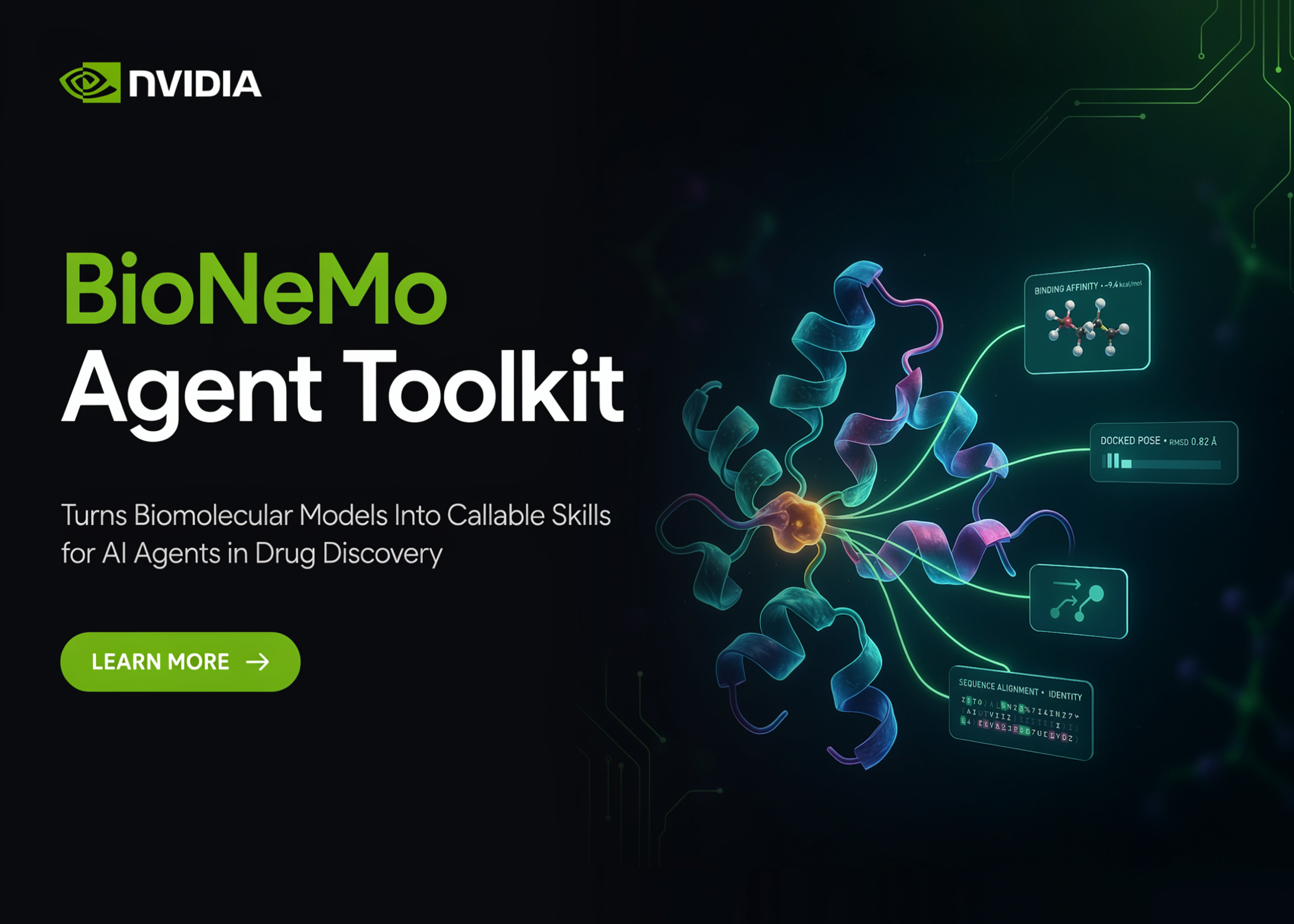
NVIDIA BioNeMo Agent Toolkit Turns Biomolecular Models Into Callable Skills for AI Agents in Drug Discovery
AI scientists are becoming a new interface for scientific computing. These agents read papers, write code, generate hypotheses, call APIs, and inspect files. But science is not software engineering. No test suite turns green when a hypothesis is correct. Discovery stays iterative, uncertain, and grounded in the physical world. That gap is what NVIDIA is targeting. NVIDIA published a hands-on walkthrough for its BioNeMo Agent Toolkit. The argument is direct. A general coding agent pointed at