PRX Part 4: Our Data Strategy
Organizations increasingly struggle to manage the massive datasets required to train and deploy AI systems effectively.
Get smart on it
This article describes the data strategy used to build a large training dataset for an image generation model. The dataset was assembled from a mix of public and internal sources, then re-captioned using a vision-language model and converted into a format suitable for distributed training. The approach prioritizes breadth and diversity over perfection, using long, accurate captions to describe everything in images so that imperfect elements become controllable attributes rather than noise. Key technical decisions included using two complementary data formats, computing text encodings during training rather than pre-computing them, and encoding images as compressed JPEG files rather than lossless formats.
Related news
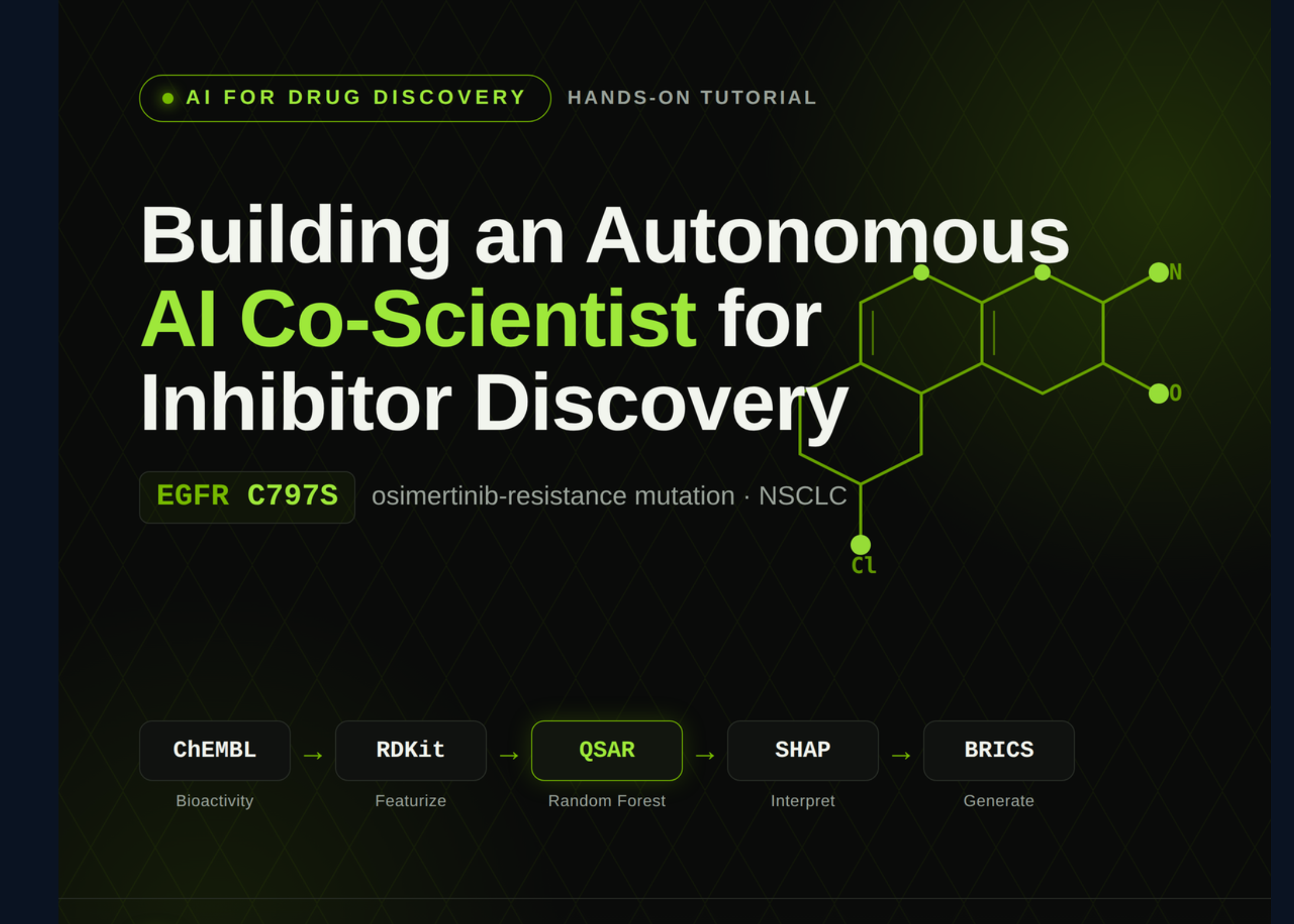
Building a Scaffold-Split Random Forest QSAR Co-Scientist for EGFR Inhibitor Discovery Using ChEMBL, RDKit, SHAP, and BRICS
In this tutorial, we build an end-to-end autonomous AI co-scientist workflow for next-generation EGFR inhibitor discovery, focusing on the C797S osimertinib-resistance mutation in non-small cell lung cancer. We start by resolving the biological target through ChEMBL and UniProt, then mine curated EGFR IC50 bioactivity records and convert them into a clean pIC50 modeling dataset. We use RDKit to standardize molecules, remove salts, aggregate replicate measurements, compute Morgan fingerprints, e

You can now customize Siri’s pace and expressivity in the latest iOS 27 beta
The update is part of Apple's broader effort to make Siri feel more natural and personal, as it rebuilds the assistant around generative AI.