Get smart on it
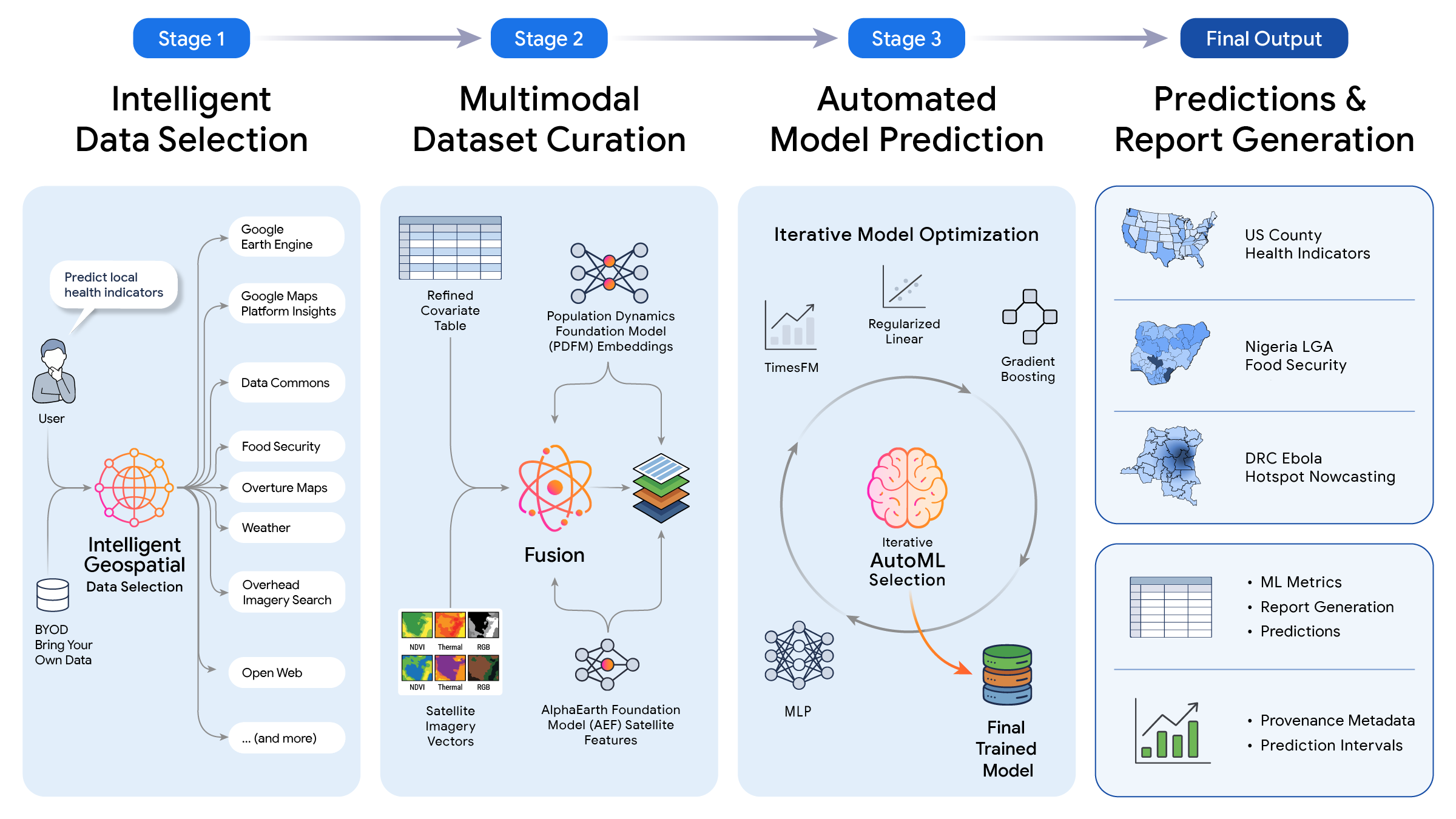
The planetary prediction engine is an autonomous AI system that automates the entire process of building geospatial prediction models, from finding and organizing relevant data to training and evaluating models, all based on natural-language queries. Building these models traditionally requires specialized teams to spend weeks on manual data preparation and engineering, but this system reduces that timeline to minutes while achieving better results across tasks like predicting disease outbreaks, food security, and public health indicators. The system works through three stages orchestrated by large language models: intelligent data selection from various sources, combining datasets with AI embeddings, and automated model building with safeguards against overfitting and data leakage. This matters because addressing global challenges like environmental disasters and humanitarian crises requires rapid geospatial analysis that previously was bottlenecked by the time-intensive manual processes involved in data preparation.
Related news

The sameness problem behind those unappetizing AI-generated menus
While restaurant owners might look to generative AI as a shortcut to sprucing up their menu, customers can viscerally sense that something is wrong with the food.
.gif&s=kx7H9a1S3ZIMP7WHNPT2XBlIq6uwDsVvpMZbLf-dnSA)
Nobody Is Saying Why OpenAI and Anthropic Had Outages Today
ChatGPT, Claude, and Grok all suffered outages at nearly the exact same time for reasons that remain murky.