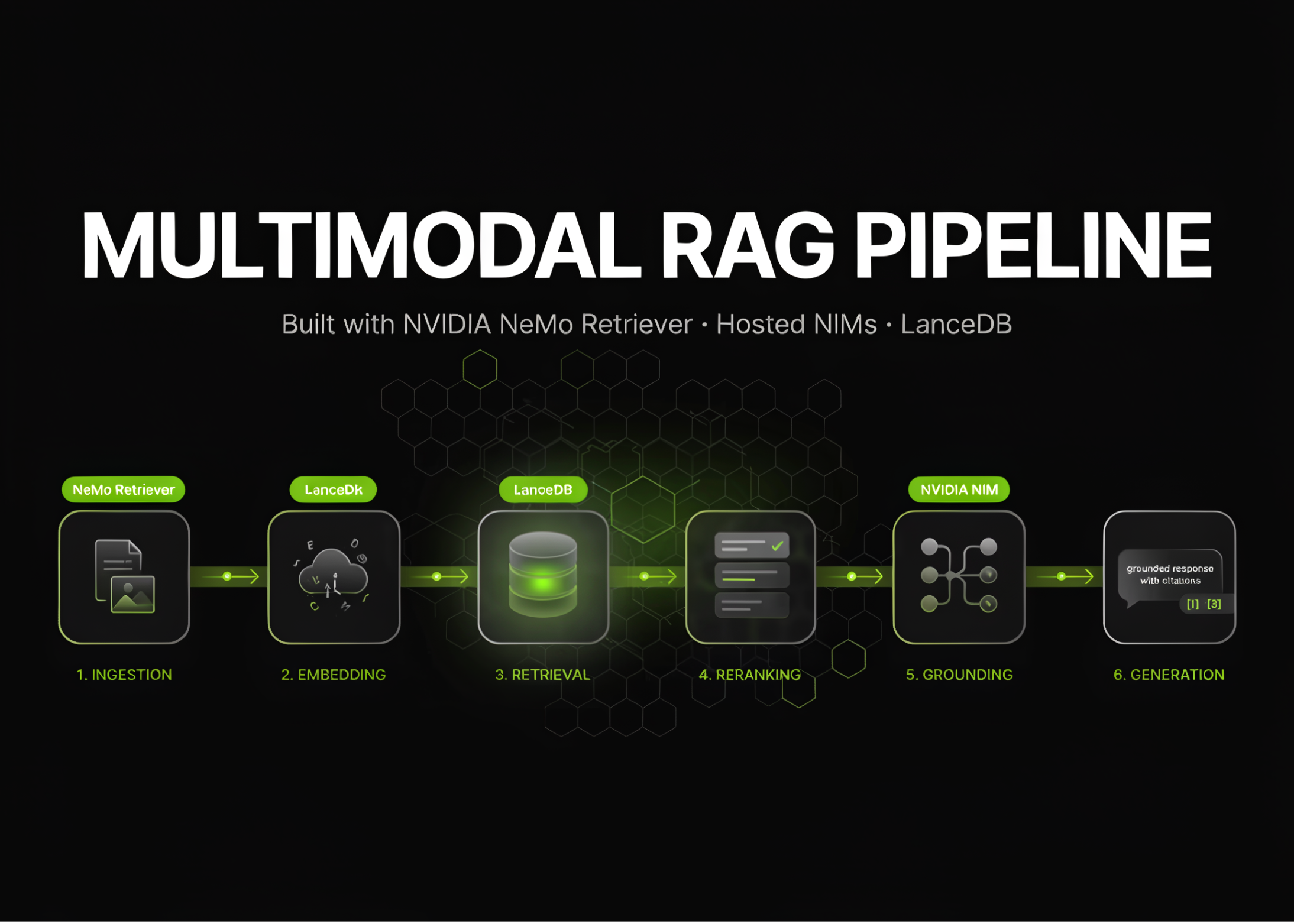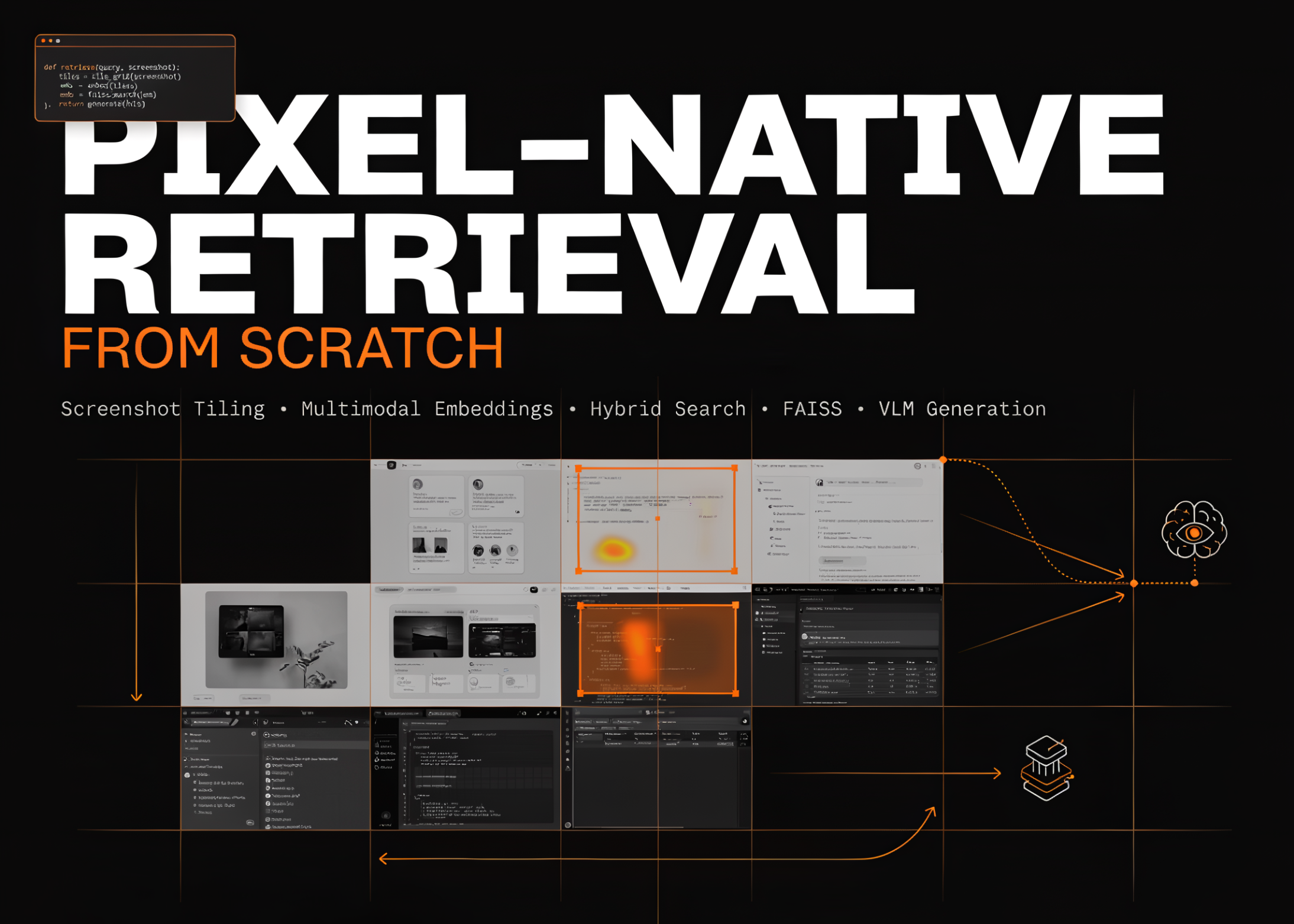
Pixel-Native RAG: A Practical Guide to Visual Document Indexing
In this tutorial, we build a complete pixel-native retrieval-augmented generation pipeline from scratch and examine how document retrieval works without relying on conventional HTML parsing, text extraction, or fixed chunking strategies. We render web pages and PDF documents as images, divide them into overlapping tiles, generate multimodal embeddings with SigLIP, CLIP, or an optional Qwen3-VL backend, and store the resulting vectors in a FAISS index for efficient similarity search. We also str
Get smart on it
Pixel-native RAG is a system for searching documents by converting them into images, dividing them into overlapping tiles, and generating embeddings that enable similarity-based retrieval without relying on text extraction or HTML parsing. The approach matters because it preserves visual layout and formatting information that traditional text-based methods lose, particularly for complex documents like PDFs and scanned pages with tables and mathematical notation. The system combines image-based dense retrieval with OCR-based sparse scoring through reciprocal rank fusion, stores results in a FAISS index for efficient search, and can optionally use vision-language models to generate answers grounded in the retrieved visual evidence.
Related news

Meet Shepherd: An Open-Source Python Substrate That Lets Meta-Agents Fork, Replay, and Revert Any Agent Run
Long-running agents accumulate state that no transcript captures. A coding agent at step 10 holds edited files, a running dev server, installed packages, and a warm prompt cache. When it misreads a traceback and rewrites a file that was already correct, neither available recovery path is cheap: patching forward grows the context and the token bill, and restarting from step one re-pays every model and tool call while reproducing nothing exactly, because runs are non-deterministic. Jumping back t
How to Disable Gemini in Gmail and Google Docs
New AI toolbars and prompts are showing up in Google Docs and Gmail. If you don’t want Gemini’s help in writing documents and emails, here’s how to turn that stuff off.