CopilotKit Open Sources Channels SDK: An MIT Licensed Library That Runs Any AG-UI Agent Inside Slack And Microsoft Teams
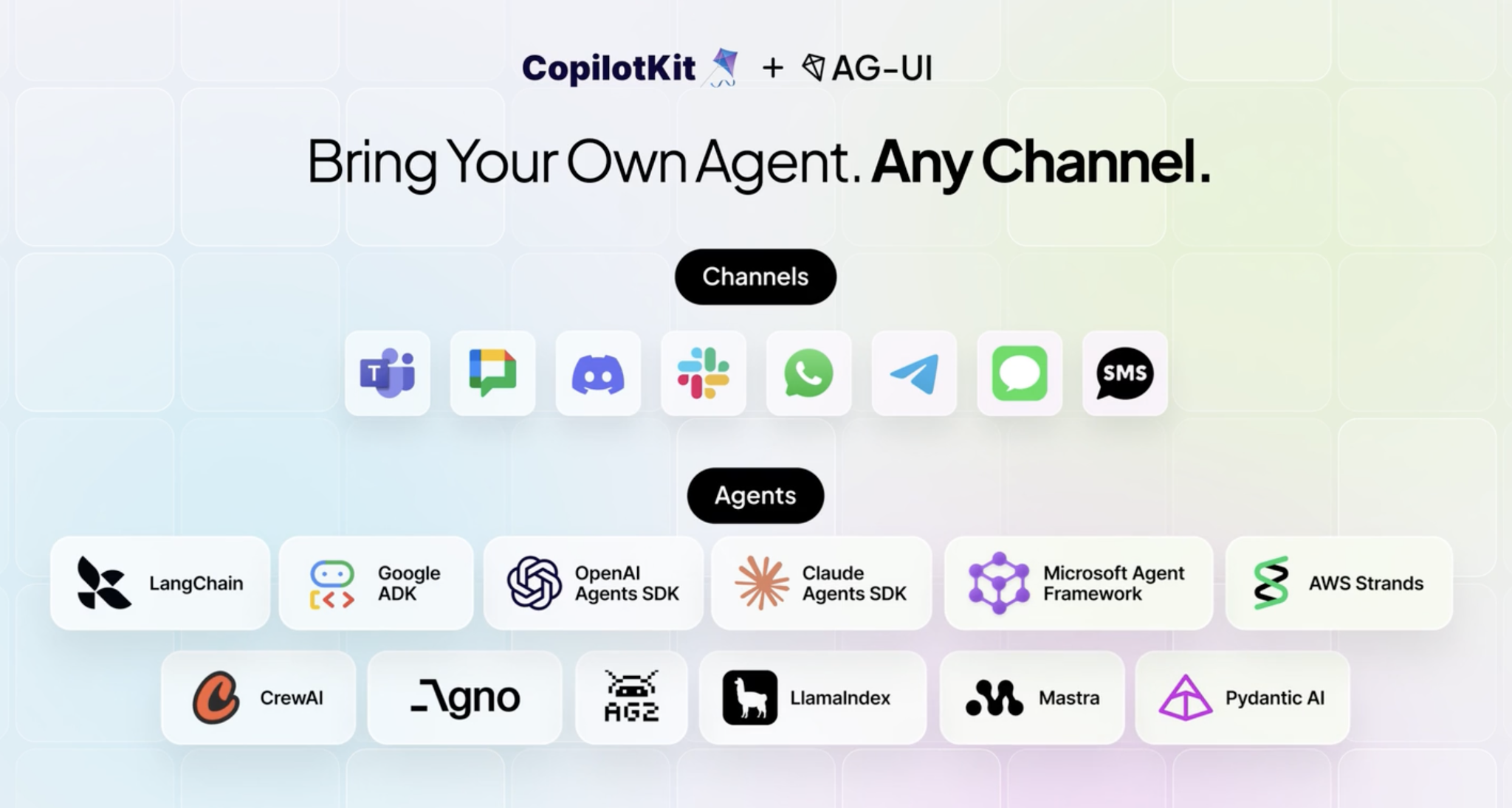
CopilotKit has just released the Channels SDK. It is an open source library that puts an existing agent inside a messaging platform. The core assumption is focused and verifiable. You already have an agent. It already has a model, tools and business logic. Channels gives it a place to work with people, without a rewrite per platform. It runs on Slack and Microsoft Teams as early access surfaces. Discord and Google Chat are named as planned. Installation is two packages: Copy CodeCopied
Get smart on it
CopilotKit has released an open source library called Channels SDK that allows existing AI agents to operate within messaging platforms like Slack and Microsoft Teams without requiring a complete rewrite for each platform. The SDK uses a protocol called AG-UI that enables different agent frameworks to connect, and it translates messages into each platform's native format rather than sending plain text. This matters because it lets organizations deploy a single agent across multiple communication platforms while keeping their existing model, tools, and business logic intact. The library requires Node.js 22 and a long-running process to maintain platform connections, and it supports features like generative UI, human approval workflows, and tool execution within conversations.
Related news

Meet Shepherd: An Open-Source Python Substrate That Lets Meta-Agents Fork, Replay, and Revert Any Agent Run
Long-running agents accumulate state that no transcript captures. A coding agent at step 10 holds edited files, a running dev server, installed packages, and a warm prompt cache. When it misreads a traceback and rewrites a file that was already correct, neither available recovery path is cheap: patching forward grows the context and the token bill, and restarting from step one re-pays every model and tool call while reproducing nothing exactly, because runs are non-deterministic. Jumping back t

How to Disable Gemini in Gmail and Google Docs
New AI toolbars and prompts are showing up in Google Docs and Gmail. If you don’t want Gemini’s help in writing documents and emails, here’s how to turn that stuff off.