A behind-the-scenes look at Midjourney’s medical scanner leaves many questions unanswered
A scan of an imaging phantom, segmented to validate how cleanly structures separate under controlled conditions. | Image: Midjourney Medical Midjourney has shown more of its futuristic medical scanner. It still hasn't shown much proof it works. The AI startup, best known for generating images, released a behind-the-scenes video of its dunk-tank ultrasound scanner, which it plans to deploy in spas and hopes will transform medicine with cheap, detailed, radiation-free imaging. Th
Get smart on it
Midjourney, an AI startup known for image generation, has released a video showing the behind-the-scenes development of a medical scanner designed as an ultrasound device housed in a tank-like structure. The company plans to deploy the scanner in spas as a wellness product focused on body composition rather than as a diagnostic medical device, which would require FDA approval and clinical trials. Experts have raised questions about whether Midjourney can overcome the well-known technical limitations of ultrasound technology and produce the detailed images at the scale and speed the company has promised, but the video largely avoids addressing these physics and imaging concerns. The company's leadership stated they have no investors to answer to and emphasized they will market it as a wellness product to launch more quickly.
Related news

Meet WebBrain: An Open-Source, Local-First AI Browser Agent That Reads Pages and Automates Tasks in Chrome and Firefox
WebBrain is a free, open-source browser agent for Chrome and Firefox. It reads pages, extracts data, and automates multi-step tasks. Unlike most browser AI plugins, it can also run entirely on a local model. It is built by Emre Sokullu and licensed under MIT. The full source lives on GitHub. Run the agent against a local model, and no page data leaves your machine. Connect a cloud API when you want more capability. What is WebBrain? WebBrain lives in your browser’s side panel
RAG-Anything Tutorial: Build a Multimodal Retrieval Pipeline for Text, Tables, Equations, and Images in Colab
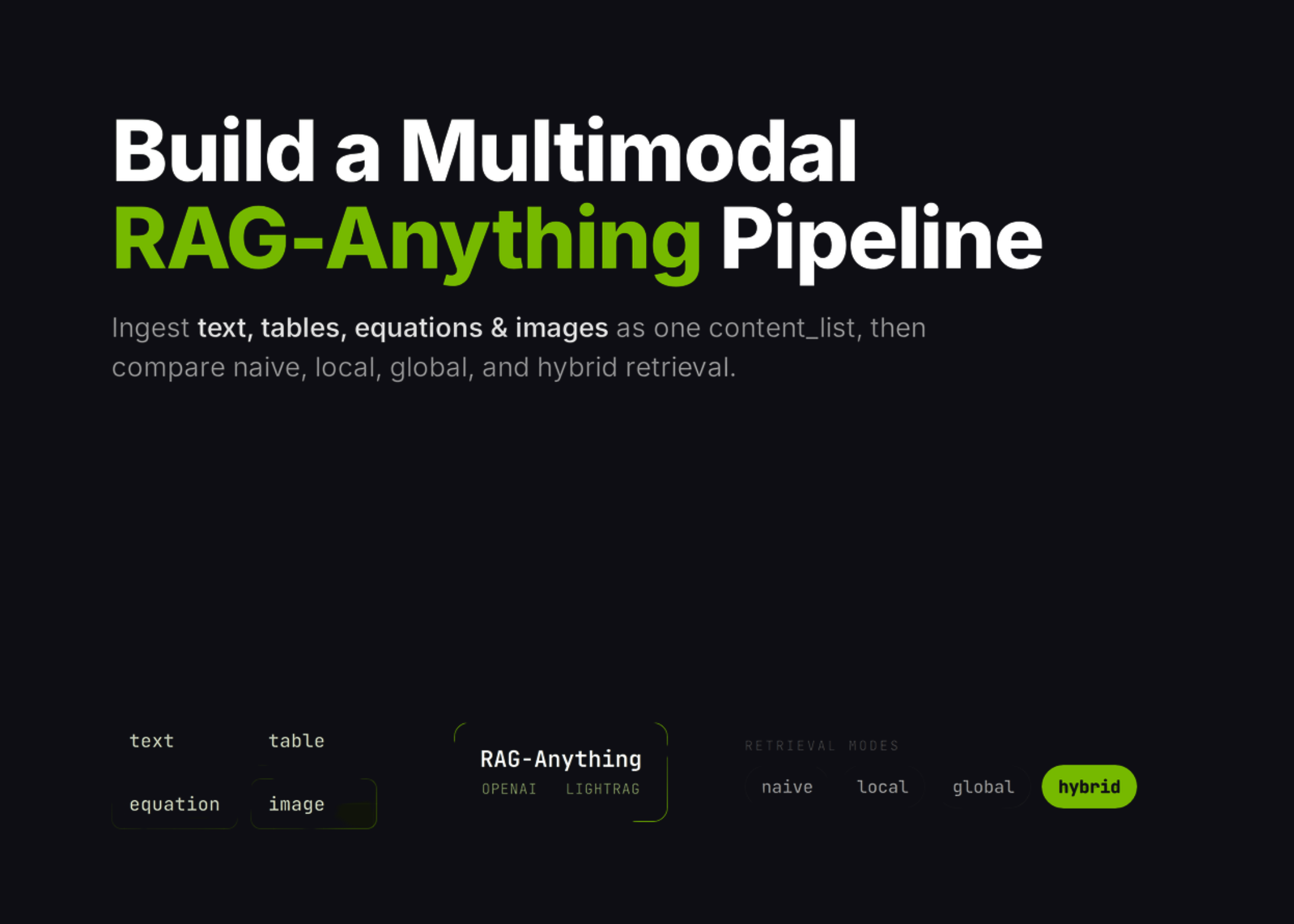
In this tutorial, we build a RAG-Anything workflow and use it to explore how multimodal retrieval works across text, tables, equations, and images. We start by preparing the Colab environment, installing the required packages, and securely entering our OpenAI API key at runtime to keep the notebook practical and safe to run. We then create a synthetic multimodal report, generate a chart and PDF, convert the content into RAG-Anything’s direct content_list format, and insert it into the retrieval