Why perception is the key to scaling industrial autonomy
Editor’s Note: Mel Torrie, co-founder and CEO of Autonomous Solutions Inc., will be speaking at RoboBusiness. Learn more about the ideas shaping the future of robotics and hear directly from industry leaders at RoboBusiness, October 20–21 in Santa Clara, Calif. The era of simple automation is over. For decades, the promise of autonomy was judged by one question: Can a machine operate safely without continuous human input? Today, that question has been answered. The defining question for
Get smart on it
Industrial autonomy has moved beyond the question of whether machines can operate without human input to a more complex challenge: how well can they perceive and understand their environment to make intelligent decisions in real time. Perception, powered by advanced vision systems, has become critical because autonomous machines must detect obstacles, predict movements, and respond within milliseconds in unpredictable real-world conditions like mines and construction sites where downtime costs tens of thousands of dollars per hour. Rather than relying on GPS positioning alone, effective autonomous systems require edge intelligence that processes visual information on the vehicle itself without depending on network connectivity, and they use multiple sensor types like LiDAR, cameras, and radar together so each can detect what the others cannot. The machines that fail in harsh industrial environments typically fail because of perception limitations rather than motor control or path planning, making sensor design and flexibility in hardware integration as important as the autonomy platform itself.
Related news

Experts look ahead at the next 20 years of robotics at RoboBusiness
From left to right: Rodney Brooks, Jonathan Hurst, and Ken Goldberg. Robotics has evolved from a promising technology into a critical business tool across manufacturing, logistics, healthcare, agriculture, defense, and beyond. At RoboBusiness 2026, which takes place Oct. 20 and 21 in Santa Clara, Calif., industry leaders will reflect on the breakthroughs that defined the past two decades. In the show’s opening keynote session, as RoboBusiness marks its 20th anniversary, leaders in robotics
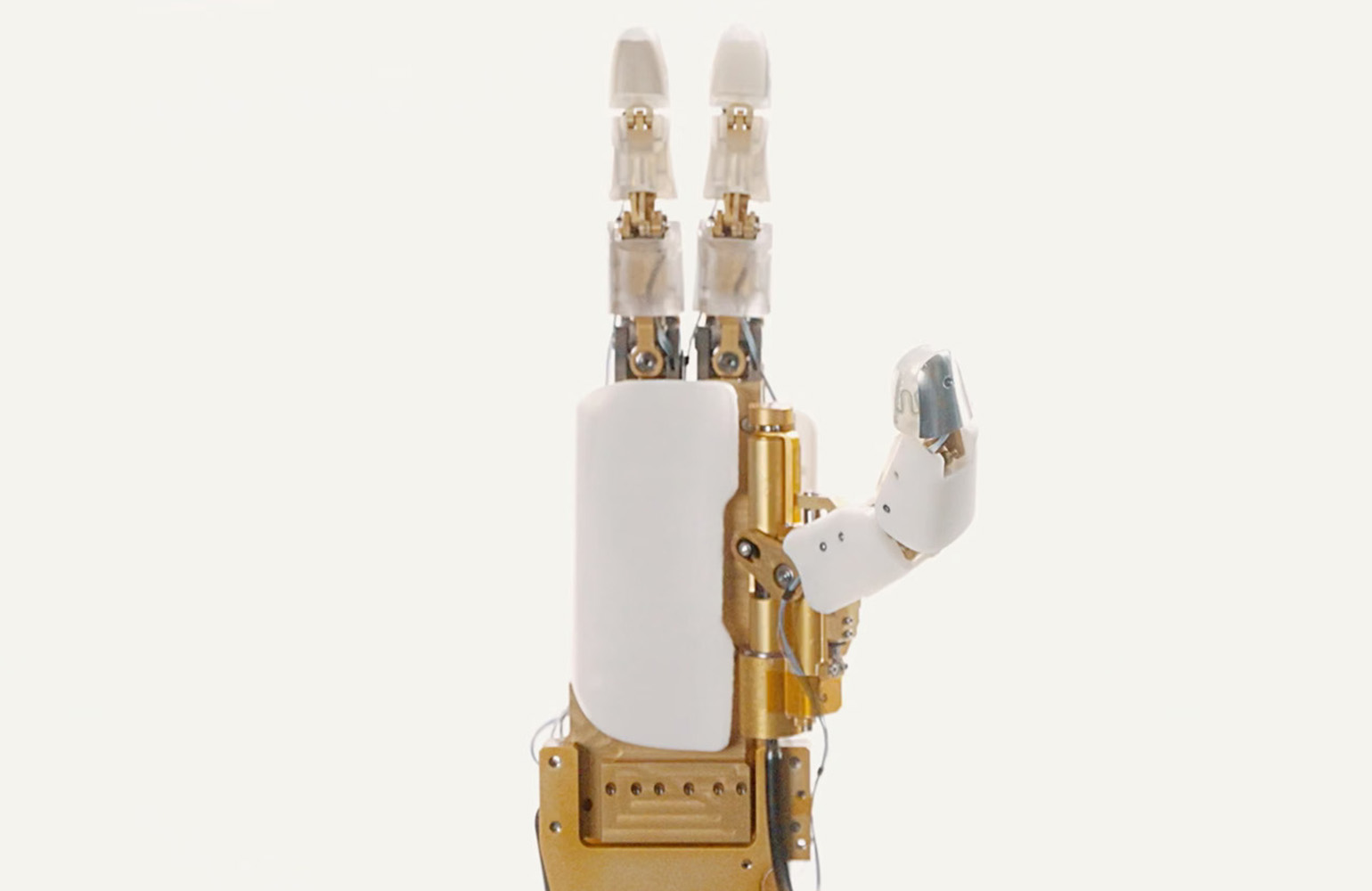
Tacta Systems takes aim at high-skilled manufacturing work with TactaBot
Tacta’s robotic hand comes in three- and five-finger configurations. | Source: Tacta Systems Tacta Systems last week launched the TactaBot, which includes the company’s Tacta Hand, Skill Capture system, and a Dexterous Intelligence AI model. These three components work together to create capable, scalable, and adaptable robotic hands for high-value work. “We have vison-only robots and a variety of different robots that do really good work today, which is moving objects and so on, but