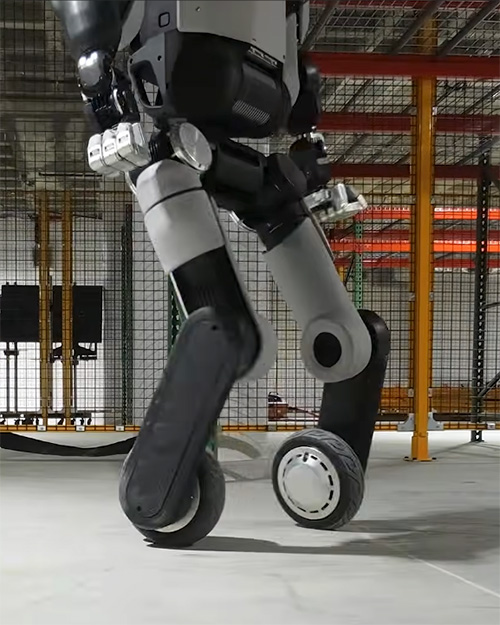
Boston Dynamics adds wheels to Atlas robot
The Robot Report: Boston Dynamics adds wheels to Atlas humanoid to test whole-body control
Bridging the divide between deterministic physics-based control and policy-driven adaptation, Boston Dynamics has deployed a hybrid locomotion architecture on a wheeled variant of its Atlas humanoid. The “experiment” combined classical model-based motor control with whole-body reinforcement learning to maintain dynamic stability across unstructured, real-world terrain. In the video, Andy Wu, controls engineer for Atlas at Boston Dynamics, highlights some recent experiments that he
Get smart on it
Boston Dynamics attached wheels to its Atlas humanoid robot to conduct control engineering experiments that test how the robot can maintain stability and adapt to real-world terrain. The experiment combined classical physics-based motor control with whole-body reinforcement learning, allowing Atlas to learn wheeled locomotion behaviors in simulation and then execute them in real environments, including performing maneuvers like pirouettes and switching between rolling on flat ground and articulated movement over obstacles. The retrofit required only a simple custom adapter mounting a scooter rim to the robot's existing ankle actuator, demonstrating that the robot's design allowed for easy modification. The primary finding was that merging traditional motor controls with reinforcement learning-based adaptation produces better real-world performance than using either method alone, though Boston Dynamics emphasized this wheeled version is a research testbed rather than a commercial product.
Relevant courses
Want to go deeper than the news? Explore live, cohort-based AI courses taught by practitioners.
Browse AI courses on MavenRelated news
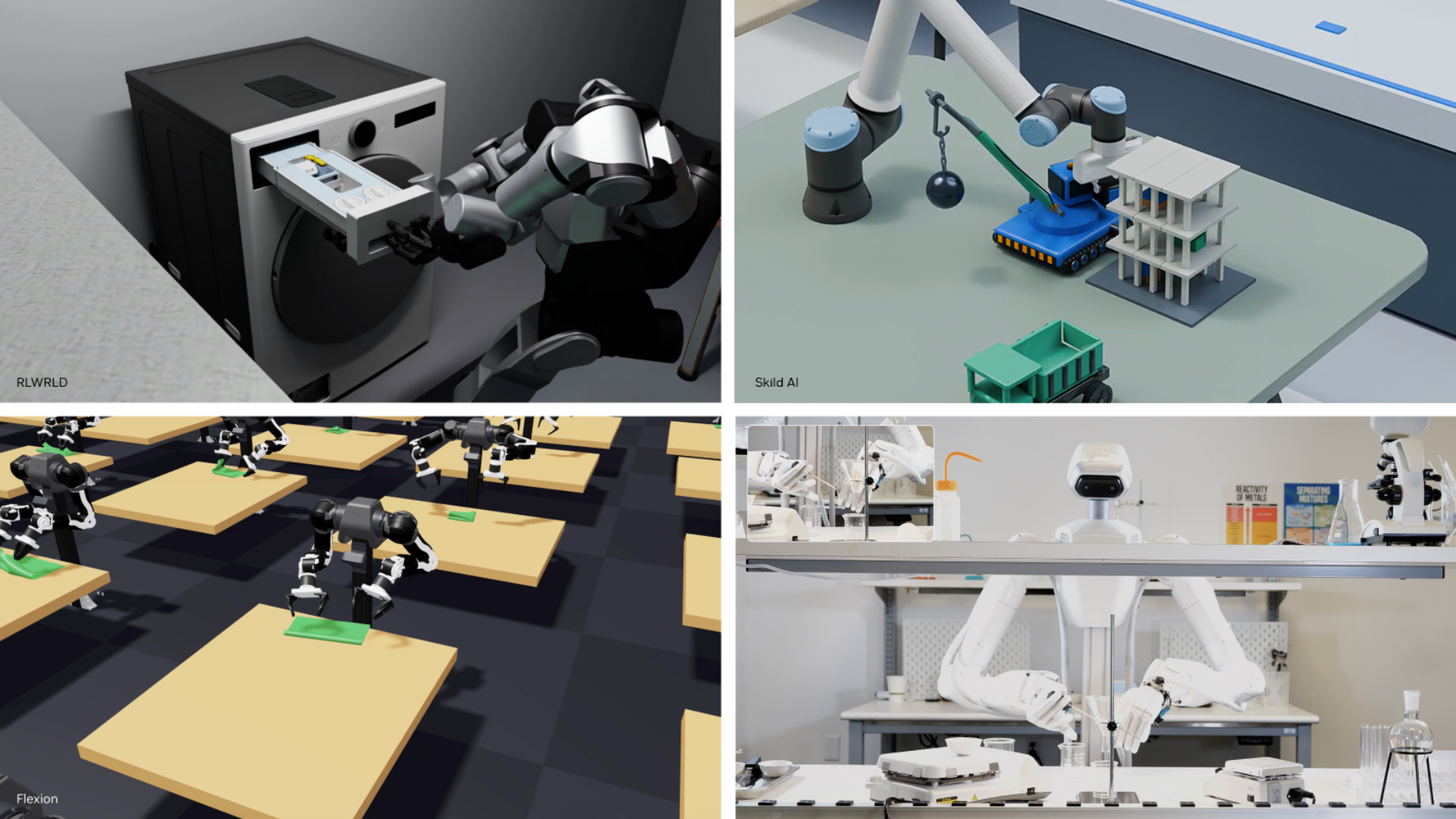
Practice Makes Precise: At CoRL, NVIDIA and Partners Reveal How Robots Rehearse Delicate Work in Simulation
Simulation, which has long been the proving ground for robots learning to walk, roll and hop, is now helping researchers teach robots tasks that require a finer touch: aligning gears, connecting cables and assembling small components. The shift from locomotion to manipulation is taking center stage at this week’s Conference on Robot Learning (CoRL) in Austin, Texas, alongside the rise of agentic robotics — a new paradigm that integrates frontier agents to create interpretable code for physical

Agility is the first pure humanoid robot company on the stock market. Are you buying?
Agility arrives on the Nasdaq today as the first publicly-traded pure-play humanoid robotics company.
Also reported by Ars Technica
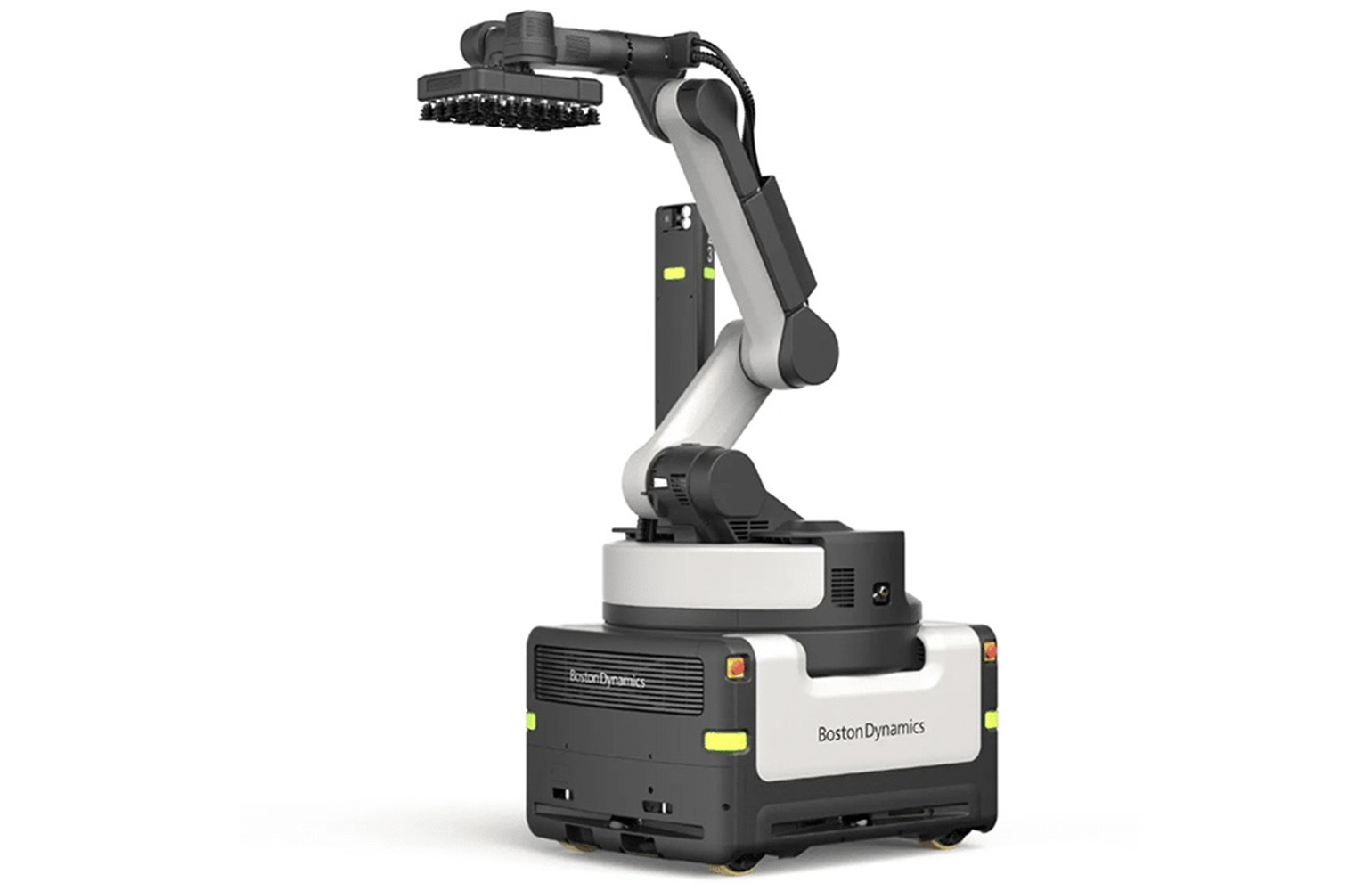
Boston Dynamics built Stretch Gen 2 for reliable, consistent performance
The new Stretch features an updated modular design that enables “plug and play” part swaps. | Source: Boston Dynamics Boston Dynamics Inc. this week unveiled Stretch Gen 2, the latest generation of its autonomous mobile trailer unloading robot. With over 100,000 operating hours and tens of millions of boxes handled under its belt, the company built the updated robot to maximize uptime and streamline maintenance. Brian Donnelly, the vice president and general manager of logistics robotics at Bost

Physicl raises $10M to make the digital world real enough for robots
Physicl is trying to solve the sim-to-real gap with a pipeline originally built to market goods online.

Sector Snapshot: Construction Robotics Funding Soars To $1.6B, Tripling Previous Peak
Construction companies are struggling to find enough workers. For startups, that means venture investors are pouring money into companies betting that robots can help close the gap. Companies spanning construction and robotics have raised about $1.6 billion this year through Oct. 29 — more than 4x the $389 million recorded in all of 2025 — according to Crunchbase data. The surge was driven by three companies that raised the majority of the funding. The broad trend: For contractors struggling to
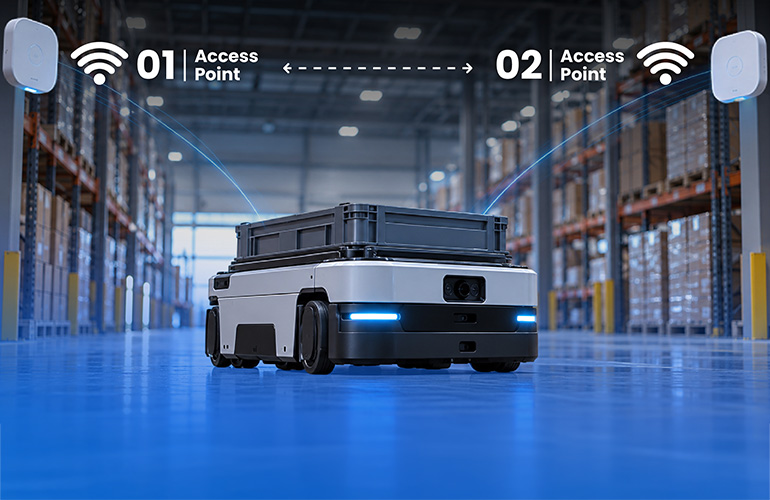
How to minimize Wi-Fi roaming interruptions for autonomous mobile robots
Wi-Fi connectivity needs to be reliable for real-time mobile robot management. Source: Synaptics An autonomous mobile robot or AMR may cross dozens of Wi-Fi coverage zones during a single shift. Each transition creates a small but potentially consequential communications problem: How does the robot find its next access point without interrupting the connection it is already using? The answer matters because AMRs, industrial inspection robots, warehouse automation, and healthcare service robots i