
RoboTrack improves point tracking for robots
Hugging Face: RoboTrack: Point tracking for real-world robotic manipulation
Accurate tracking of object points could help robots grasp and manipulate items more reliably in unstructured environments.
Robots performing real-world tasks need to track specific points on objects and tools as they move, become hidden, and reappear during manipulation. Existing point tracking systems perform well on established benchmarks but fail to reliably handle the varied scenes, viewpoints, and object interactions that robots encounter in practice. A new benchmark called RoboTrack-Bench, containing human-annotated videos of robotic and human manipulation across cluttered environments, reveals that leading trackers score significantly lower on real manipulation footage than on existing benchmarks. To address this gap, researchers created RoboTrack-15M, a synthetic training dataset generated from simulated robot manipulation, which improves tracker performance on real videos.
- GXO doubling down on robotics in 2027 · The Robot Report
- The manufacturing data gap holding back physical AI · The Robot Report
- How Vention is cutting factory programming from weeks to minutes · The Robot Report
- All of today’s AI news, biggest first →
One short email a day with the stories that matter. Free. Unsubscribe with one click.
Want to go deeper than the news? Explore live, cohort-based AI courses taught by practitioners.
Browse AI courses on Maven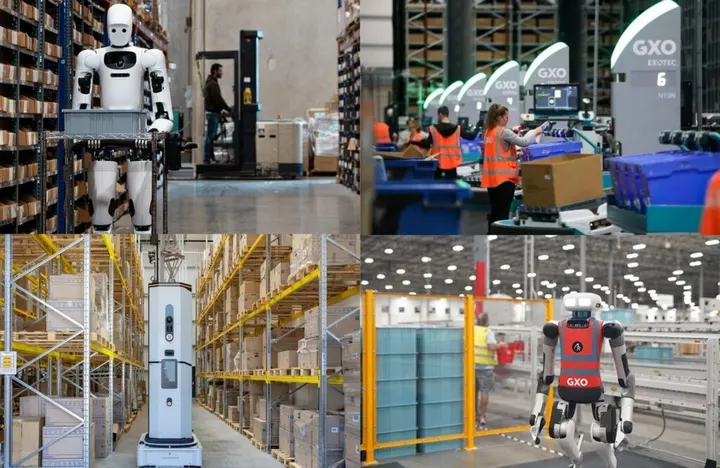
GXO doubling down on robotics in 2027
Some of the robots GXO is testing or using in its facilities, including Apptronik’s Apollo humanoid, the Exotec ASRS, Dexory’s inventory robot, and Agility’s Digit humanoid. | Source: Apptronik, Exotec, Dexory, and Agility Robotics GXO Logistics plans to accelerate deployments of adaptive technologies across the U.S. in 2027. The phased rollout will start at GXO’s priority sites and continue over the next 12 months. The deployment will include: Pallet AMRs to
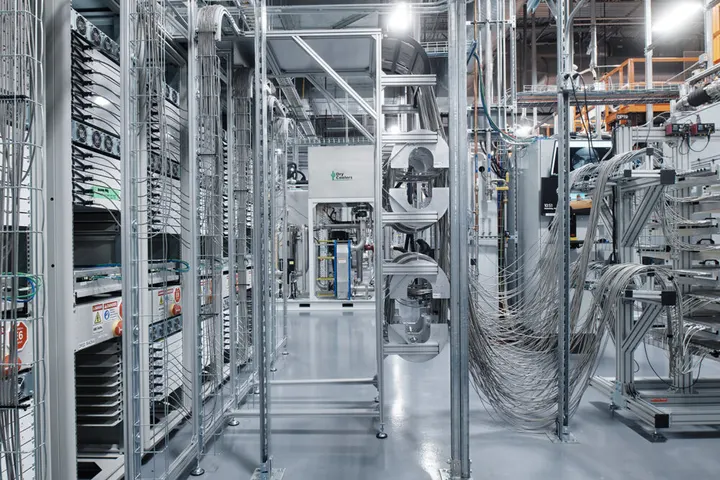
The manufacturing data gap holding back physical AI
Robotics and physical AI companies have raised nearly $48 billion so far in 2026, but the rollout of fully autonomous machines in industrial settings isn’t a given. For robots to step beyond controlled environments onto the manufacturing floor, they need real-world data to learn from. Most production facilities aren’t set up to provide it. Consider the welding process. For a robot to improve its technique autonomously, it needs to understand how changes in welding angle, travel speed, workpiece

How Vention is cutting factory programming from weeks to minutes
The Robot Report Podcast · How Vention is cutting factory programming from weeks to minutes President & Chief Executive Officer, Founder, Vention. In Episode 271 of The Robot Report Podcast, we talk with Etienne Lacroix, President & Chief Executive Officer, Founder of Vention. Etienne Lacroix is a business leader and entrepreneur building and transforming engineering-driven companies. At Vention, McKinsey, and GE, he developed new industrial technologies and supported manufacturers acro
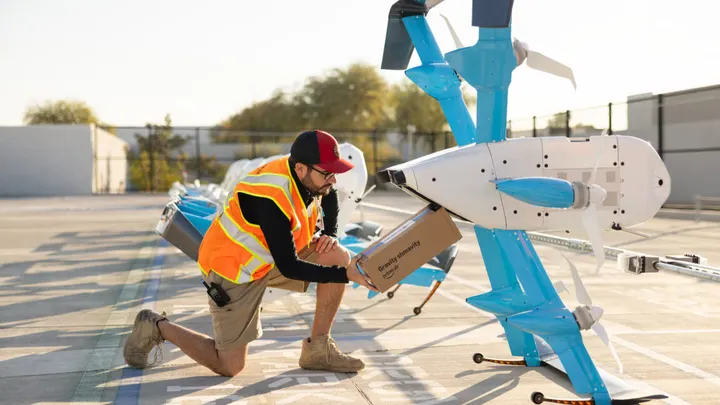
FAA opens probe after Amazon delivery drone clips cable, crashes into garage
An Amazon delivery drone that clipped a fiber-optic line before crashing onto a garage roof is now the subject of an investigation by the US Federal Aviation Administration. It’s the latest delivery drone mishap caught on video as Amazon and other companies are ramping up such aerial delivery operations across the United States. The November 20 incident began with Jim Brennan and his wife, residents of Huntington Woods, Michigan, placing an order for shampoo and being surprised by a notification
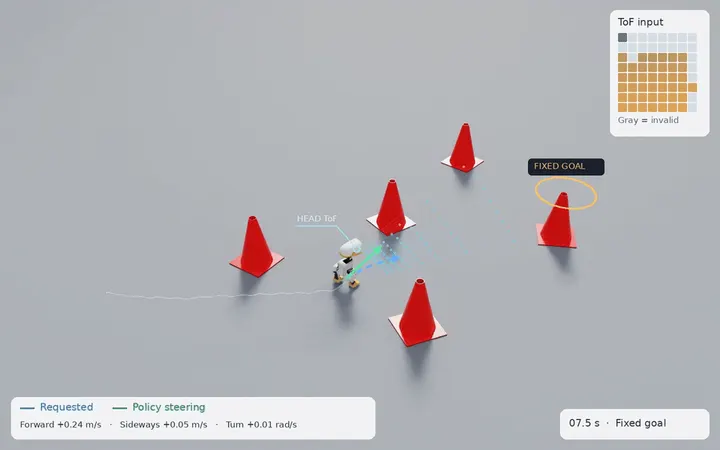
Microduck Obstacle Avoidance: A Sim2Real Workflow with Isaac Lab and Newton
Bridging the gap between simulation and real-world robots requires solving how virtual training translates to physical performance without costly trial-and-error.
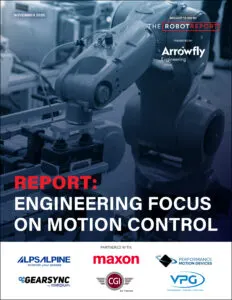
Special Report: Engineering Focus on Motion Control
Motion control is at the heart of every robotic system. From industrial robotic arms and autonomous mobile robots (AMRs) to humanoids, the ability to move with precision, efficiency, and reliability is critical to successful development and deployment. Developers must balance increasingly complex requirements around torque, speed, accuracy, weight, power consumption, and cost. Advances in motors, actuators, gearboxes, sensors, and software are helping engineers address these challenges and unloc