
Ring launches security drone and patrol robot
TechCrunch: Ring, known for its doorbell cameras, launches a home security drone and an enterprise security robot
Amazon-owned Ring is pushing into robotics with the launch of a home security drone and a rolling robot designed to patrol and protect businesses.
Part of a story that several outlets report: Ring launches AI-powered flying drone camera for homes
Ring, an Amazon-owned home security company, has launched a robotics division with two new devices: an indoor flying security camera for homes and a roving security robot for businesses. The home drone can patrol rooms and investigate when alarms trigger, while the enterprise robot patrols on set routes and streams 4K video with two-way audio capabilities, both powered by an AI system called AI Pilot. Privacy concerns have historically surrounded Ring due to its cameras being accessed by police departments, and similar concerns are likely to arise with these new robotic devices, though Ring says they include encryption protections. This launch follows Amazon's previous attempt at a home security robot called Astro, which was discontinued after failing to gain traction as a small business product.
- Google DeepMind releases new advanced robotics AI model and next-generation gene prediction model · SiliconANGLE
- Six AGIBOT G2 Robots Complete 1,730 Tasks in 24-Hour Shanghai Convenience Store Trial · The Robot Report
- Gemini Robotics 2.5 accelerates real-world general dexterity · Google DeepMind
- All of today’s AI news, biggest first →
One short email a day with the stories that matter. Free. Unsubscribe with one click.
Want to go deeper than the news? Explore live, cohort-based AI courses taught by practitioners.
Browse AI courses on Maven
Google DeepMind releases new advanced robotics AI model and next-generation gene prediction model
Alphabet Inc.’s artificial intelligence research lab, Google DeepMind, Tuesday debuted the next generation of Gemini Robotics, the company’s most capable vision-language-action model to date for creating an “AI brain” for robotics. Separately, DeepMind announced AlphaGenome 2 today, a next-generation AI model that can predict how DNA sequences and their variations affect human cell types, creating […] The post Google DeepMind releases new advanced robotics AI model and next-generation gene
Also reported by MarkTechPost and The Decoder
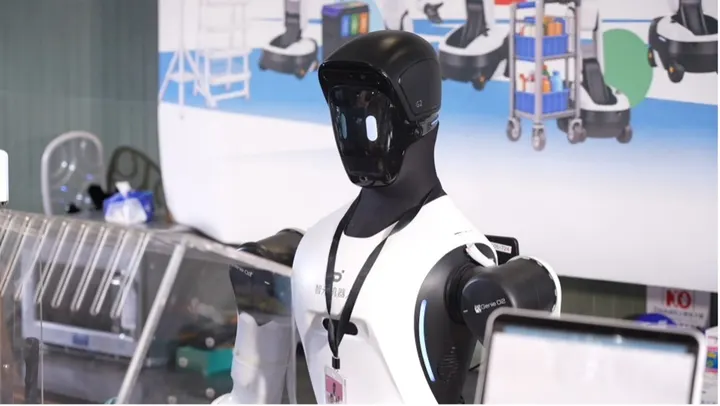
Six AGIBOT G2 Robots Complete 1,730 Tasks in 24-Hour Shanghai Convenience Store Trial
Four of the six robots pass a performance assessment as the trial puts customer service, retail operations and embodied AI capabilities to the test in a working store. Six AGIBOT G2 wheeled humanoid robots completed a 24-hour trial at an operating convenience store in Shanghai’s Xuhui District, performing a combined 1,730 tasks ranging from customer assistance and coffee preparation to shelf restocking and cleaning. The trial ran from 10 a.m. on November 2 to 10 a.m. on November 3 an

Gemini Robotics 2.5 accelerates real-world general dexterity
Our most capable vision-language-action model enhances robot dexterity, reliability, and safety
Also reported by Ars Technica
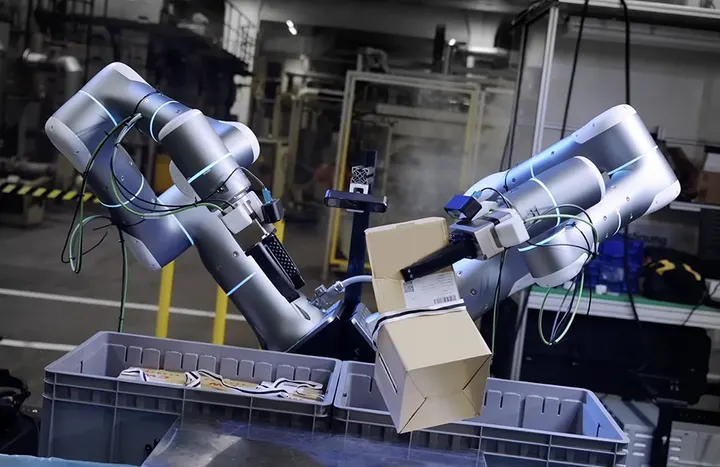
How Rhoda AI is using video data to create generalized AI models for robots
Rhoda pretrains its models on internet-scale video to build a strong prior on motion, physics, and physical interaction. | Source: Rhoda AI Earlier this year, Rhoda AI emerged from 18 months of stealth with $450 million in Series A funding. The company is working with customers in automotive, manufacturing, logistics, and e-commerce to deploy its direct video action, or DVA, model for robotics. “We’re focused on deploying in the real world, and that means you have to deal with the messiness of t
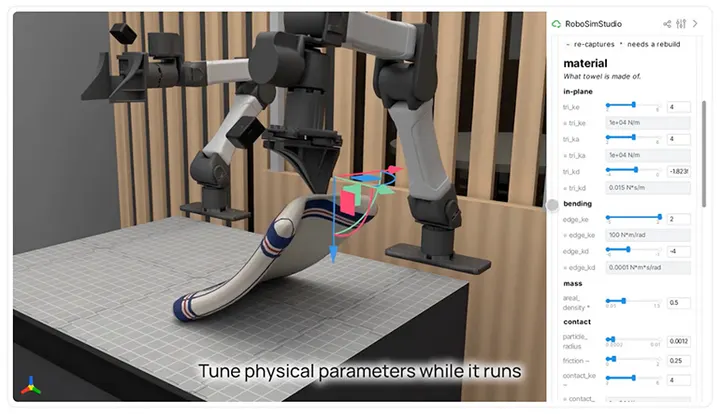
Can AI agents program industrial robots without training data? Berkeley says yes
The new RoboSimStudio is an open-source project that enables agentic AI coding of robotic simulation environments. | Credit: UC Berkeley UC Berkeley and NVIDIA have released open-source tools for a new approach: enabling teams of AI coding agents to write, simulate, and refine readable robot programs. Since the early days of industrial robots, programming, tuning, and troubleshooting robotic workcells has taken weeks to months. New research coming out of UC Berkeley has demonstrated that new age
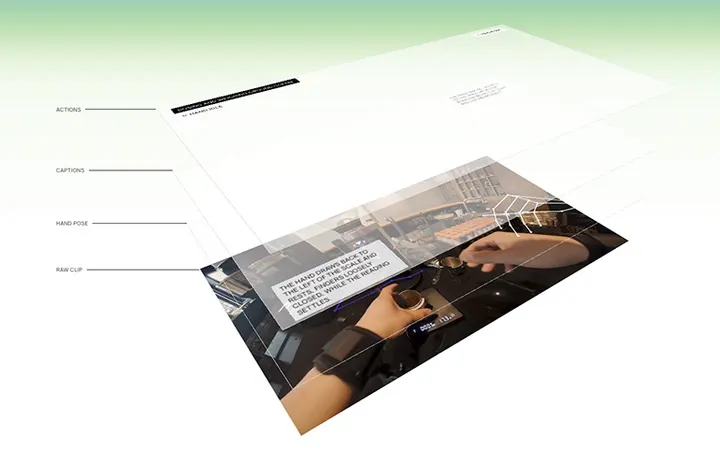
Memories.ai builds standardized egocentric video pipeline
Memories.ai models label every clip: Memories-H0 for hand pose, EgoAction for action segments. | Credit: Memories.ai Memories.ai is building a data pipeline for robotics companies that combines standardized video collection with AI-powered annotation to turn everyday egocentric footage into training data for robots. The San Francisco-based company is developing software and AI to help robots understand the physical world. It builds video-understanding models and data infrastructure, and it colle