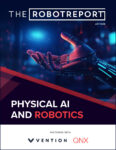
Report shares the state of physical AI and robotics
While robotics developers have used artificial intelligence for years, the past few years have seen a fundamental shift in how the technologies work together. Rather than rely solely on deterministic programming for things like navigation and object recognition, robots are increasingly able to perceive, comprehend, decide, and act with AI. Physical AI is not just a buzzword; it’s also enabling the future of automation in factories, warehouses, and beyond. In this free download, readers wil
Get smart on it
Physical AI represents a fundamental shift in how robots work, moving beyond pre-programmed instructions to perceive, comprehend, decide, and act using artificial intelligence for tasks like navigation and object recognition. This technology is enabling automation across factories, warehouses, and other domains, though its success depends on domain-specific data and different training approaches. Physical AI companies have raised over $23 billion in venture capital so far, with major investments focused on foundation models, industrial automation, autonomous vehicles, and humanoid form factors. The technology is being deployed to address labor shortages and precision needs across various markets, while also creating demand for hyperscale data centers that require simulation, fleet orchestration, and reasoning capabilities.
Related news
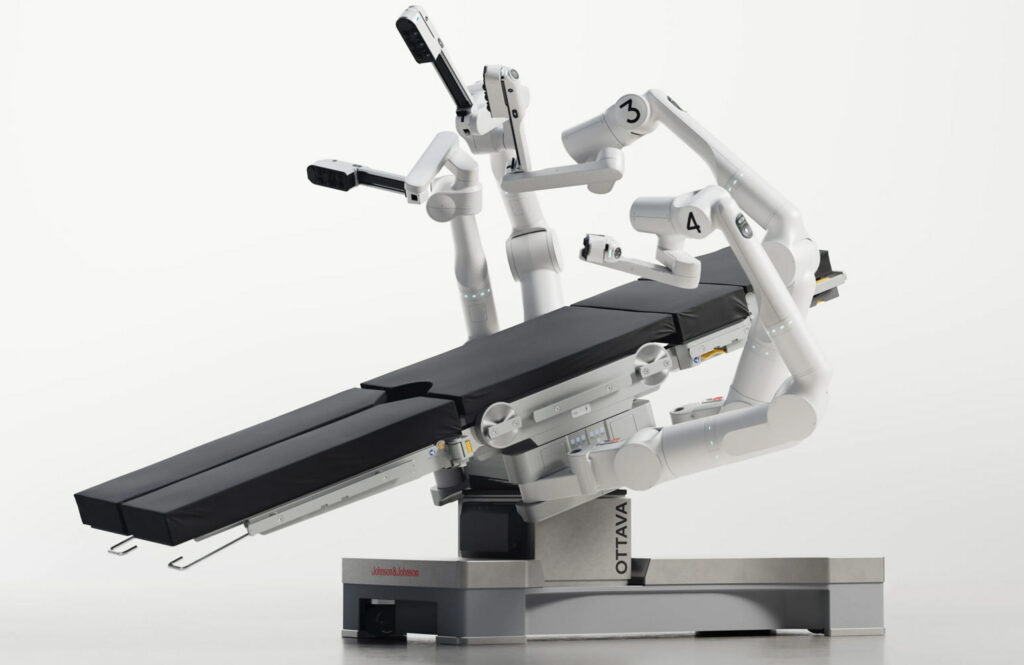
Photos: First look at J&J’s Ottava surgical robot
Johnson & Johnson’s Ottava surgical robot has four robotic arms that come out from underneath the operating table. Photo credit: Johnson & Johnson Johnson & Johnson MedTech unveiled its long-awaited Ottava surgical robot after winning FDA de novo authorization. It’s the world’s first table-integrated, soft-tissue robotics system. The robot-in-table design is meant to save space in the operating room, with J&J saying its novel architecture takes up 30-50% less space tha
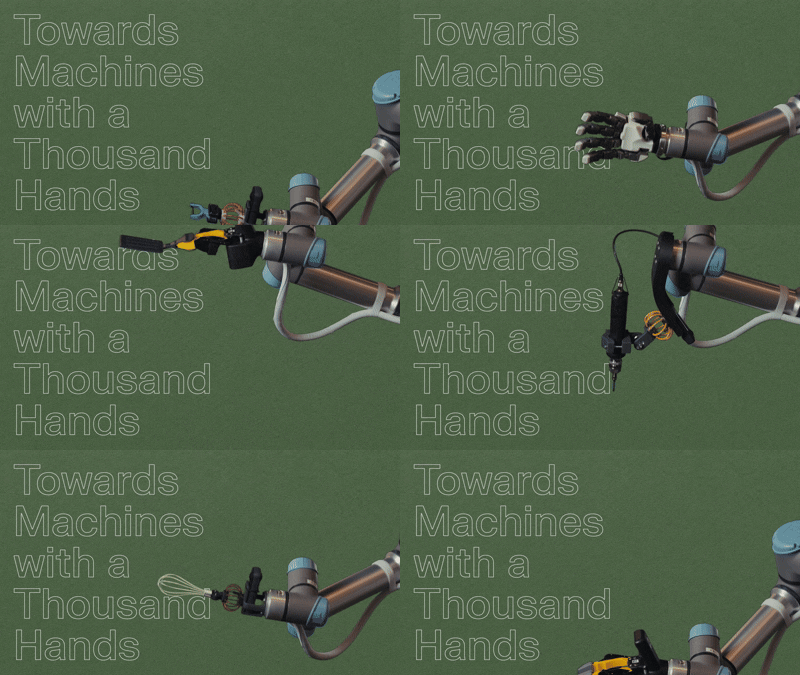
Generalist’s GEN-1 foundation model now supports a range of robot end effectors
Generalist’s latest embodied foundation model, GEN-1, now supports a broad range of robot end effectors. The company said GEN-1 is compatible with five-fingered hands to specialized tools with new modes of actuation and everything in between. By training GEN-1 to work with these new hands, Generalist said it is demonstrating that a single base AI model can learn sensorimotor policies on robots that transfer across radically different ways of interacting with the physical world. Below, the