Q2 2026 robotics demand increased across industries, reports A3
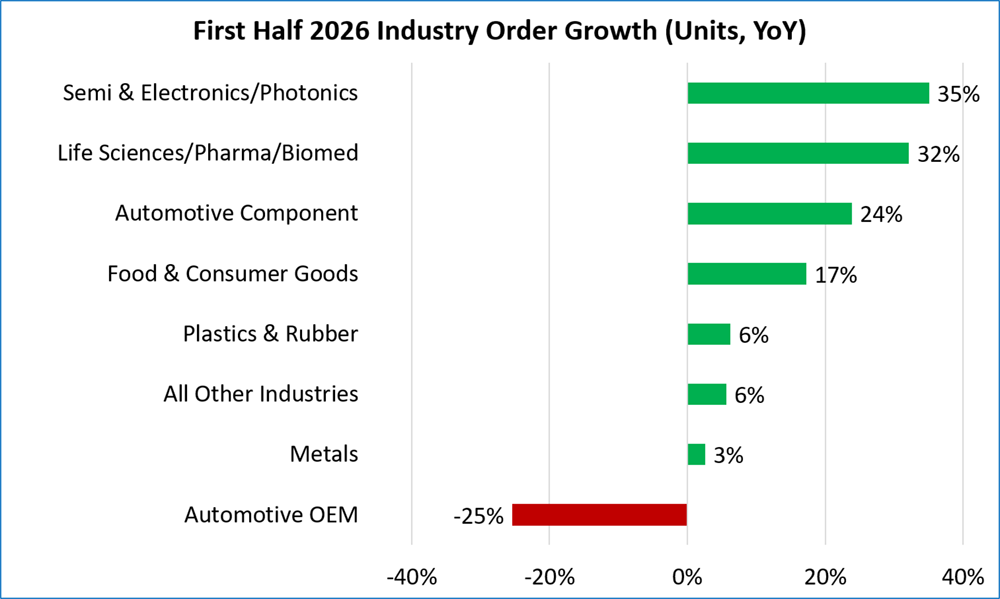
Automotive component makers increased robot orders, while OEMs did not in Q2. Source: A3 While progress in artificial intelligence and humanoid robots continues to capture public and investor interest, industrial automation is still the leading segment in robotics. The Association for Advancing Automation, or A3, marked modest growth in North American orders in the Q2 of 2026. North American companies ordered 8,940 robots valued at $622 million in Q2, the association reported. Compared with the
Get smart on it
The Association for Advancing Automation reported that North American robot orders grew modestly in the second quarter of 2026, with companies ordering 8,940 units valued at $622 million, representing a 4.3% increase in units and 21.3% increase in revenue compared to the same period in 2025. While automotive original equipment manufacturers saw orders decline 25% in the first half of 2026, demand for robots increased significantly across other industries including semiconductors, electronics, life sciences, and food and consumer goods, with non-automotive customers accounting for 56% of units ordered. Collaborative robots, which are force and power-limited robot arms designed to work alongside humans, represented 15.4% of all robot units ordered in the first half and remained particularly strong in healthcare and electronics sectors. The data suggests manufacturers view automation as a long-term competitive investment despite broader economic uncertainty.
Related news
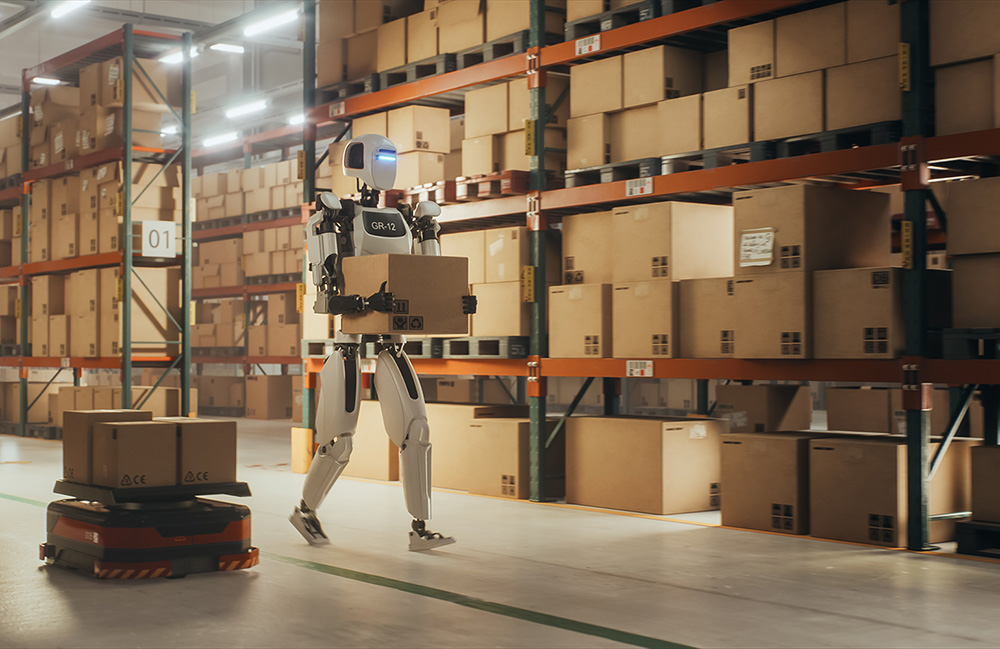
Why robots that can’t communicate naturally won’t be adopted
For humanoid robots to operate in the real world, they’ll need more than a sense of sight. | Source: Adobe Stock At recent major tech events, humanoid robots were everywhere. Some of them walked, navigated, and manipulated objects with a level of dexterity that would have seemed unrealistic just a few years ago. And yet, despite all of this progress, I find myself consistently underwhelmed when I try to communicate with them at Treble. Supporting the development of advanced audio and voice

The Next Big Influencer Is This 4-Foot-Tall Robot From China
The Unitree G1 has found online fame as a relatively affordable robot that can charm a crowd. But can it ever hold down a real job?