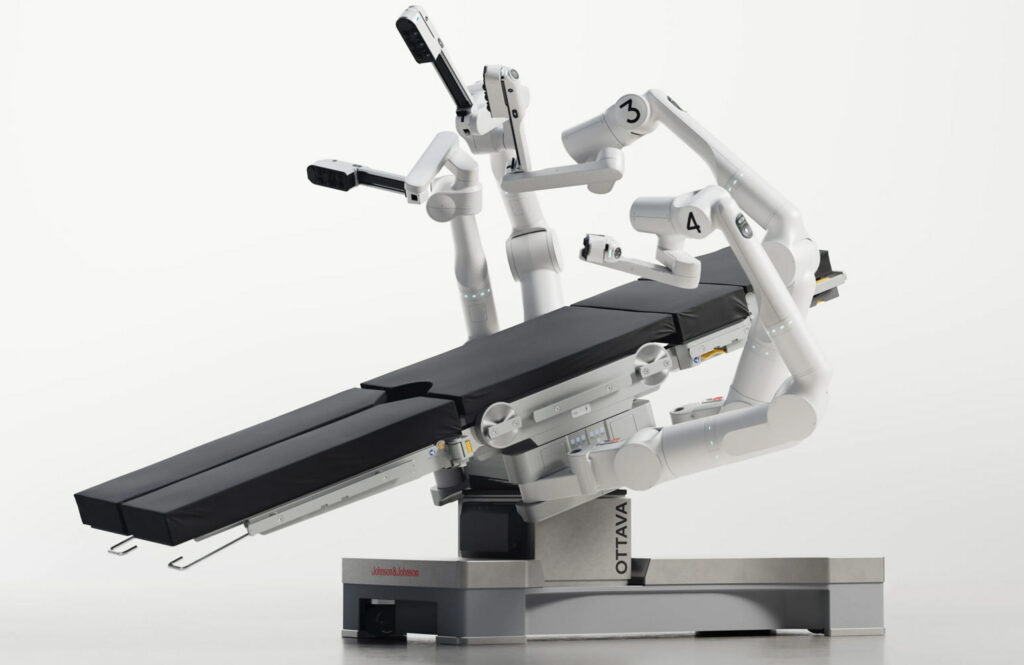
Photos: First look at J&J’s Ottava surgical robot
Johnson & Johnson’s Ottava surgical robot has four robotic arms that come out from underneath the operating table. Photo credit: Johnson & Johnson Johnson & Johnson MedTech unveiled its long-awaited Ottava surgical robot after winning FDA de novo authorization. It’s the world’s first table-integrated, soft-tissue robotics system. The robot-in-table design is meant to save space in the operating room, with J&J saying its novel architecture takes up 30-50% less space tha
Make your prediction
Will J&J's Ottava surgical robot be commercially available in the US by end of 2026?
Resolves by Dec 31, 2026
Your prediction
50% · 50/50 coin flip
NOYES
Get smart on it
Johnson & Johnson MedTech has received FDA authorization for its Ottava surgical robot, which is designed as the world's first table-integrated soft-tissue robotics system. The robot features four arms built directly into the operating table that tuck underneath when not in use, reducing operating room space by 30-50% compared to traditional boom-and-cart systems. The system includes redesigned surgical instruments, such as a needle driver with separate cut and suture modes and improved scissors, developed based on surgeon surveys identifying common problems like accidental suture cuts and dull cutting tools. The Ottava system can automate setup and breakdown procedures, save time during workflows, and integrate with a digital ecosystem for data collection and training.
Related news
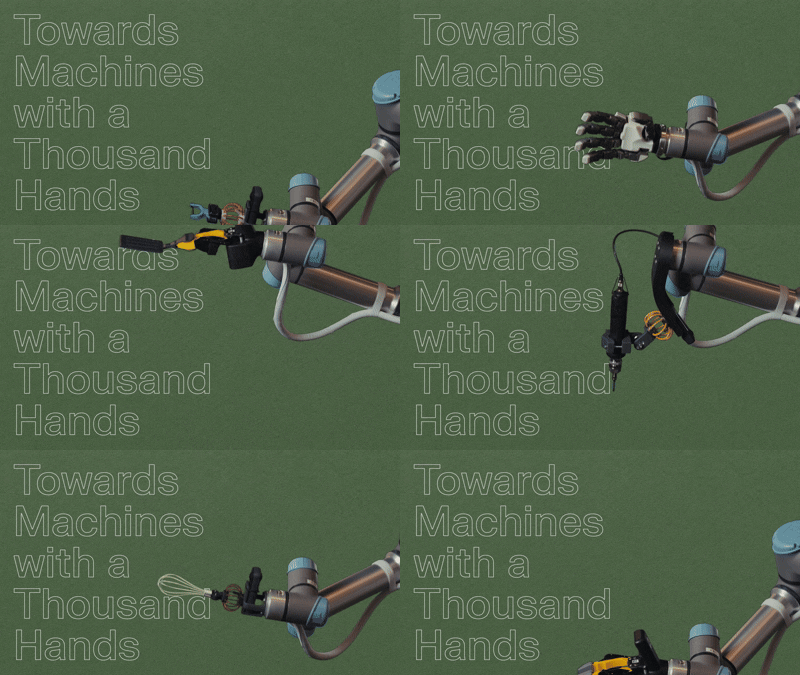
Generalist’s GEN-1 foundation model now supports a range of robot end effectors
Generalist’s latest embodied foundation model, GEN-1, now supports a broad range of robot end effectors. The company said GEN-1 is compatible with five-fingered hands to specialized tools with new modes of actuation and everything in between. By training GEN-1 to work with these new hands, Generalist said it is demonstrating that a single base AI model can learn sensorimotor policies on robots that transfer across radically different ways of interacting with the physical world. Below, the

How time series databases unlock real-time data for robotics
The Robot Report Podcast · Unlocking the Power of Time Series Databases for Industrial and Robotic Systems In Episode 254 of The Robot Report Podcast, we talk to Doug Pagnutti, developer advocate at Tiger Data. He discusses how time series databases like TimescaleDB are improving industrial automation, robotics, and AI applications. He shares insights about integrating these databases with various sensors, managing data at scale, and optimizing performance both on the cloud and on the edge. Dou