NVIDIA shares how to evaluate general-purpose robot policies for real-world deployment
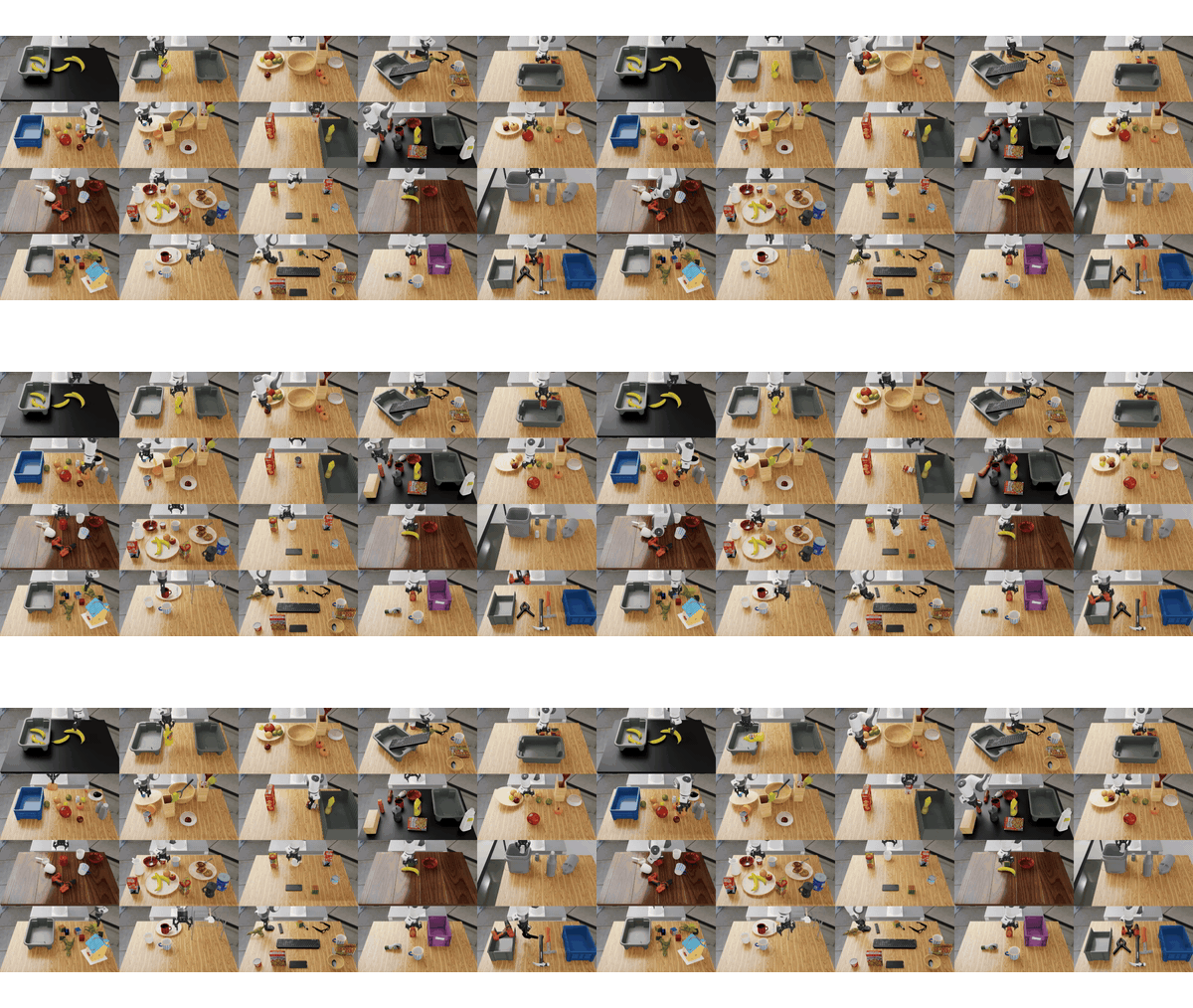
RoboLab is NVIDIA’s simulation benchmarking platform. | Source: NVIDIA Robotics foundation models have made remarkable progress, according to NVIDIA. Today’s best systems can follow natural language instructions to pick, place, sort, and manipulate a wide variety of objects. But as these models grow more capable, evaluating them rigorously has become one of the field’s hardest unsolved problems. In this blog post, we introduce the key problems and our method for addressing them. Why curren
Make your prediction
Will NVIDIA publish a follow-up blog post on RoboLab evaluation methods by August 12?
Resolves by Aug 12, 2026
Your prediction
50% · 50/50 coin flip
NOYES
Get smart on it
Robotics foundation models have become capable enough to follow natural language instructions for manipulation tasks, but evaluating whether these models will work in real-world deployment remains extremely difficult. Current simulation-based benchmarks have critical flaws: they often train and test models on the same visual environments, leading models to memorize rather than generalize; they use fixed task sets that quickly become saturated as models improve, making it hard to distinguish which systems are actually more capable; and they provide only binary success/failure scores without explaining why failures occur. A simulation benchmarking platform called RoboLab addresses these issues by enabling rapid generation of diverse new tasks to prevent saturation, providing detailed diagnostic tools to understand failure modes, and using statistical methods to ensure results are trustworthy rather than based on small sample sizes.
Related news

Key to Humanoid Progress: Managing the Power Behind the Robots
This episode of Designing the Future is brought to you by Murata Power Solutions. Robotics, perhaps the most anticipated technology of the 20th century, is finally delivering on the science fiction promise of truly useful, general-purpose, humanoid machines. Speed, mobility, dexterity, vision and the user interface, are all progressing so rapidly that hardly a week goes by without a major advancement. Engineers however, who must deliver on that promise, know that the essence of motion is

US military sent explosive drone boats into combat for the first time
For the first time in its history, the US military sent explosive-laden drone boats into combat by attacking an Iranian midget submarine and naval port. The unprecedented use of such kamikaze sea drones by the United States comes nearly a decade after Iranian and Houthi forces first demonstrated such weapons. The US military shared a video showing three “one-way attack surface drones” exploding after approaching an Iranian midget submarine and ship maintenance facility at Iran’s Bandar Abbas Nav