Why robotics teams need virtual gyms before deployment
Humanoids and other robots can benefit from training in ‘virtual gyms.’ Source: SoftServe The challenge for today’s robots is no longer limited to automating a task. It is adapting to ever-changing environments — and that variability remains one of the hardest problems. This distinction matters more and more as the industry moves from programmed automation toward physical AI — systems that perceive, reason, and act in the physical world. The global robotics market is developing rapid
Make your prediction
Will a leading robot simulation platform announce a dedicated ISO 10218:2025 compliance testing feature by October 2026?
Resolves by Oct 12, 2026
Your prediction
50% · 50/50 coin flip
NOYES
Get smart on it
Robots increasingly need to handle unpredictable real-world environments rather than just perform programmed tasks, which requires them to gain experience through training. Virtual gyms are high-fidelity simulation environments where robots can practice, fail, and be tested before live deployment, combining digital twins, synthetic data, and reinforcement learning to reduce the need for expensive and risky physical testing. The gap between simulation and reality creates deployment failures when robots encounter variations like different lighting, packaging, or warehouse traffic patterns that weren't captured in initial training. A practical deployment workflow uses simulation to cover most scenarios, targeted physical tests to identify gaps, and real-world validation to confirm performance, which can reduce commissioning time by 30 to 50 percent.
Related news
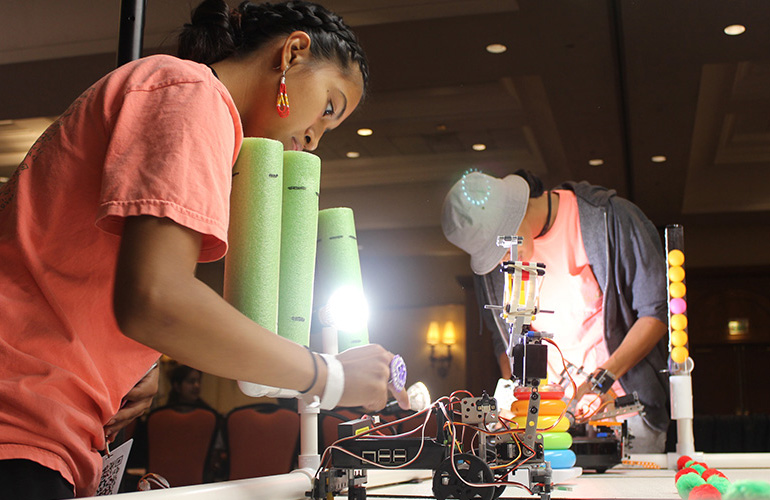
STEM education in the classroom, introducing BotBall
Botball provides students inquiry-based experiences to build creativity, critical thinking, and teamwork. | Credit: KISS Institute for Practical Robotics The story of Botball and the Junior Botball Challenge is defined by a shift in perspective: moving away from a model where adults lead the way, and instead placing the full weight of discovery on the students. According to Steve Goodgame, executive director of the KISS Institute of Practical Robotics (KIPR), the program was born from the idea t
Are suppliers ready for new robot safety standards?
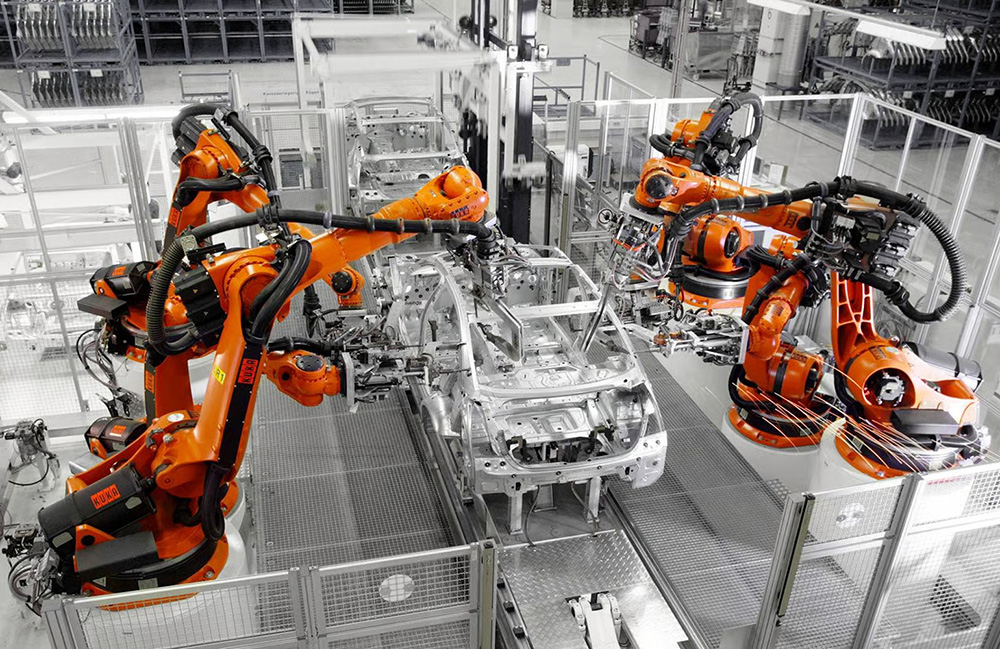
KUKA is one of the world’s leading providers of robotics for the automotive industry. | Source: KUKA Questions about the updated ISO 10218 safety standard are becoming increasingly common in the robotics industry. Central to the discussion are CE certification requirements in Europe, as ISO 10218 is the key safety standard for industrial robots under the CE marking framework. ISO 10218:2025 is the updated industrial robot safety standard and will become mandatory for CE-marked products und